Woo, progress! Recap has been completed.
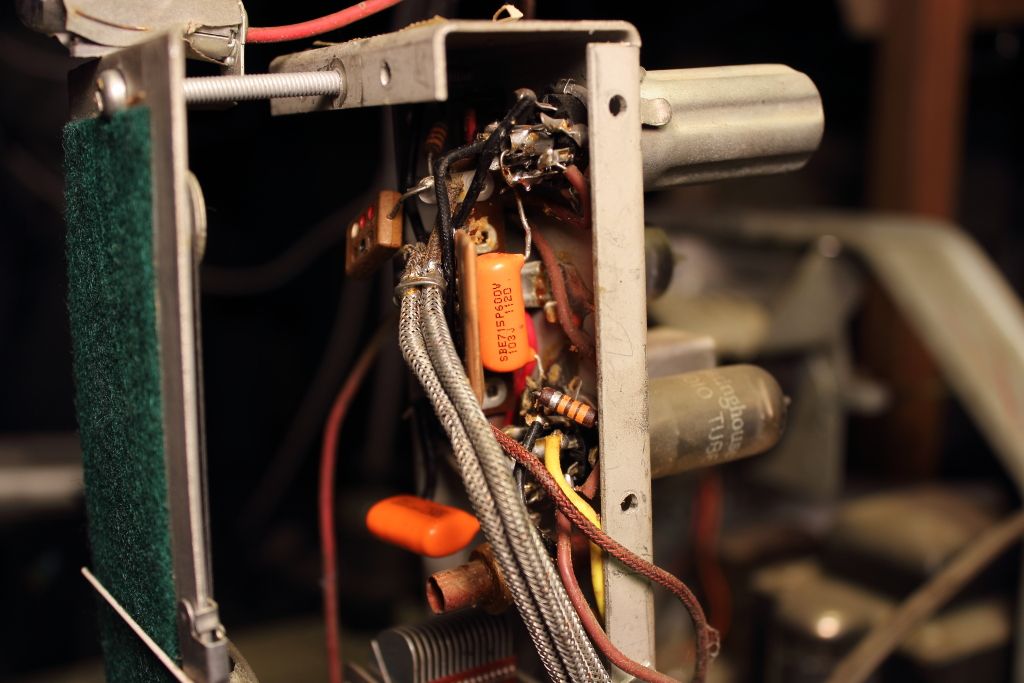
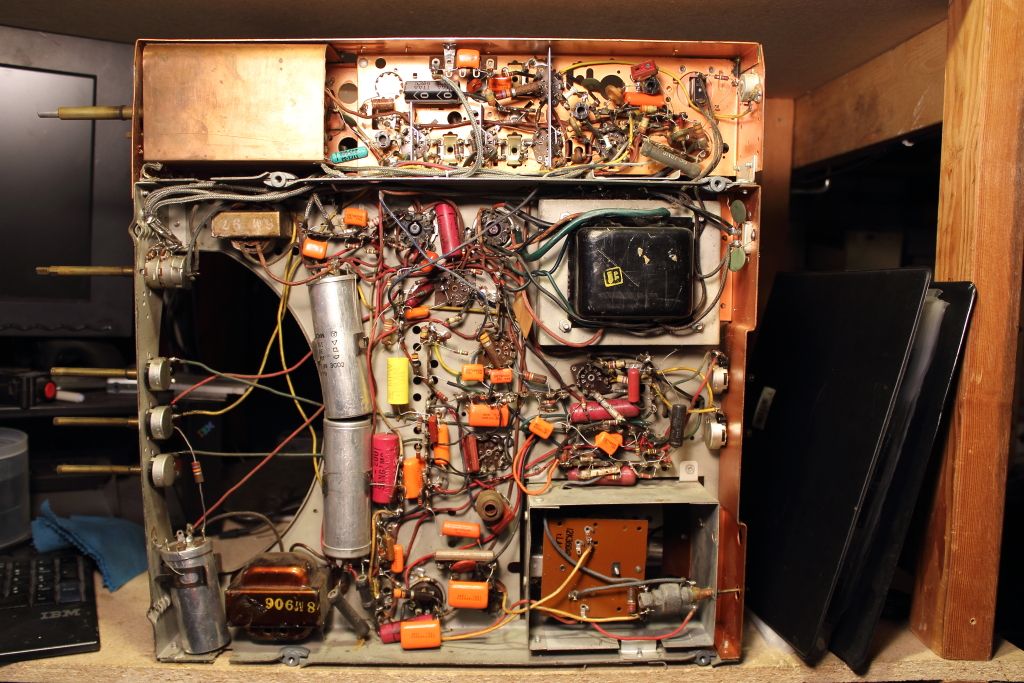
The multi-cap cans are still there but I"m not touching those until I'm positive they have problems. I don't even know where to start on figuring out how their pin arrangement works.
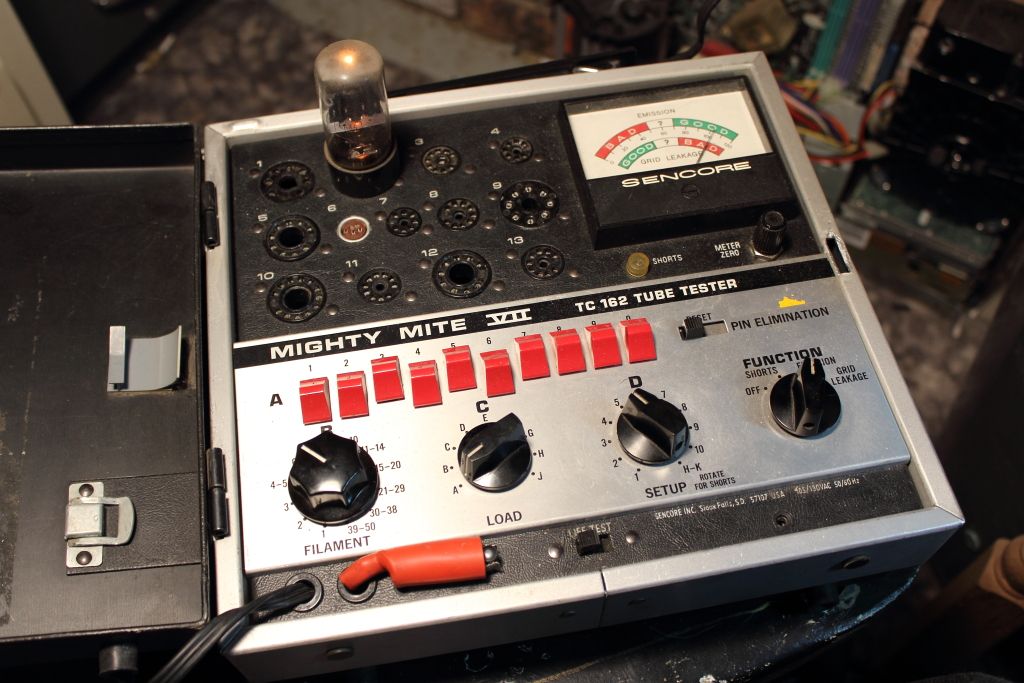
All but two tubes have been checked on my Sencore. A number of them gave weak emissions but improved after a few minutes of cooking. I did however find a 6BE6 that had good emissions and life test but was pegged on BAD on grid leakage (once warm it crawls up and pegs, not an immediate swing-to-peg). I also have a 6W6GT but my setup chart only showed the 6W6. Are these two compatible for testing? The other tube not checked was the IB3GT which on inspection had a cloudy glass envelope near the base. Unsure if it's a manufacturing defect or sign the tube gassed. I could not get the Sencore to give any reading with it plugged in but I'm aware these tubes don't really work in most testers because of their design so if it works it works, else I have replacements for it and the 6BE6.
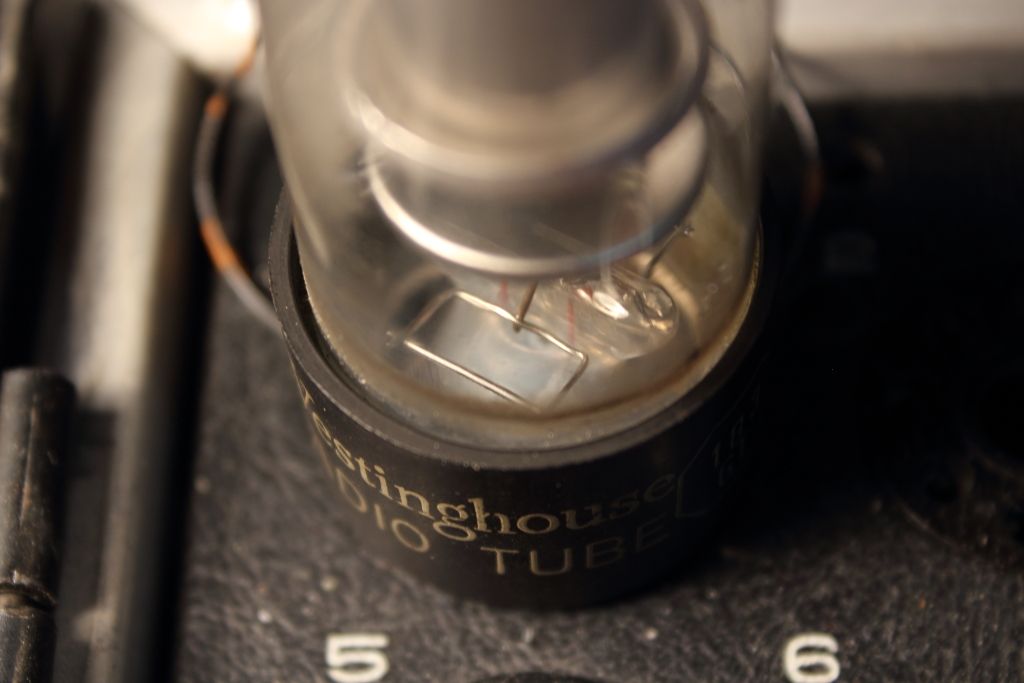
The only other thing I did tonight was reconnect the anode cable. It's pin 7 on the IB3GT but the socket is confusing because pin 7 for some wild reason also has a lead which makes the socket base and the support live with a few thousand volts. It's isolated form the chassis by a ceramic tube buy why would they of done this?
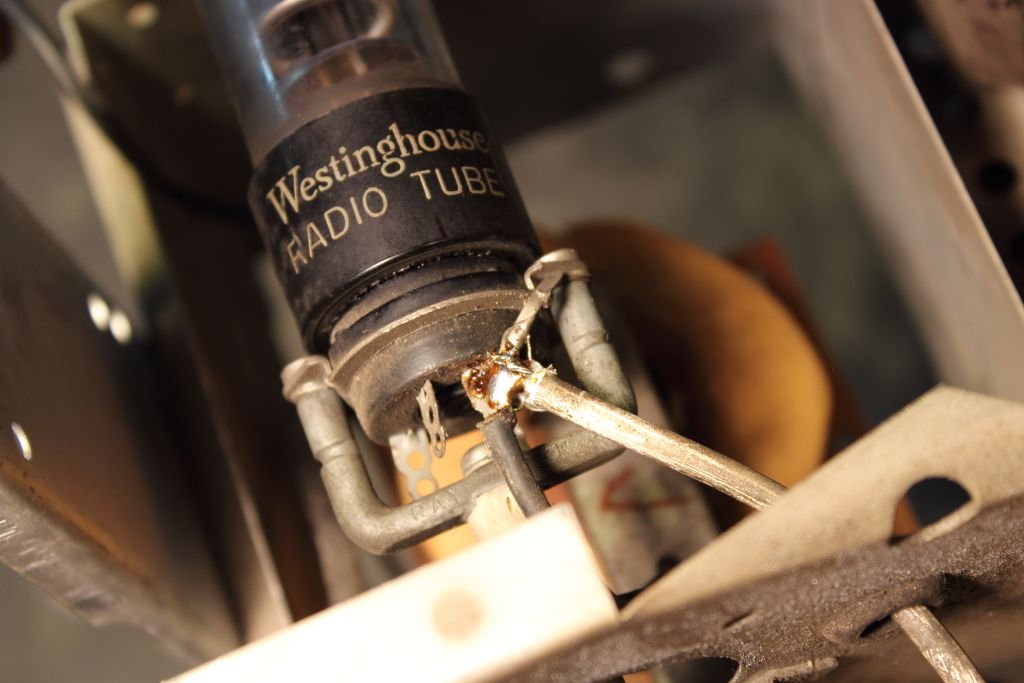
Now that everything seems good it's time to attach the variac and lightbulb and see if it wakes up gracefully. The issue however is that my variac is only rated for 1A (what an amazing chinese product) so I would rather not push it past 2A so I want to limit the current I want to keep the CRT out and kill the high voltage. Any ideas on how to quickly cut that for now?
One last thing. Four of the pots on the front and rear of the chassis won't free up. I've gone at them with penetrating oil and WD 40 but only one other pot freed up. Should I dismantle and clean these old ones or replace them?