Regarding issue #6, I had one CRT whose edges were noticeably brighter than the center area where scanning had occurred. In this photo I used tape to mark the boundaries.
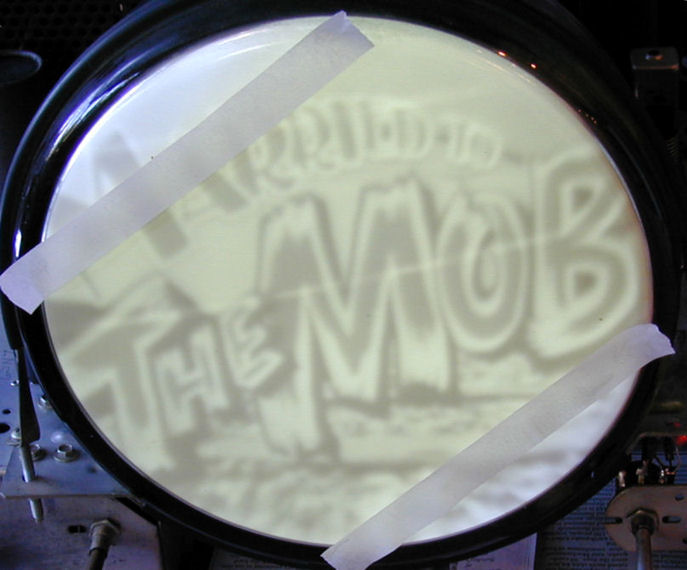
My solution was to rotate the CRT so that these areas were hidden by the mask (as they had been originally).
I assumed that this was caused by long use. You can read more about this at
http://antiqueradio.org/RCAT-100Television.htm . To test whether the phosphors in your CRT have faded, you can simply rotate your CRT a bit and see whether the shadow rotates, too.
As you have figured out, it's normal with every round CRT for the extreme corners to be cut off. By definition, the TV image is a rectangle, not a circle. The mask on your TV also has rounded corners, so if you adjust height and width to just fit the mask, the extreme corners will still be hidden.
That said, in your last photo the height and width seem excessive. I would normally expect to see all of that big circle. If you reduce the height and width -- as long as you don't create black bars around the edges -- you'll see more of the image.
On some TVs, trying to achieve perfect geometry is a losing battle. I think some TVs were deliberately designed with a little overscan so that customers wouldn't constantly call the repairman when components aged and black bars appeared on the edges. And some sets give you more adjustment leeway than others. If you work with your adjustments long enough, you'll eventually find the best compromise for your particular TV. Then it is time to put away the test patterns and enjoy watching normal programs

Phil Nelson
Phil's Old Radios
http://antiqueradio.org/index.html