Sam's has an index online, and you can buy folders from them, but they are rather expensive. A better solution is to use their online index to get the folder number, then get a copy from a large old library (If you live near a major city the library in that city is likely to have them as are libraries some older vocational schools that once taught TV repair), there are some cheap online sources for original paper copies too.
Even if TVs don't get thrown out (some people who have them don't keep track of what you can and can't throwout or hope someone will grab it) stereo consoles can show up, and those can be resold profitably and or traded for TVs once you have as many as you want.
There are also some great period books on TV repair that are worth reading for understanding of operation...A good block diagram of signal flow and interdependence of stages will aid localization of troubles. If your screen lights it will often tell you enough to isolate a problem to one or two tubes and the passive components associated with them. The folks here are quite knowledgeable and helpful if you should want/need advice.
No guarantee the Truetone will have RCA definitive markings since RCA did not make all clone chassis (and by the mid 60's did not make any), but rather usually licensed the design to other makers. RCA also owned the patents to many orthodox color TV circuits so even something like a Zenith or Admiral might have an RCA patent license on it for some circuit that they had yet to create a functional-patent-doge-equivalent for. Chassis pictures are often good since RCA layouts are fairly distinct, but some licensees may have changed the layout so tube compliment is good to know.
I have a Silver tone CTC-15 clone which will give you a good feel for the general look of RCAs from CTC-12 thru CTC-16 (they looked similar in that series).
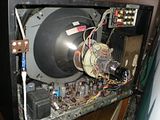
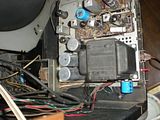
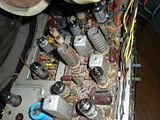
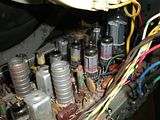
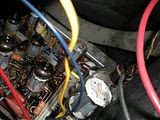
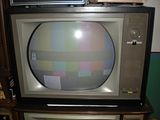
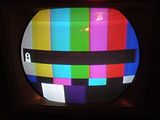
click pictures for larger view.