
|
|
|
|
|
#1
 09-29-2012, 06:10 PM
|
||||
|
||||
|
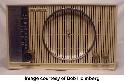
1950's RCA TV.... Picked this up today.
Bought this set for $40.00 today.
Don't know anything about it, except that it looks very cool. I know it's not good to turn it on, but I did, all the tubes lit, no screen. Hope the CRT is okay, looks like there is a black spot on the glass, I don't know if thats a common red flag showing a bad CRT or not. I wasn't informed of it till I handed over the cash! I told the guy nicely, " you could have mentioned that before we made the deal", but that I would fool with it and see. Maybe it's just lots of dust, well, when I can figure out how to remove the glare cover, then I'll know. I did hear crackling in the speaker though. This also has the back cover, and is complete. Doesn't look like anyone touched it for years. Anyone ever work on one of these before? It has a huge chassis, can't wait to clean her up and recap it all, just want to be sure the CRT is decent before I do anything else. What I really need now is a CRT tester? I think it's called, I wonder what type is good? Would it tell me if this CRT is good or shot? Also, Is the tube in the HV cage supposed to be lit when the set is powered on? It wasn't lit. 
|
|
#2
09-29-2012, 06:31 PM
|
|||
|
|||
|
At first, I thought that the CRT had been "necked". But on closer examination, it just looks like typical dirt that accumulates because of the electrostatic attraction. A good Windex job will most likely fix that problem.
Do you know anyone with a CRT tester? Don't know where you live (City or State).
|
|
#3
09-29-2012, 06:37 PM
|
||||
|
||||
|
One good model of CRT tester is a Sencore CR70. There are many others out there, but be aware that a vintage tester may require the same sort of restoration as anything else that old.
A CRT tester may cost more than you paid for your TV. If you have a multimeter, you can at least test the filament to find out if your CRT is a total dud. This article explains how: http://antiqueradio.org/FirstStepsInRestoration.htm The rectifier tube in the HV cage is a 1-volt tube and you won't see it glow (if at all) unless the room is totally dark. If you skim a couple of the TV restoration articles in this section, that should give you an idea what's generally required to make these old TVs work: http://antiqueradio.org/restoration.htm Be careful around high voltage, as noted many times in those articles. I would not play the TV for extended periods until you have replaced (or at least checked) the electrolytic capacitors in the power supply. Phil Nelson Phil's Old Radios http://antiqueradio.org/index.html
|
|
#4
09-29-2012, 10:48 PM
|
||||
|
||||
|
Quote:
I have looked at your site many times, but didn't know that was you! You have great information on there Phil, thanks.
|
|
#5
09-29-2012, 11:07 PM
|
||||
|
||||
|
I love the looks of these mid 50's RCA consoles. I guess some collectors feel they're sort of ho hum, but cabinet style wise they look just as nice as the early color sets. So what chassis does this set use? Looks like a lot of fun for $40.

|
| Audiokarma |
|
#6
09-29-2012, 07:55 PM
|
||||
|
||||
|
I don't THINK the CRT has lost its vacuum-Just typical dirt accumulation over nearly 60 years of use, as mentioned by Kyflyer. The cabinet LOOKS to be good, maybe indicating it came from a good home.
__________________
Benevolent Despot
|
|
#7
09-29-2012, 09:26 PM
|
||||
|
||||
|
I agree with everyone on this. If the CRT had been necked (meaning the neck was literally knocked off the back of the tube), accidentally or otherwise (!), air would have rushed in and blown the phosphors off the center of the screen, leaving a much larger spot than your set shows. Run the usual emission test on the tube; perhaps you won't have to replace it. Many times these old CRTs will have a surprising amount of life left in them; depends on how much the set was used.
__________________
Jeff, WB8NHV Collecting, restoring and enjoying vintage Zenith radios since 2002 Zenith. Gone, but not forgotten.
|
|
#8
10-01-2012, 11:20 AM
|
|||
|
|||
|
Quote:
They did it for several years, both b&w and color. 
|
|
#9
10-01-2012, 03:37 PM
|
||||
|
||||

curious to know the chassis number, or KCS- number stamped on the rear of the chassis. Yours looks like one I picked up in June, a KCS-97D. Haven't tackled mine yet, and it'll be interesting re-capping the "upside-down" circuit boards.
 Kevin
__________________
stromberg6
|
|
#10
10-01-2012, 06:02 PM
|
|||
|
|||
|
Quote:
I used to replace the .01 cap across the sine wave coil, when you couldn't get the horizontal AFC to align properly. Easy to solder, through the holes in the top of the chassis. 
|
| Audiokarma |
|
#11
10-02-2012, 07:24 PM
|
||||
|
||||
|
Quote:
I would have been trying to take it out from the front... Yes, the chassis is a KCS97. The set Dave is picking up has what looks like a remote on the top middle? Mine doesn't have anything there... I guess my set is only "Super" not "Deluxe"! So '59 is right on the year of this??
|
|
#12
10-02-2012, 11:02 PM
|
||||
|
||||
|
Quote:
__________________
Jeff, WB8NHV Collecting, restoring and enjoying vintage Zenith radios since 2002 Zenith. Gone, but not forgotten.
|
|
#13
10-03-2012, 01:45 PM
|
||||
|
||||
|
Quote:
, so I'll put in the "wacky antennas" post. The difference between Deluxe and Super is not clear but a special is not as good as either. The set is face-down in my subaru wagon, a perfect fit with the back seat upright. 24" Everest model# 24D655U with UHF tuner. Its got some scratches but is dry and complete with a very dusty looking CRT, so I'll have to deal with those clips. It is the same CTC97 chassis as yours too, (3) 6AQ5 for audio, video and vertical outputs. What could be better? I will do a separate thread when I get to this one. With such simple and basic mid-50s tube circuits, It will be very easy to make YOURS work like new. I just happen to have a factory manual on that one which I could scan if you need it. PM if you do and Ill circle the first caps to replace before you apply power . Last edited by DavGoodlin; 10-04-2012 at 11:28 AM. Reason: update
|
|
#14
09-30-2012, 04:20 PM
|
||||
|
||||
|
Good score!!
|
|
#15
09-30-2012, 04:50 PM
|
||||
|
||||
|
In addition to the Sencore CR70, there are also several B&K models (467, 470, 480, and 490) that are decent. The 467 and 490 have three seperate meters for better evaluation of color CRT's. The 470 and 480 models have a single meter and a knob to select between R, G, and B color guns. The models that I mentioned also have a decent rejuvenate function that will be less likely to harm the CRT than older testers. These testers cost a lot of money when new; but, can now be obtained cheaply if you look hard enough.
If all you want to do is evaluate the condition of older B&W tubes; then, pick up an older B&K tester from the '50's or '60's. The blue cased 465 is a good tester for testing B&W and older color CRT's; but, the rejuvenate function is rather crude and will often do more harm than good when attempting to rejuvenate a weak CRT. The older CRT testers sell for next to nothing and are often free. My first CRT tester, a freebie from a shop who no longer used it, was a B&K 465 (early '90's).
__________________
http://www.youtube.com/user/radiotvphononut
|
| Audiokarma |
 |
|
|






 Hybrid Mode
