
|
|
|
|
|
#1
 08-04-2007, 10:57 PM
|
||||
|
||||
|
Just happened to spot this...
... at www.consumerreports.org 's archive. Seems they weren't impressed with some brands of TVs.
Tom
__________________
Tom 

|
|
#3
08-05-2007, 08:51 PM
|
||||
|
||||
|
Consumer Reports' main goal in life seems to be making controversy whether based on significant differences or not. In the past, their criteria for judging many items was far from well-balanced and did not take into proper consideration that some consumers may value certain attributes in a product. This was especially noticeable to me in their car reviews, where they sometimes put down sporty cars apparently because they didn't cater to the same uses as a family sedan!
They did do one thing for TV sets, in constantly complaining about the lack of full DC restoration, which was one of the failings of color sets for a long time. Eventually, one year, they did come up with the amazing but true revelation that most transistorized color TVs at the time had roughly the same picture quality, and reliability was now much better than the old tube sets. Don't know how they managed to write that, when their existence depends on finding differences among products.
|
|
#4
08-05-2007, 09:52 PM
|
||||
|
||||
|
What is the difinition of "private label" TVs? I would have assumed that Muntz, for example, WAS mass-produced. ??
__________________
John Folsom
|
|
#5
08-06-2007, 07:13 AM
|
||||
|
||||
|
Quote:
|
| Audiokarma |
|
#6
08-06-2007, 01:24 AM
|
||||
|
||||
|
I thought so as well. Private label I thought was something like Sears having their Silvertone brand slapped on a TV made by someone else.

__________________
Tom
|
|
#8
08-06-2007, 10:30 AM
|
||||
|
||||
|
I have that actual report somewhere if anyone wants me to scan it.
veg
__________________

|
|
#9
08-06-2007, 06:41 PM
|
||||
|
||||
|
Quote:
|
|
#10
08-10-2007, 06:47 PM
|
||||
|
||||
|
Quote:
__________________
"Tubes are those little glass things that light up orange unless there is a short.. Then they light up all pretty colors..." Please join my forum. http://www.tuberadioforum.com/
|
| Audiokarma |
|
#11
08-06-2007, 07:15 PM
|
||||
|
||||
|
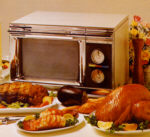
Hope I don't deviate too much here... but Whirled One's showin' off my Amana!

__________________
"Having a moustache tells people that I listen to the Little River Band with giant headphones..." -Peter Griffin
|
|
#12
08-07-2007, 12:45 PM
|
||||
|
||||
|
I've never actually laid my hands on a Setchel-Carlson, but don't those sets have hand-wired unitized "modules"? They find nothing that differenciates that from a Muntz???
Idiots. It's almost comical if you know a certain product inside & out to read a CU report. They've aquired their "fame" by default, as I don't know of any other independant testing lab that reports to the public.
__________________
From Captain Video, 1/4/2007 "It seems that Italian people are very prone to preserve antique stuff."
|
|
#13
08-10-2007, 07:39 AM
|
||||
|
||||
|
Quote:
Looking at the actual article, the Muntz was the lowest-rated set tested, and rated below the worst of the sets tested in CU's 'regular' 21" B&W TV project that year. The best rated of the "minor-brand" sets tested was the Andrea, but even it was not considered as good as the Dumont or Zenith (or even Admiral) sets tested earlier. From the article: "The Andrea's ranking throws a curious light on the promotion for this brand, which has persisted in claiming special "craftsmanship" that lifts it far above the "mass-produced" reciever. Actually, the general design features of the Andrea, as well as its performance, show it to be really the same breed of cat as the "mass-produced" sets of comparable quality. CU's study of the sets included in this project reinforces the concpet that neither mass-production nor small-scale production necessarily creates good TV quality or bad TV quality." "Such quality depends, first, on what the design engineers do at their drafting boards; and second, on the exactness with which the final design is realized in production." "This exactness can be achieved by automatic production machines, by women wielding soldering irons, or by men from outer space-- if they could be persuaded to come down and do the job. It's simply a question of how well the job is done; not how it is done." As for the Setchel-Carlson, it wasn't actually given any ratings for quality, since it was judged "not acceptable" due to shock hazard, in part due to the fact it was the first set they had tested in the past several years that did not have a line-cord interlock. [You can complain about that being grounds for disqualification if you want, but it does seem distinctly odd to see a TV in 1960 without a safety interlock; wasn't that a UL *requirement* by that time..?]
|
|
#14
08-10-2007, 03:31 PM
|
||||
|
||||
|
I was never able to link to an article... Only saw the caption which stated "..brands such as Andrea, Muntz and Setchell-Carlson find nothing to justify their reputation for being better than mass-produced models."
So to me it appeared they were lumping Muntz in with Setchell-Carlson. Which their caption, in fact, did.
__________________
From Captain Video, 1/4/2007 "It seems that Italian people are very prone to preserve antique stuff."
|
|
#15
08-10-2007, 10:16 PM
|
||||
|
||||
|
...and here's the original article. From Consumer Reports, March 1960.
By the way, those of you interested in such things might want to pay a visit to your local library and take a look at the periodical stacks. [University libraries are especially good for this.] Old issues of Consumer Reports can make for a very interesting read. Try it-- you'll be glad you did.
|
| Audiokarma |
 |
| Thread Tools | |
| Display Modes | |
|
|














 Hybrid Mode
