
|
|
|
|
|
#1
 03-29-2009, 09:05 PM
|
||||
|
||||
|
Interesting Find in A Radio
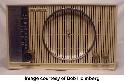
I finally got around to working on a Fada 790 that I've had for a number of years.
I heard something rattling around in the radio. Wasp (hornets?) nest! PS - Anyone have a knob for the right side? 
|
|
#2
03-29-2009, 09:18 PM
|
||||
|
||||
|
__________________
Bell Sound Labs: Bell 6060 "Carrilon", H/K TU610 Tuner, Fostex FE103E's (Folded Horn) Technics Sl-3200 TT, Velodyne CT-100, Infinity RSe.
|
|
#3
03-29-2009, 09:20 PM
|
||||
|
||||
|
That's a mud-dobber nest. Non-stinging cousin of the wasp. Harmless, but annoying.
__________________
Growing up leads to growing old and then to dying, And dying to me dont sound like all that much fun... -John Mellencamp
|
|
#4
04-06-2009, 07:12 AM
|
||||
|
||||
|
Quote:

__________________
Dave Never sweat the petty things and Never pet the sweaty things
|
|
#5
04-06-2009, 01:23 PM
|
||||
|
||||
|
This radio does in fact have FM (the tuning scale for that band is directly below the AM one on the dial). I don't know how old this one is, but since it has the 88-108 MHz FM band it's probably no older than 1947-48.
The gold tuning dial is a nice touch. I don't know whether this radio was high-end in its time, but the dial alone makes it look the part. If it has six tubes or more, then it is in fact a high-end table model. The sixth tube is often an RF amplifier stage, and any tubes after it are often refinements to the signal circuits; extra IF stages, limiter, etc. The radio could also have push-pull audio output, or at very least tone and loudness compensation circuitry in the audio stages, with a single high-power tube (such as a 35C5/50C5/50L6, etc.) as the output stage. Zenith (and possibly other manufacturers) used these compensation systems in their better table radios of the '50s, so it wouldn't surprise me in the least if your set has one or more such networks in its audio stages as well. Regardless of the type of insects you found in your radio, it's a good thing you got the nest out of there. As others have said, these things can be annoying--and I'll add something of my own: dangerous, if they are of the stinging variety. Even if they don't or cannot sting, it can still be unnerving to hear them scratching around inside the cabinet. Good luck. Like Zeniths and other well-known radios, yours will work very well once restored. They don't make them like that anymore.
__________________
Jeff, WB8NHV Collecting, restoring and enjoying vintage Zenith radios since 2002 Zenith. Gone, but not forgotten.
|
| Audiokarma |
|
#6
04-06-2009, 01:30 PM
|
||||
|
||||
|
Quote:
The gold dial is --beautiful-- on these, and contrasts nicely against the bakelite.
__________________
. . . Console, chairside and table top radios. Test equipment , tubes, and a couple TV's. Oh, and tube/SS audio equipment.... lots and lots of audio equipment.....
|
|
#7
03-29-2009, 11:10 PM
|
|||
|
|||
|
I had the same thing happen years ago, had my radios on a shelf above my bed, turned off the tv and lights, laying there for a little while I start hearing this scratching kind of noise, finaly traced it to one of the radios, It spent the rest of the night outside in the -10 minnesota cold.
|
|
#8
03-30-2009, 02:09 PM
|
||||
|
||||
|
'Mud-dauber' I believe is the term. They daub mud, you see. Found in many a radio.
I have that 790, the styling looks 10-15 years older than it really is. Cool because it has FM I believe. Another place you might check for a knob is Mike Koste at Gobs of Knobs.
__________________
Summer's here and the time is right. 
|
|
#9
03-30-2009, 02:14 PM
|
||||
|
||||
|
Quote:
__________________
. . . Console, chairside and table top radios. Test equipment , tubes, and a couple TV's. Oh, and tube/SS audio equipment.... lots and lots of audio equipment.....
|
|
#10
03-30-2009, 04:38 PM
|
||||
|
||||
|
I gotta get around to restoring that one. The gold dial is so cool, and the molded in details on the case.
__________________
Summer's here and the time is right.
|
| Audiokarma |
|
#12
04-07-2009, 10:22 PM
|
||||
|
||||
|
Late 40's is right, but Frank Alphonse D'Andreas' designers had not heard that yet. And there is a twin in white plaskon. I have both around the ranch and they are my favorite AM/FM's from the era. A very nice sound on FM.
Dave A
__________________
“Once you eliminate the impossible...whatever remains, no matter how improbable, must be the truth." Sherlock Holmes. Last edited by Dave A; 04-07-2009 at 10:25 PM. Reason: text
|
|
#13
04-07-2009, 10:31 PM
|
||||
|
||||
|
It's actually an 8-tuber with an RF stage and 25L6 output.
http://www.nostalgiaair.org/PagesByM...4/M0005664.pdf
__________________
Summer's here and the time is right.
|
|
#14
04-08-2009, 10:19 AM
|
||||
|
||||
|
With an RF amp that works for both AM and FM, I would think this radio would be very sensitive and excellent for DXing. This design was popular in the late 1940s-early fifties because not every city or town had a local radio station (AM or FM) in those days; the sets almost had to be built with high-performance signal circuits.
Looking at the schematic for the Fada model 790, I found a ballast tube (the type number shown on the schematic is 117-24, although I think it may be 117Z4) as part of the power supply. This is also a tipoff that the radio was made in the 1940s; these tubes were likely the first means used to take up whatever line voltage was not used by the series filament string (the filament voltages in the 790 total about 68 volts, so the ballast tube had to drop the remaining 49 volts, assuming that the AC line voltage in homes in the '40s was 117).
__________________
Jeff, WB8NHV Collecting, restoring and enjoying vintage Zenith radios since 2002 Zenith. Gone, but not forgotten.
|
|
#15
04-08-2009, 01:53 PM
|
||||
|
||||
|
You wonder why they didn't use a 50L6 instead of a 25 volt output tube. And I think the rectifier was a 25Z4. If that had been a 50V rectifier they would have been there w/o the ballast tube.
__________________
Summer's here and the time is right.
|
| Audiokarma |
 |
|
|











 Hybrid Mode
