
|
|
|
|
|
#1
 04-22-2012, 04:38 PM
|
||||
|
||||
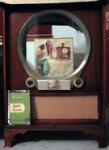
 Zenith out of cabinet
Got the chassis out of the cabinet today. Broke the cap part of the brightness knob off its base but think it can be epoxyed back together. Bigger problem is the grey plastic ring that encircles the picture tube. It's broken at about 11:00 into many pieces and at the base, 600PM where the plastic mounts onto the chassis with two sheet metal screws. It would be a chore to glue all the pieces back together and not sure it would ultimately hold once reinstalled around the tube. Photos attached. Anyone have a good used one they want to sell?

|
|
#2
04-22-2012, 05:10 PM
|
||||
|
||||
|
My 16" porthole has a perfect and pliable CRT mask.
But my 19" porthole mask has some cracks. Might be hard to find a replacement. Save all the pieces as you probably will want to refurbish it. Wonder if anyone here has repaired a CRT mask? Carl
__________________
CW 1950 Zenith Porthole - "Lincoln"
|
|
#3
04-23-2012, 07:22 PM
|
||||
|
||||
|
CW - No answers from others so far. Not only are there about 6-8 little pieces but it has some cracks around the perimeter that are in imminent danger of breaking all the way through. I hate to start cementing this old plastic until I gingerly clean it up a bit, especially the broken surfaces that need to be mated. So what to clean it with and what type of bonding agent to use? Steve
|
|
#4
04-22-2012, 09:16 PM
|
||||
|
||||
|
Quote:
(oh! I just looked at your other thread. You have a 19".. sorry don't have that one) Last edited by charokeeroad; 04-22-2012 at 09:23 PM.
|
|
#5
04-24-2012, 06:46 AM
|
||||
|
||||
|
I bet poster Bandersen could come up with some suggestions.
If I remember correctly, my 16" mask was some sort of rigid hard rubber. Many cars have rubber bumpers and I saw an episode of the BBC show Wheeler Dealer where they repaired a rubber bumper using a special product. Unless someone comes up with a better idea, I would try that. My 19" CRT mask has cracks from front to back and when I remove the chassis again, I'll probably have to deal with fixing it. Also, I wonder if we can find a metal band that we can form around the mask -- but if we do we would have to ground it to the chassis to avoid possible HV shock. Interesting problem that needs an answer. Carl
__________________
CW 1950 Zenith Porthole - "Lincoln"
|
| Audiokarma |
|
#6
04-24-2012, 06:51 AM
|
||||
|
||||
|
This has got me to thinking.
Wonder if we can get make a mold out of say plaster paris. Then pour some liquid rubber to make a copy. Here is an interesting video: http://www.youtube.com/watch?v=b3eR8...eature=related Carl
__________________
CW 1950 Zenith Porthole - "Lincoln" Last edited by cwmoser; 04-24-2012 at 07:35 AM.
|
|
#7
04-24-2012, 11:53 AM
|
||||
|
||||
|
Yah, I'd make an effort to repair it if you have enough of the pieces to make it structurally sound. Two-part epoxy would be my choice, too.
Once glued together, if there are some gaps, they can be filled with bondo. Then you can sand as needed and repaint. Casting a reproduction is not rocket science, but it requires an intact original to make the mold. If you repair your ring well enough to serve as the model for making a mold, then presumably it's repaired well enough to use. An alternative would be to fabricate an entirely new model out of clay or whatever, which exactly matches the original, and use that as the model. I have made simple one-piece molds in the past. This thing might require a two-piece mold. It's also a rather large object. Neither factor makes reproduction impossible, but they would make it more complicated. Phil Nelson Phil's Old Radios http://antiqueradio.org/index.html
|
|
#8
04-25-2012, 09:10 PM
|
||||
|
||||
|
Re: Plastic ring
Thanks for the suggestions guys. I like the two-part epoxy idea. So now I need to clean up the pieces that are to be bonded and do a little experimenting to see how/if this puzzle will hold. No real work to begin on the chassis until next month when friend Bob will help with that. Went over the chassis with a damp cloth and it looks excellent. Opened up the tuner and it looks clean. I'll be back with more later. Steve
|
|
#9
04-26-2012, 12:11 AM
|
||||
|
||||
|
It is really hard to find any of those plastic rings that don't have at least one crack in them. I think the exposure to ozone-generating HV accelerates the deterioration of the plastic.
I used JB Weld to fill in a crack on my 16" set, and in about a week, it fell apart again. I used Bond-O this time, and it seems to be holding up. I repainted the whole ring in primer grey, and it was a fine match.
|
|
#10
04-24-2012, 11:38 AM
|
||||
|
||||
|
Thanks for the link. That's certainly one possibility. It will probably require some experimenting with different materials which can be kinda of expensive though
 I've repaired rigid plastic with Loctite 2-part epoxy plastic binder in the past. It's strong, fills voids and can be sanded. I haven't tried it on a bezel yet.
|
| Audiokarma |
|
#11
04-28-2012, 06:40 AM
|
||||
|
||||
|
I've used JB Weld with very good results sticking bakelite pieces back together on a radio cabinet. Strange it didn't work on that ring. As to reinforcement, you can use fiberglass cloth or scraps of plastic window screen.
__________________
Reece Perfection is hard to reach with a screwdriver.
|
|
#12
04-28-2012, 12:45 PM
|
||||
|
||||
|
After curing, JB Weld is stronger than most materials that you might glue with it.
With this and all other adhesives, the pieces to be glued must be clean. I remember one case where JB Weld didn't hold on a metal surface because it was somewhat greasy (as I discovered later). Bondo is primarily a filler. I use it to fill in cracks after glueing with something that has greater sticking power. Fiberglass cloth is helpful to fill in a big gap with bondo after glueing the main structure with epoxy. Phil Nelson
|
|
#13
04-28-2012, 04:30 PM
|
||||
|
||||
|
I did not back the Bondo with anything. In small quantities, Bondo is about as flexible as the Zenith mask is. Basically, I forced a blob through the back of the mask, struck the excess level off of the face of the mask, and let it cure. I gave it the "twist test" and the Bondo stayed put. But to be safe, I pulled the whole piece out, and glued it back in with either gel superglue or gorilla glue (I forget which). Bondo tends to stay together in one piece (which is why auto restorers dislike it, as the whole fill piece will eventually fall out, making an ugly wound in the car) so it can be pretty easily be removed from the work piece as I did and still be a perfect fit later.
|
|
#14
04-29-2012, 06:35 AM
|
||||
|
||||
|
If it were me, I'd dry fit all the pieces making sure where they will fit. Then use Epoxy to carefully glue it back together. Smooth it down to the surface. Then let it cure. Then put down a bed of Epoxy and take some fiberglass cloth and press down into the glue. I would only use the fiberglass cloth on a non-visible area and make sure that it is low enough that the Mask will still fit in the TV cabinet.
If there are any voids from missing pieces, etc, I'd use some bondo and/or fiberglass cloth and carefully smooth it out before it dries. Then if it looks "patchy", paint the mask. I bet you can make it look as good as new. Restoring these old TVs sometimes requires ingenuity that you didn't originally anticipate. Hey, I've got a 19" Zenith Porthole and it has cracks in the mask that I am going to address when I pull the chassis again. When you get your Porthole playing, I think you will find that 19" CRT makes a pretty good size viewing surface. These Zenith Portholes make wonderful TVs and are very collectible. Carl
__________________
CW 1950 Zenith Porthole - "Lincoln" Last edited by cwmoser; 04-29-2012 at 06:42 AM.
|
|
#15
04-30-2012, 10:02 PM
|
||||
|
||||
|
CW, Phil and everyone that responded, Thanks for all the tips. I've copied them all and will print them out when I'm ready to tackle that darn'd ring. I want it to be right and I will take my time with it. Heck, it will be one of the last pieces back on anyway. I'm having fun every night piddling with her and haven't even started the real work yet! I look at the chassis and the cabinet every night and feel like a proud papa.

|
| Audiokarma |
 |
|
|




 Hybrid Mode
