
|
|
|
|
|
#1
 11-18-2013, 11:34 AM
|
||||
|
||||
|
neat magnavox
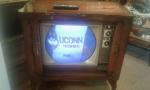
I picked this up over the weekend. Its in fairly decent shape, for surviving in a frat house. I thought it was neat because it has 4 speakers, phono input and the extra piece of glass over the crt. I dont know much about it, all the stickers and such have been long peeled away. Does anyone have an idea as to the year?

|
|
#2
11-18-2013, 12:02 PM
|
|||
|
|||
|
56'-59'maybe
|
|
#3
11-18-2013, 01:14 PM
|
||||
|
||||
|
Magnavox clearly bucked the pro-simplicity trend by putting all those knobs right out in the open. I don't think they ever made a TV in the generic 'two big knobs' style of the 50s.
__________________
tvontheporch.com
|
|
#4
11-18-2013, 01:35 PM
|
||||
|
||||
|
It looks similar to a 24" 55 Maggie I had, does it have a separate amplifier mounted under the chassis in the speaker area?
|
|
#5
11-18-2013, 01:55 PM
|
||||
|
||||
|
I had one similar. IIRC the chassis was a two-digit number, like 22-3.
All it needed was a 5U4 when I got it, made a good picture, nice sound all without a re-cap. Originally found in a Long Island City dump in the mid-70s.
__________________
"When resistors increase in value, they're worthless" -Dave G
|
| Audiokarma |
|
#7
11-18-2013, 04:36 PM
|
||||
|
||||
|
Quote:
|
|
#8
11-18-2013, 04:14 PM
|
||||
|
||||
|
Nice, vertical chassis we had one growing up, different cabinet, same knob setup.... Volume pull on off, contrast on right, then all those at the bottom...... Gave us kids lots to do having it all right there for us.... Ours had a spot for UHF, but no tuner, 110 degree deflection tube ?? or just 90 ?? if I remember.... it was nice and short...
__________________
Yes you can call me "Squirrel boy"
|
|
#9
11-18-2013, 07:43 PM
|
||||
|
||||
|
[QUOTE=Username1;3087484] Ours had a spot for UHF, but no tuner
Magnavox, like many TV manufacturers of the 1950s-'60s, probably offered this TV with UHF as an extra-cost option for areas with UHF and VHF or only UHF stations. Yours was apparently built for VHF-only areas, although a UHF converter could be used to receive such stations if and when they came to the owner's viewing area. The sets with factory-installed UHF tuners probably sold like hotcakes in areas like Fort Wayne, Indiana or Youngstown, Ohio, which only have (or had, before DTV) UHF local TV stations.
__________________
Jeff, WB8NHV Collecting, restoring and enjoying vintage Zenith radios since 2002 Zenith. Gone, but not forgotten.
|
|
#10
11-18-2013, 07:44 PM
|
||||
|
||||
|
Quote:
Magnavox, like many TV manufacturers of the 1950s-'60s, probably offered this TV with UHF as an extra-cost option for areas with UHF and VHF or only UHF stations. Yours was apparently built for VHF-only areas, although a UHF converter could be used to receive such stations if and when they came to the owner's viewing area. The sets with factory-installed UHF tuners probably sold like hotcakes in areas like Fort Wayne, Indiana or Youngstown, Ohio, which only have (or had, before DTV) UHF local TV stations.
__________________
Jeff, WB8NHV Collecting, restoring and enjoying vintage Zenith radios since 2002 Zenith. Gone, but not forgotten. Last edited by Jeffhs; 11-18-2013 at 07:48 PM. Reason: Removed off-topic remarks
|
| Audiokarma |
|
#11
11-18-2013, 05:30 PM
|
||||
|
||||
|
yea guys i cleaned it up, no booze or doobs, just lots of dust and pretty dirty.
 . Oh, whats with the switch on back for the phono/tv? i know what i does, but isnt it supposed to cut off power to the crt when its on phono? every once in a while ill get a few white lines, but other than that its just black but on? i dont know, but either way it works great. The picture tube has been replaced at some point in the sets life. the cap with the wires that connects to the end of the crt is all spliced together, and its spliced together somewhere else, i havent really felt like climbing inside to investigate, i bought it knowing it worked. This morning when i powered it on, i got sound but no picture until i shut it off and lightly tapped the cap on the neck, where it was spliced. I saw in another post on here that another mag owner had the same issue (thanks for the tip). over all so far, its been a good 30 bucks . Oh, whats with the switch on back for the phono/tv? i know what i does, but isnt it supposed to cut off power to the crt when its on phono? every once in a while ill get a few white lines, but other than that its just black but on? i dont know, but either way it works great. The picture tube has been replaced at some point in the sets life. the cap with the wires that connects to the end of the crt is all spliced together, and its spliced together somewhere else, i havent really felt like climbing inside to investigate, i bought it knowing it worked. This morning when i powered it on, i got sound but no picture until i shut it off and lightly tapped the cap on the neck, where it was spliced. I saw in another post on here that another mag owner had the same issue (thanks for the tip). over all so far, its been a good 30 bucks 
|
|
#12
11-28-2013, 01:39 AM
|
||||
|
||||
|
Quote:
For the record, you don't need to turn the set off to do what you are doing. You are just creating more guesswork and by doing that you will likely be powering the set off and on a lot more which is way more of a strain on all components than one might realize. If nothing else, you can run it with the back off and take a roll of electrical tape and with the aid of a helper have someone press on the loose plug and visually ensure that the heater is glowing inside the electron gun (it's not when it stops working). When you establish this, then you can firmly secure the plastic plug to the glass of the gun with the electrical tape. The correct fix is to heat the pins of the plug until solder flows into them and fills them. Then you can get some of the epoxy resin that they make these days that has a sort of syringe tip and get as much as you can inside the void between the glass and the plastic plug with the pins protruding. Frankly, electrical integrity is the key here as far as the tube working properly. The importance of steadying the plastic is so that you don't eventually have the small wires inside break which would be a whole new thread. I hope this helps...
__________________
"Face piles of trials with smiles, for it riles them to believe that you perceive the web they weave, and keep on thinking free"
|
|
#14
11-18-2013, 07:45 PM
|
||||
|
||||
|
Quote:
|
|
#15
11-28-2013, 02:09 AM
|
||||
|
||||
|
Quote:
Now in the early 50s the first true rectangular tubes became standard. Although they have the now classic looking rounded corners, they are in fact deemed rectangular in the engineering guide books put out by companies like Sylvania. That design stuck around until somewhere in the early 60s when the more rectangular shape that most of us would consider standard up until the end came into play. What I don't get is why color tubes sort of went through the same development process only a number of years later. They began completely round and transitioned in the mid to later 60s to what we consider standard. Why were they round when truly rectangular black and white designs were already in place? Somewhere there is an interesting article from about 1954 about an experimental color tube that was rectangular with I believe an inline electron gun array. I might be wrong on the gun(s). Like many folks, I prefer the round tube over the rectangular. I mentioned and RCA 8T-243 as an example of a set that I knew people could look up and I happen to have one. I always annoys me that like a year or two later RCA made pretty much the same set with a "double D" mask which to me makes for one heck of a better looking set. I also preferred round tube color sets back in the 80s when people were practically giving them away. I liked the look of the set in general better and in many cases I believe they produced a better picture. But then I am the type who would rather listen to my music on an LP as opposed to a CD, so go figure.... 
__________________
"Face piles of trials with smiles, for it riles them to believe that you perceive the web they weave, and keep on thinking free"
|
| Audiokarma |
 |
|
|







 Hybrid Mode
