
|
|
|
|
|
#1
 05-10-2016, 07:02 PM
|
||||
|
||||
|
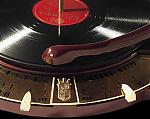
Export Philco Transitone "Tropic" Model 3010
I found this version of what has become a fairly popular and pricey Philco (51-532) radio on the auction sites. I hope that I didn't go overboard in giving a little extra due to the fact that I have never seen one for sale, or at all really. It is identical to the 532 except for bearing a different dial glass with "Tropic" written on it and a shortwave scale. The American version is AM only.
Just being shortwave threw me into impulse buy mode as anything shortwave is bringing higher prices as one would expect. The radio is in good condition with no cracks (yet) and needs the typical disassembly and cleaning. I guess I'm just wondering if anyone here knows much about them or their worth. I have seen the plain 532s regularly going for over a hundred bucks for some unknown reason. I started noticing that a couple of years ago when I first began watching the auctions. I wondered why this particular model of what was Philcos more or less run of the mill radio was hitting home runs at auction. So in this case I figured that if the common American version is at a peak, then I can't loose with a shortwave export model of which few seem to exist. Let me know what you all think Philco fans... 
__________________
"Face piles of trials with smiles, for it riles them to believe that you perceive the web they weave, and keep on thinking free" 
|
|
#2
05-11-2016, 04:56 PM
|
||||
|
||||
|
Quote:
What is the shortwave frequency range in mhz? jr
|
|
#3
05-11-2016, 06:39 PM
|
||||
|
||||
Gotta admit , I like when there is something just a bit electrically different about an AA5 , and this one using two Octals , two Loctals , and one 7 pin mini is sure different than most AA5s which usually have the same tube base type for all 5 tubes . The fact that the two Octals are the 35Z5 rectifier and the 50L6 output is nice cause the 35Y4 and 50A5 (the Loctal equals) aren't usually kicking around in everybody's tube stash the way the Octal versions are .  We want Chassis Pics !!!! We want Chassis Pics !!!!
|
|
#4
05-12-2016, 01:12 AM
|
|||
|
|||
|
Shortwave wuz in megacycles. Don't need no steenkin' megahurtz.

|
|
#6
05-12-2016, 11:17 AM
|
||||
|
||||
|
Personally I don't mind either frequency unit, but the original one hertz a bit less.
 Whatever you do, don't give me conductance figures in Siemens...That unit grosses me out.
__________________
Tom C. Zenith: The quality stays in EVEN after the name falls off! What I want. --> http://www.videokarma.org/showpost.p...62&postcount=4
|
|
#7
05-12-2016, 05:24 PM
|
||||
|
||||
|
I haven't yet received the radio, but looking at pics I see that the dial lists 16 to 60 meters. I'm by no means an expert on shortwave radio, but somehow the numbers I gave here break down into bands that range from around 5,000 to 18,000 Khz, or 5 to 18 Mhz, or Kilo or Mega cycles if you prefer.
I will post a chassis pic when I get the set and go to cleaning. I feel that the tube lineup will be different than the standard American AM models.
__________________
"Face piles of trials with smiles, for it riles them to believe that you perceive the web they weave, and keep on thinking free"
|
|
#9
05-13-2016, 02:28 AM
|
||||
|
||||
|
I have had the AM version since I was about 11 years old and I'm 47 now. It was one of my first radio buys and we kept it in the bathroom for morning listening. All these years later I cleaned it up and found that it still worked great. Some time later I noticed that whenever I saw one on praybay that there were a number of bidders and the prices were pretty high for a common radio (to me). Nothing special really. Just another AA5 Philco. Not long after that I was bringing it down for a dusting and dropped it cracking the case from front to back. I couldn't believe it! It bothered me so bad that I searched and actually lucked out on a trade for an RCA Senior VoltOhmist VTVM. That was nothing special to me, so I was back in the game. I actually put my old chassis in the better case that I got and put the other (still working) chassis in the patched together case and sold it for a few bucks. The tubes are worth what I get out of stuff like that. I'd rather see a set move on and have a life as a whole than to scrap it for tubes and a dial light.
Now I see this export AND shortwave model and I just figure it's got to be sort of special. I don't care about specific monetary value, but it is nice to know that you have something that others would like to have.
__________________
"Face piles of trials with smiles, for it riles them to believe that you perceive the web they weave, and keep on thinking free"
|
|
#10
05-16-2016, 12:15 AM
|
||||
|
||||
|
"We want chassis pics"
Ok, here it is. No loctals or octals. All miniatures and a stupid safety interlock riveted to the back by 4 rivets. At least that gave the owner(s) a reason to keep the back. It's a nice, clean chassis and like most Philcos' it works fine with all original parts minus a few of the tubes.
So now I have another matching pair of radios in the house of clutter. They are way easier to buy than to sell! That's for sure.
__________________
"Face piles of trials with smiles, for it riles them to believe that you perceive the web they weave, and keep on thinking free"
|
| Audiokarma |
|
#11
05-16-2016, 11:28 AM
|
||||
|
||||
|
Chassis looks good , a bit dusty and not at all rusty , just the way we like em !
So I gotta ask , the switch whose shaft is at the back of the chassis , behind the variable capacitor , is that the band switch or a voltage selection switch ? If it is the band switch , and if it has no voltage switch , I don't think it would have been built for European export . South American export perhaps , since they do use 110 ?
|
|
#12
05-16-2016, 09:12 PM
|
|||
|
|||
|
Quote:
|
|
#13
05-18-2016, 09:59 AM
|
|||
|
|||
|
Quote:
The IF transformers are different and larger, that the other Philco radios, of the same era. Some multi-band Philco radios at the time had 265KC if's. An interesting set to be sure.
|
|
#14
05-20-2016, 04:52 PM
|
||||
|
||||
|
Quote:
Second, the switch shaft mentioned is indeed the band switch. I have seen this type setup particularly on old Emersons' and i'm sure there are others. It wouldn't be a good idea to put a voltage selection switch at the ease of access to the end user. However. there is a piece of thin cardboard on the far side of that covering a socket with jumpers for voltage selection. I will have to look as I can't remember exactly what the schematic said, but the voltages were odd. 110VAC of course, but there is no 220V as would be needed for European use. The radio is not for Euro export though. As the "Tropic" name implies, it was for south of the border and I assume that at least then they used a different service supply. There is another hitch that I found out that sort of contradicts what I said about the "Tropic" name. There were "Tropic" radios built in England for Euro use. I never realized Philco was that worldwide of an organization. I just thought that they were a statement (out of Philadelphia) of the one time built to last craftsmanship and quality that Made In America stood for. Certainly a common folk sort of product, but a darned good one. I have owned many and most came in either working as is or nearly working. Maybe some hum or whatnot or a bad tube.
__________________
"Face piles of trials with smiles, for it riles them to believe that you perceive the web they weave, and keep on thinking free"
|
|
#15
05-20-2016, 06:37 PM
|
||||
|
||||
|
Another odd thing about the use of the name "Tropic" on the radio is that the bands that were designated back in the day for domestic broadcasting in the tropics (with fairly wide coverage at night) are not all covered by this radio.
The Tropic bands were/are: 2300-2495 kc (125 meter) 3200-3400 kc (90 meter) 4750-5060 kc (60 meter) Instead, this radio seems to be designed to receive the most popular worldwide shortwave broadcast bands.  jr
|
| Audiokarma |
 |
|
|






 Hybrid Mode
