
|
|
|
|
|
#1
 09-13-2005, 02:25 PM
|
||||
|
||||
 component lead coupling springs
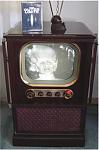
Hi everyone, I am new to AudioKarma. Been collecting old B&W round crt tv's and console AM radios for several years now. I just aquired a very nice zenith 12 porthole, going to have Scotty rebuild the 12up4 crt (open filiment) and then recap the set.
QUESTION: back in the 50's and 60's when I first cut my teeth on radio and tv electronics, somebody used to make teenee weenee little coil springs for butt end coupling the leads of resistors and capacitors. They were about 1/2" long and the ID of the spring was just big enough to fit over the lead of a resistor or capacitor. The idea was you would cut the bad component out leaving about 1/2" of the old leads on the chassis, then you slip a spring over each of the old lead wires left on the chassis, and push the ends of the leads of the new component into the open end of the springs. Then you soldered the leads and spring and made an inline butt ended connection. I don't remember who made them (maybe GC electronics?) or where I used to get them (probably a long closed electronics supplier) Does anyone remember these springs, and have any idea where I could still get some? Thanks, Bob Galanter 
|
|
#2
09-13-2005, 04:18 PM
|
|||
|
|||
|
I believe they were called "quigs" and were made by Sprague.I would imagine that you could find some at an old tv repair shop if you can still find an old tv repair shop.You could probably make your own out of 20ga buss wire.Just
use a nail as a former. Regards, Swanson
|
|
#3
09-13-2005, 05:41 PM
|
||||
|
||||
|
We have some of those springs, am not sure where they came from but I haven't used them...I just make a hook in the cut lead from where the old component was, filing it if necessary to remove oxidation, then make a hook in the new component lead, clamp both together firmly with needlenose and solder.
|
|
#4
09-13-2005, 10:08 PM
|
||||
|
||||
|
quig from the new component
I just make a spiral quig from the extra length of wire on the new component. I just hold the lead against a miniature screwdriver and wrap it around 4 or 5 turns and cut the excess. I slip that over the stub of the old wire still soldered in place. Then I squeeze it on to the stub with a pliers for solid contact before soldering. Not the perfect cosmetic repair, but very good for matching original wire lengths and not disturbing settings.
Dave A
|
|
#5
09-13-2005, 10:57 PM
|
||||
|
||||
|
I remember when you'd buy a box of Sprague Black Beauties or Orange Drops there would be a bunch of them thrown in the box along with the capacitors. The ones I remember were springs that had solder already on them and all you did was slip them on and touch your soldering iron to it.
__________________
"proximo satis pro administratio" KAØSCR
|
| Audiokarma |
|
#6
09-14-2005, 11:10 AM
|
||||
|
||||
|
Right, Randy, I found a bunch of them in some NOS Sprague caps I bought. They come in handy sometimes. The solder is already on them. I don't think they make for the neatest looking job but for some tight spots there isn't much choice. I think they called them Kwikettes.
__________________
Bryan
|
|
#7
09-14-2005, 02:06 PM
|
|||
|
|||
|
I remember these, and so many other useful aids for TV servicing, that were once so plentiful at the parts house. Like Miller replacement coils. Hard to believe its all gone now.
|
|
#8
09-15-2005, 08:47 PM
|
||||
|
||||
|
That's the name I remember, so many things from the TV service days are gone now...Howabout the local electronics jobbers themselves, always a great place to see the other guys in the business and drink coffee or a bottle of soda while you got your parts. I can remember going with my Uncle and Dad in the 50's and early 60's to some great parts houses, Harry Reed Radio Supply in Springfield Mo where I got a lot of great kits and Ebingers in St Louis, I'd just drool over all the neat test gear and neat stuff. How many can remember the hot tube pullers made out of foam rubber that kind of looked like a funnel...mine had GE Tubes on it. I took apart some old car radio vibrators and pulled the foam insulation out of them to use as tube pullers also. How many, if I said 1/4 inch nutdriver picture the Xcelite Red Handle, I've still got several, including the real long one with the magnet in the end to reach in and pull the tuner assemble out of console sets. My Dad had a friend that had a Furniture store and was an RCA dealer from around 1949 till the early 80's and when I was a kid he'd let me go down in the basement and pick out as many of the trade in sets (remember them), for free that I wanted and could talk Dad into hauling home in the 53 Plymouth station wagon, I kept his garage full and with Dads help learned an awful lot about electronics. At 10 years old I was piddling around in tube type TV's with B+ voltages that could kill but Dad taught me how to be careful around HV, lessons that still serve me well. I used Dad's Triplett tube tester, Eico signal tracer, and Eico 249 VTVM all of which I still have. Dad got me interested in electronics and I've enjoyed nearly every day of it, Dad's been gone for 12 years now and not a day goes by that I don't hear some bit of his wisdom run through my mind. I still remember my Mother questioning him about me working on TV's and Radios at that young age and Dad telling her, he knows how to be careful and he knows what can hurt him....he'll be fine. Sorry to ramble but your quickettes tipped over my memory barrel......
__________________
"proximo satis pro administratio" KAØSCR
|
|
#9
09-15-2005, 09:31 PM
|
|||
|
|||
|
There is still one of the old time electronics stores in my area, they still have racks of old stock tubes behind the counter. A while back I was talking to the owner about how he used to buy 6GH8's by the case. I have been going there for over 30 years and I remember when he had a row of tube testers in the back of the store for walk in's.
|
|
#10
09-16-2005, 06:25 AM
|
||||
|
||||
|
I can just remember the very end of the tube era in electronics...I started working on radios when I was 8 or 9 yrs old, about 1986 or so and Radio Shack still had their tube tester and some tubes although some like the 50HK6 I needed had to be ordered. You could still pick up a needle for a 1950's RCA at Ratshack.
About that time I correctly diagnosed a bad electrolytic as the cause of hum in a 1950's GE radio; my dad took me to Fox international in Cleveland OH and they said they did not carry that dual electrolytic anymore. I was pretty sad as I thought there was no way to fix it. They did not think to recommend using two single value caps...I didn't figure that out till several years later. Thank goodness for the World Wide Web...I can remember back before the internet really became widely used and your information resources were pretty much limited by what you could find at the local library and parts were much harder to order for old equipment. I think the actual availability of parts and data for working on tube equipment is actually better now than in the mid '80s. We just put new 7868 tubes in a jukebox...just a couple of years ago all you had to go on was NOS for those tubes if you could find them. Last edited by Chad Hauris; 09-16-2005 at 06:28 AM.
|
| Audiokarma |
 |
|
|








 Hybrid Mode
