
|
|
|
#1
 02-17-2011, 12:39 AM
|
||||
|
||||
|
Remove Paint from Bakelite? Farnsworth AT-10 (1940)
The Farnsworth logo seduced me. I believe this is Farnsworth Television and Radio Corp. model AT-10 (1940). There's a sister model, ATL-10, but I don't know what the difference is. Rider's has a single page for a dozen AT-XX and ATL-XX models with four different C1-X chassis. This album shows the new acquisition and photos of original-appearing AT-10 and ATL-10.
https://picasaweb.google.com/coldrb/...eat=directlink Does anyone know if this is Bakelite or plastic? It smells like Bakelite, and decoradios.com shows it as Bakelite, but radiomuseum.org indicates "modern plastic." Does anyone have experience with removing oil-based paint from Bakelite? I can test paint stripper on the inside of the chassis. I'd like to recover it's original finish. If not, maybe I can find some Bakelite-colored paint. I'd also like to know if anyone has a photo of the back of a similar model. Eventually I'll need to make a facsimile of the original back. 
|
|
#2
02-17-2011, 07:04 AM
|
||||
|
||||
|
If it's from 1940-ish it's 99% sure it's bakelite. You can rub a little 409 or Scrubbing Bubbles on a paper towel on a clean inside brown surface and if the towel comes up yellowish it's bakelite. It was common for manufacturers to offer their bakelite cases either plain or painted white/ivory in those days. This one might have been ivory to start with and got repainted, or the surface may have been worn or damaged in some way and so was painted? If it were mine, and it looks nice from the picture, I think I'd leave it that way since I wouldn't know what I'd find under the paint. Just my humble opinion.
__________________
Reece Perfection is hard to reach with a screwdriver.
|
|
#3
02-17-2011, 07:30 AM
|
||||
|
||||
|
Reece beat me to the punch about your radio!
I'd be concerned that once the finish would be removed that there would be sand scratches or other blemishes plus you may not be able to remove all the paint easily from every little crevice.
|
|
#4
02-17-2011, 11:12 AM
|
||||
|
||||
|
It's probably Bakelite and that's probably the original ivory paint. It was very common, as noted, to offer radios in either plain Bakelite or painted ivory.
Bakelite won't be hurt at all by paint stripper. My experience is that the Bakelite surface under factory paint is often wonderful, since it has been protected by paint all those years. It will be shiny, just like the unpainted models that were also sold. Think about it -- the factory didn't have separate assembly lines for painted and unpainted Bakelite cabinets. They just made, say, 100 identical cabinets and then painted 50 of them. My Farnsworth GT-051 ( http://antiqueradio.org/farn01.htm ) had badly damaged factory paint that I removed with stripper. It looked so good after stripping that I decided to leave it unpainted (below). If your paint looks good, I'd leave it alone. On the other hand, it's your radio, and if Farnsworth also sold that same model unpainted, it's not like you'd be creating a monstrosity by removing the paint and pretending that it was originally sold au naturel. One drawback of leaving my set unpainted is that the knobs and dial no longer match the body color as they did before. Phil Nelson Phil's Old Radios http://antiqueradio.org/index.html 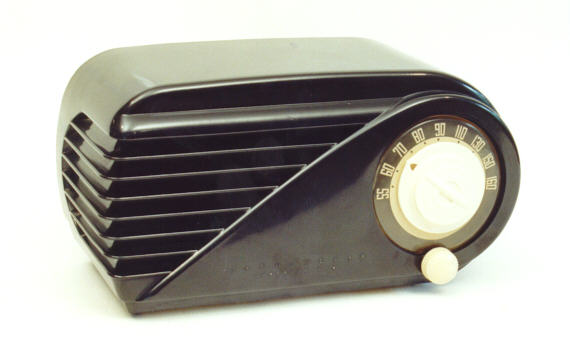
|
|
#5
02-17-2011, 12:40 PM
|
||||
|
||||
|
I believe the paint is recent because of it's pristine condition and it's a satin finish. Small paint chips on the knobs show them to be Bakelite. If the cabinet is unacceptable, I can always repaint it. Thanks to all.
- Winky
|
| Audiokarma |
 |
|
|


 Linear Mode

