
|
|
 |
|
|
Thread Tools | Display Modes |
|
#1
 04-30-2008, 03:41 PM
|
||||
|
||||
|
Line-cord antenna coupler - safe on new cord?; tube substitutions
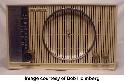
I just reinstalled the line-cord antenna coupler from the old power cord onto a new one on my Zenith MJ-1035. The coupler fits the new cord and seems to work well, allowing the radio to receive all local stations in my area, but I am concerned about safety issues (that the cord could short to the coupler and cause a fire hazard, or destroy the FM front end by means of feeding line voltage directly to the grid of the RF amplifier tube [1/2 of a 17JK8] should the cord's insulation fail). I put a cardboard insulator in the clip per the original design. Did I miss anything, such as isolation networks between the radio's antenna terminals and the input of the FM tuner? The cord looks reasonably safe; in fact, I could see no cracks or bare spots on it.
BTW: The question I am about to ask has been in the back of my mind for some time. How is this line-cord coupler supposed to work? Obviously, it isn't connected directly to the AC power cord; moreover, there is a cardboard insulator between the cord and the coupler, so there is no actual contact between the coupler and the cord. The only thing I can come up with is that the coupler somehow connects the antenna terminal of the radio to the AC cord by means of capacity coupling. BTW (2): I am thinking of eventually retubing my MJ-1035 from the ground up, even though the radio works rather well now (except for an intermittent volume control). I can probably find replacements for most of the set's eleven tubes, but at least one could be difficult to find (the 17JK8 FM RF amplifier/converter). Is there a direct substitute for the 17JK8 that might be more readily available? Another tube that might prove difficult to find is the 50EH5 audio output (the MJ1035 has two, one for each stereo channel). Would a 50C5 (which is still readily available) be a direct substitute for the 50EH5? Thanks in advance.
__________________
Jeff, WB8NHV Collecting, restoring and enjoying vintage Zenith radios since 2002 Zenith. Gone, but not forgotten. 
|
|
#2
05-01-2008, 10:02 AM
|
||||
|
||||
|
The fix you describe with the line cord coupler should be just fine, provided the cardboard liner extends a little beyond the ends of the metal clamp, preventing any contact of a sharp metal edge with the cord insulation.
You're right, the device capacitively couples the line cord for use as an antenna. Probably on the order of 50pf or so--plenty to pass a VHF signal in the FM100 band frequency range. The 50C5 should work fine in place of the 50EH5, IIRC. The 17JK8 might prove to be more of a problem subbing out.
|
|
#3
05-01-2008, 10:10 AM
|
||||
|
||||
|
I've made new couplers by wrapping several turns of 20-22 ga. wire around the line cord. But you know what, 4.5 to 5 feet of loose 18 gauge single conductor wire connected to the antenna terminal will do fine in most cases. I pick up Memphis stations clearly (90 miles away) with that arrangement.
|
|
#4
05-01-2008, 10:44 AM
|
||||
|
||||
|
As far as tubes... I test 'em, replace weak ones, and if it doesn't make a noticeable difference, I put the weak one back...
 I'd have a replacement set of tubes, but I wouldn't necessarily CHANGE any... Although I HAVE changed god tubes when they weren't the original brand and I had one that was. I'd have a replacement set of tubes, but I wouldn't necessarily CHANGE any... Although I HAVE changed god tubes when they weren't the original brand and I had one that was.17JK8 will cost you $1.80 at Antique Electronic Supply. If you're desperate, a 12DT8 would probably work, or a 17EW8... but it is an oddball tube, with two unequal triodes. And 50EH5 costs half of what a 50C5 costs... If the cord clamp make you nervous, wrap the cord with Nomex or similar tough insulating material where it goes through it.
|
|
#5
05-01-2008, 11:59 PM
|
||||
|
||||
|
Quote:
Thanks for the info on the tube substitutions and the line-cord antenna. I didn't realize that, in a pinch, the two tubes you mentioned as subs for the 17JK8 (the 12DT8 and 19EW8) would work, especially since the two substitutes have 12- and 19-volt filaments respectively. However, you did say that the 17JK8 is unusual in that it has two unequal (I read this as dissimilar) triodes, which tells me that a substitute for this tube would rarely work as well as the original. It's always better to replace tubes with the same ones which were originally supplied with the unit, anyway. Substitutions often work, but seldom as well as the tube for which the circuit was designed. I did not realize, either, that a 50EH5 would actually cost less than a 50C5, at least at Antique Electronic Supply; I thought it would be vice-versa, since the 50C5 has been around at least since AC/DC radios used miniature tubes. In fact, until I got my MJ1035, I had never even heard of a 50EH5 tube and was, admittedly, surprised when I found two such tubes in my set (I had expected to find 50C5s). The Sams Photofact for my MJ1035 (set 715, folder 9) shows two 50C5s, one in each output stage; however, that particular Photofact is dated 4-65 and could well be for a later version of the radio, perhaps the MJ1035-W1. Mine is model MJ1035-1, which has the RCA phono input jacks on the rear panel; further, the original MJ1035 had the radio-phono switch near the jack panel at the top rear of the set, whereas the MJ1035-1 (and possibly the MJ1035-W1 as well) had the phonograph input switch as a fourth position on the band switch, with the RCA jacks for the phonograph input at the lower left-hand rear corner of the cabinet, below the FM antenna terminals, looking at the front of the radio.
__________________
Jeff, WB8NHV Collecting, restoring and enjoying vintage Zenith radios since 2002 Zenith. Gone, but not forgotten.
|
| Audiokarma |
|
#6
05-02-2008, 08:34 PM
|
||||
|
||||
|
50EH5 is a higher gain tube than 50C5...it was often used in record players with only a single tube amplifier. I would just keep using the original tubes until such time as the reception appears weak...radios are pretty forgiving of weak tubes unlike how TV's can be.
|
|
#7
05-05-2008, 02:30 PM
|
||||
|
||||
|
Quote:
I would think there would have had to be at least two tubes in any phonograph that used a single 50EH5 as an amplifier stage, the second tube being a 35Z5, 35W4 or similar type rectifier (with a dropping resistor to take up the remaining 32 volts) unless, of course, a selenium power rectifier was used. Also, one other problem with one-tube phonos that used the 117Z3 could arise if the tube developed a heater-cathode short. Since the tube filament is connected directly across the AC line, such a short would blow a fuse or kick out the circuit breaker immediately upon turning the set on or even plugging it in (the switch need not be on), and could burn out the phonograph motor at the same time by virtue of putting the full line voltage across the 90-volt winding unless the circuit was fused. I doubt very seriously, however, if any of the one-tube phonos using line-operated tubes had line fuses, although goodness knows it would have been a good idea from a safety standpoint. As to your suggestion on leaving the original tubes in my MJ1035 as long as the radio works well, that is exactly what I intend to do (as I mentioned in a reply to Tom Bavis's post on that subject). The radio seems to work well, except for an intermittent volume control, so I will leave everything alone until or unless a tube goes or the radio develops some other problem. The adage "If it isn't broken, don't fix it" certainly applies here. Well-meaning attempts at "repairing" something that is basically working have ways of going terribly awry, often leaving the device with more problems than it had before the "repairs" were begun.
__________________
Jeff, WB8NHV Collecting, restoring and enjoying vintage Zenith radios since 2002 Zenith. Gone, but not forgotten.
|
|
#8
05-05-2008, 03:02 PM
|
||||
|
||||
|
Quote:
I've seen plenty of those record players from the '50's and '60's. Most of the mono units used a 25L6 tube in series with a 90 volt phono motor. The rectifier was usually selenium. Some of the later ones had a silicon rectifier. I've seen some stereo models that used two 60FX5 tubes in series. The main thing I dislike about these one tube record player's is that they require a high output cartridge (2 to 3 volts) to drive the tube. The better models used a lower output cartridge and had a preamp tube ahead of the output. The only portable record players I've seen with fuse protection were the classroom models (Califone, Newcomb, Audiotronics) and the "talking book" record players for the blind furnished by the library of congress. Some of those had a circuit breaker instead of a fuse.
|
|
#9
05-06-2008, 08:20 AM
|
||||
|
||||
|
Quote:
Most of the Califones and Newcombs I encountered had a transformer power supply, but they may have made them both ways.
|
|
#10
05-06-2008, 08:25 AM
|
||||
|
||||
|
Quote:
 My attitude is if it ain't broke don't fix it. My attitude is if it ain't broke don't fix it.I get nervous about subbing in different tubes in the RF front end of a receiver; often poor tracking of the tuned circuits--or sporadic and unwanted oscillations--can result. And you are right about the 50C5 vs 50EH5 price. I also noticed this about the oddball 35B5. I was tempted to rewire an old Zenith table radio to accept the more widely-used 35C5, but was pleasantly surprised at the price and availablility of the original.
|
| Audiokarma |
|
#11
05-06-2008, 07:47 PM
|
||||
|
||||
|
Quote:
I did not stop to think that the old one-tube phonographs were or could be fire or shock hazards under the right (or wrong[!]) conditions, but it's true, especially since these were transformerless chassis that were connected directly to one side of the line. I knew someone years ago who had a transformerless phonograph (whether it had a one-tube amplifier or not I couldn't tell you) that was severely damaged when water was spilled into it. I was told there was quite a bit of smoke coming from it right after the mishap, but fortunately there was no fire. Unfortunately, however, the phonograph was destroyed because of the damage to the amplifier. These small phonos may not have been worth repairing, even in the '40s-'50s, due to the sheer simplicity of the amplifier circuitry; I don't think there was much to these except the tube, a filament dropping resistor (if an amplifier tube other than a 117Z3 were used), a selenium rectifier, the loudspeaker of course, and the volume control with an AC switch on the back. BTW, speaking of the 117Z3 tube, how many one-tube phonographs used this tube as an amplifier, with a selenium rectifier? I asked this question earlier in the thread, but it was never answered. I would think that phonographs using the 117Z3 would have almost ridiculously simple amplifier circuitry consisting of little more than the tube, volume control and a speaker. Talk about an electronic circuit in which almost nothing can go wrong! The only thing that could really go wrong with these, I think, is that the tube would eventually burn out or short. Were the phonos with the 117Z3 among those that required a high-output cartridge to get any kind of volume? If a cartridge with an output on the order of 2 to three volts was needed to drive the tube to usable volume level, the 117Z3 (and probably most other tubes used in one-tube phonograph amplifiers) must not have been a very powerful amplifier to begin with.
__________________
Jeff, WB8NHV Collecting, restoring and enjoying vintage Zenith radios since 2002 Zenith. Gone, but not forgotten.
|
|
#12
05-07-2008, 12:50 AM
|
||||
|
||||
|
Quote:
I have a Califone 1410 tube record player made in 1970 that has a transformerless chassis. The tubes are 50L6 and 12AV6 and the rectifier is a silicon diode. I had a Newcomb once that was transformerless. It used two 50L6's in push-pull and a 12AV6. The rectifier was also a silicon diode. The rest that I have seen all had power transformers. Was that Califone you had one of those big monsters with the speaker in the lid? I've got a Newcomb like that and it has some power to it.
|
|
#13
05-07-2008, 08:20 AM
|
||||
|
||||
|
The one-tube phonographs sometimes used the 70L7, and sometimes used the 117L7 to dispense with the filament dropping resistor. http://www.nj7p.org/Tube4.php?tube=117L7GT IIRC the 70L7 could output considerably more than the 117L7, and they both differ in basing.
|
|
#14
05-07-2008, 06:43 PM
|
||||
|
||||
|
Quote:
My Newcomb phonograph had its front-facing speaker mounted in the cabinet; nothing in the top cover that I can remember--in fact, I don't think I ever had a cover with it since I got it. I do remember Newcomb phonos with huge external speakers; we had a few in the elementary school I attended as a kid in the '60s. Nevertheless, my own Newcomb phono had a very powerful amplifier. Wouldn't have wanted to run it wide open in the summer with the windows open (I still lived in a house at that time [early 1970s]; I'd really have a mess on my hands, however, if I ever played anything that loud in the apartment in which I live today). The neighbors probably could have heard it for blocks around at full volume.
__________________
Jeff, WB8NHV Collecting, restoring and enjoying vintage Zenith radios since 2002 Zenith. Gone, but not forgotten.
|
|
| Thread Tools | |
| Display Modes | |
|
|









 Linear Mode

