
|
|
|
|
|
#1
 06-28-2010, 08:01 AM
|
||||
|
||||
|
I suppose recording the CBS System on a camera using the NTSC scan rates would end up a strobing, artifact filled mess. That's probably why there hasn't been any posted. You can, however, get true-to-life video of a Col-R-Tel type of converter. There's one playing in the background of the video presentation of the 2003 Early TV Convention in all its flickering glory. In fact, if you pause the VHS and advance frame by frame you can see the converter step through its sequential fields: red, green, blue, red, green, blue....
Last edited by David Roper; 06-28-2010 at 08:07 AM. 
|
|
#2
06-28-2010, 12:13 PM
|
||||
|
||||
|
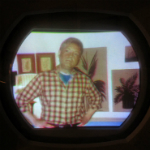
I took this snapshot of a b/w set using a CBS color converter at the last ETF convention.
 As Steve noted, a still photo basically shows you what there is to see. An average person walking by will say, "Hmm, that's a nice looking color TV." To me, the only difference from a conventional picture was some flickering. Perhaps that's more evident to some people than others, like the strobing from fluorescent lights. This converter uses a magnifying lens, so some of the reflections & whatnot in the snapshot result from that. As with all TV shots, the only way to get a true depiction of the screen image is to turn down the room lights somewhat. My memory is that this screen looked deeper and less washed-out than it appears in this snapshot. Phil Nelson
|
|
#4
06-28-2010, 01:55 PM
|
||||
|
||||
|
You may remember this thread with a DIY article from Popular Science.
http://videokarma.org/showthread.php?t=247597 Phil
|
 |
| Thread Tools | |
| Display Modes | |
|
|




 Hybrid Mode
