
|
|
|
#16
 07-23-2010, 07:41 PM
|
||||
|
||||
|
What does the rest of the tuner look like?
Phil 
|
|
#17
07-24-2010, 04:27 AM
|
||||
|
||||
|
After looking through the service info that leadlike kindly put together for me, I'm pretty sure there's no UHF on my Zenith. It looks like there's supposed to be a separate tuner assembly mounted in front of the regular one which I obviously don't have in my tv. The knob itself should have UHF channel numbers listed around the outer circumference of the knob, which I don't have either.
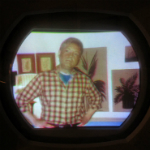
Here's what the whole thing looked like the first time I removed it from it's cabinet. Oh, and that other number was bleeding over in the picture because I was holding an LED to light it just for that photo. Properly mounted in the tv, it shouldn't show but one channel number at a time. 13 is the only instance where it projects a number other than what is shown on the gold bezel, in this case 25. Last edited by RitchieMars; 07-24-2010 at 04:32 AM.
|
|
#18
07-24-2010, 07:10 PM
|
|||
|
|||
|
Greetings from FixitLand!
Quote:
Take care, -- J. E. Knox 'The Victor Freak'
|
|
#19
07-25-2010, 02:11 AM
|
||||
|
||||
|
My tuner seems to lift straight out the top as a whole unit, but sure enough, I did find this:
 So what's the functionality of having the one UHF channel?
|
|
#20
07-25-2010, 10:34 AM
|
||||
|
||||
|
Probably the town where it was originally sold only had channel 25. UHF channels were scarce in the early days, and it's possible to construct a tuner that receives both VHF and UHF if the right strips are inserted. This article has a description of a 1953 VHF-UHF tuner. It also includes a journal article that describes the tuner in more detail.
http://antiqueradio.org/RCACT-100TelevisionDesign.htm Phil Nelson Last edited by Phil Nelson; 07-25-2010 at 01:20 PM.
|
| Audiokarma |
|
#21
08-03-2010, 01:58 AM
|
||||
|
||||
|
Pictures
I know how you guys like pictures as much as I do, so I thought I'd give this old thread a bump and put up a few of what this '53 Zenith L1846R actually looks like:
 This is one of the first pictures I actually took of it, the day I brought it home. Cosmetically, it's in great condition and the only thing I'd really like to improve upon is the simulated "gold-plating" that's worn off on the control panel, particularly on the pencil box door.  Here's a good view of everything that's going on underneath the chassis. From what I've seen, everything there is probably original which calls for a complete recap. If you spot anything here that I should pay special attention to, do let me know! I hope to get to recapping this in the near future. It's a real pain to take this chassis out, mainly due to it's weight. Removing the CRT helps, but not as much as I'd like.  This picture came out rather blurry, but I recall thinking it was one of the weirdest looking things I've ever seen inside of an electronic device. Based on what I know now, I believe this is the flyback transformer. I suppose if it were bad, I wouldn't have gotten a horizontal raster... and if it goes bad in the way that most transformers seem to do, I take it that it would get very hot, the wax would melt, and bad things would happen! When did they invent gray, glittery wax? 
Last edited by RitchieMars; 08-03-2010 at 02:05 AM.
|
|
#22
08-03-2010, 02:12 AM
|
||||
|
||||
|
I have a Zenith with similar chassis. Notice that some of the terminal strip lugs were left blank at the factory. I found that to be very considerate of them when I got around to replacing the old electrolytics.
And yes, that's your flyback, presumably a healthy one.
|
|
#23
08-03-2010, 02:31 AM
|
||||
|
||||
|
Oh, I didn't think about that, but it'll definitely be handy having those extra lugs. I have to admit, when I saw this circuitry for the first time, it was pretty intimidating. But, based on what I've worked on so far, I seem to work pretty slow and double-check everything as I go. It took me all day the first time I recapped a radio chassis, so I'd imagine it'll take me a few long nights to do this one.
I'm going to have to get a rebuilt CRT sent to me for this television, so the flyback had sure better hold up!
|
|
#24
08-03-2010, 06:03 AM
|
|||
|
|||
|
The coating on my fly was falling off so I coated it with non-acidic silicone. I bought it at the auto parts store (sensor safe). For the simulated gold you could try mohawk laquer. They have a clear with an amber tone that might work.
|
|
#26
08-16-2010, 05:25 AM
|
||||
|
||||
|
Ah, so is re-coating the flyback with silicone something I should look into doing to preserve it, or should I only worry if it's falling apart?
I haven't heard of the mohawk lacquer, so I'll have to look into that. I could just paint it, but I kinda wanted something semi-transparent or at least a bit more gold-looking than the typical metallic gold paint. Hey, what do you guys usually do about power cords? I know it's easy to replace, but I wanted to make sure I got the right kind because it hooks to the tv with a 2-prong female end plug that fits into a riveted box on the back of the tv. It's actually loose unless it's pushed up onto the male prongs inside the tv. It's a pretty flimsy interlock if you ask me. What I mean, is usually on my radios, the power cord goes into a box which is securely mounted into the back of the radio and it's two ends go securely over the prongs sticking out the back of the chassis. This TV has the plug just loose inside a box, where yes, it doesn't come out of the box because of the big ears on the plug, but it has to be guided to fit tight fit onto the prongs from the chassis. I never really liked the way that felt when I put it together, so I'd be fine without the interlock, just having the proper plug by itself without being trapped in the back of the tv, and that would help me with testing also. Where should I look to get a cord like this? I've seen old-style cords but they have no pronged ends, so I figured I might have to reuse the old one and botch it together, but...? That doesn't seem right at all. Last edited by RitchieMars; 08-16-2010 at 05:55 AM.
|
 |
| Thread Tools | |
| Display Modes | |
|
|




 Linear Mode

