
|
|
|
#1
 02-21-2011, 12:27 AM
|
||||
|
||||
|
Console TV or stereo kill switch
Technically this is a boring modification, but I suppose this feature was too expensive to put into TV sets in cabinets with doors. "Finished watching TV? Just shut the doors and the set turns itself off! And tomorrow, when you want to watch TV again, just open the doors and the set turns on!" It does sound like a boring feature...
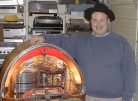
 Anyway, using a "normally closed" click switch I got out of a microwave oven, I installed this feature in a console audio system. The insert in the picture shows some sheet plastic I formed to act as a cover. Here the powerline wires are routed to the back of the console. For a TV with sideway opening doors you'd probably use some sort of mechanical arrangement to have a rod that passes thru a hole to then activate the switch.
__________________


|
|
#2
02-21-2011, 01:11 PM
|
||||
|
||||
|
I figure the main reason this wasn't done was to save damage - nothing like a couple of power cycles to kill equipment, and the thermal stress would kill tube heaters pretty quickly if the switch was toggled a few times in rapid succession.
Also, I don't think microswitches became common until a bit later in the centry...
|
|
#3
02-21-2011, 05:31 PM
|
||||
|
||||
|
A lot (most?) TV's and phonos with doors or lids put a pilot light on the front of the cabinet, sometimes down low, so that you'd see it was on with the door(s) closed.
__________________
Reece Perfection is hard to reach with a screwdriver.
|
|
#4
02-21-2011, 08:32 PM
|
||||
|
||||
|
Quote:
Rapid cycling of the electronics sounds like what they were trying to avoid by not having a TV kill switch. Then again, the push button type of switch they used for the light might not be able to handle the higher loads of the TV.
|
|
#5
02-21-2011, 08:41 PM
|
||||
|
||||
|
I have a Magnavox 21" B/W wooden table model TV with a switch like this. The controls are on the top under a hinged control panel, and when the panel is closed, the set shuts off. Also Micro Switch brand and similar switches have been around a long time, at least since the early 50's. They were used in Wurlitzer jukeboxes of the time.
|
| Audiokarma |
|
#6
02-22-2011, 09:51 AM
|
||||
|
||||
|
Quote:
Since you're dealing with quite a bit of current, you'd want something more solid like a throw switch, especially since micro-switches are more susceptible to contact "bounce". To solve that you'd need a low voltage supply to the switch and a relay of some sort to do the actual switch-on... more parts, more cost etc. I'd also wonder about the safety of a straight up mains switch like this... a tech servicing the cabinet, forgot to unplug it, but it's off, tilts the cabinet a bit, door falls open and *ZAP*. Or, as in above, you're running 120V through a commonly-accessed area, more potential for the customer to get zapped if wire frays or becomes exposed etc.
|
|
#7
02-22-2011, 04:51 PM
|
||||
|
||||
|
Quote:
Quote:
__________________
|
|
#8
02-22-2011, 07:17 PM
|
||||
|
||||
|
The Truetone Console I just got has a Mercury switch attached to the door, when the CRT tilts down into the cabinet the TV turns off.
There is a plug on the chassis for the switch, it looks exactly like an auxiliary 120v socket.
|
|
#9
02-23-2011, 10:51 AM
|
||||
|
||||
|
Quote:
The power factor of transformer sets is surprisingly good though.
|
 |
| Thread Tools | |
| Display Modes | |
|
|







 Linear Mode

