
|
|
|
#1
 12-19-2011, 12:40 PM
|
||||
|
||||
 RCA CTC4: the barberized Seville. Update: it is ALIVE, with video and sound!!
Last weekend I visited Nick to get that Zenith poster, and exchange a couple more items, and he mentioned that he had a CTC4 he wanted to sell.
To make a long story short I ended up buying it. This I believe is the Seville model minus the legs. 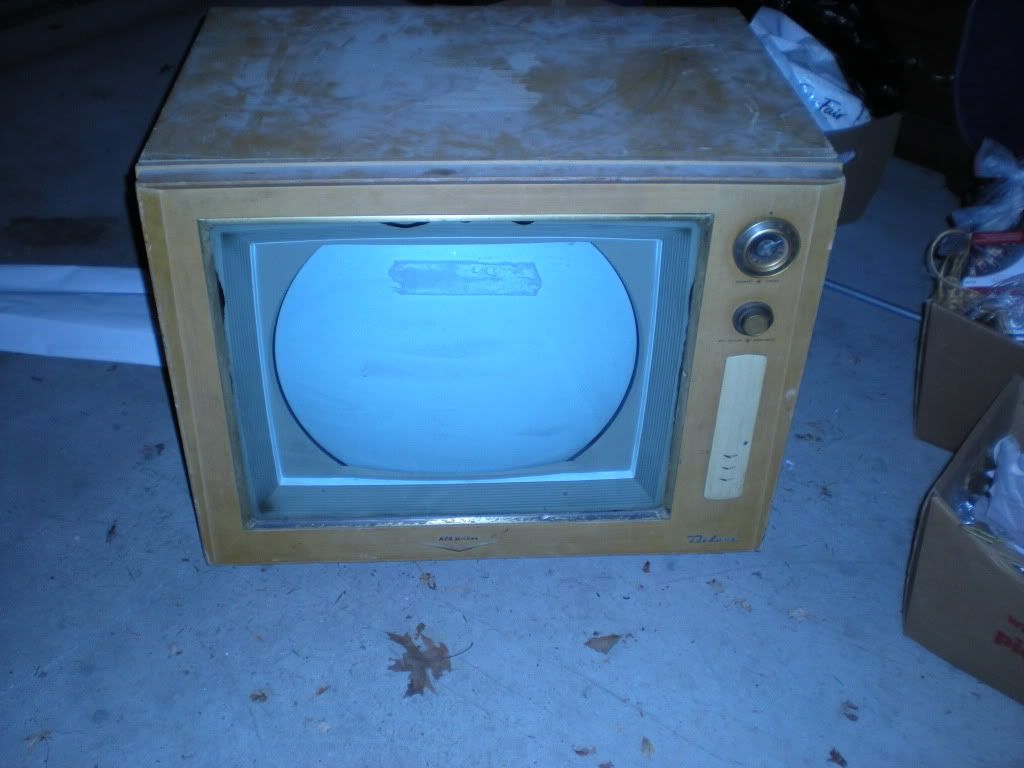 Whom ever owned it before Nick did not take good care of it. All the tubes (aside from the CRT), the speaker, the back, the legs, the channel selector knob, and possibly other stuff are all missing. The 21AXP22 has the PNGOD (Purple Neck Glow Of Death) so it seems that I'm going to have to use a 21FJP until I come upon sufficient luck and or resources to bring a good 21AXP22 into my possession.  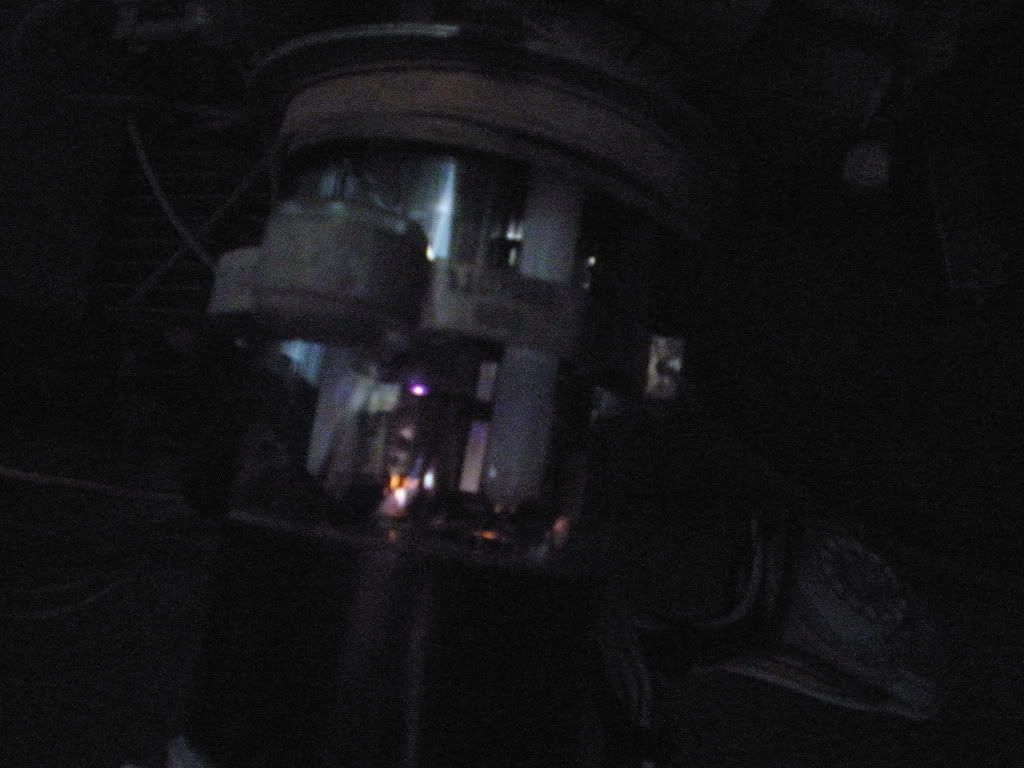 A nice 21FJP22 with the strongest emission of any of my roundys came with the set so I have a strong jug to put in for the time being.  One of the IF cans got knocked off the board, but miraculously the board appears to be just fine. I'm going to go down in a few minutes and start examining the set in day light (read pulling the chassis and examining it). Here is a link to some pictures of it... http://s1095.photobucket.com/albums/...lond%20finish/ I've clearly got my work cut out for me, but still I can't suppress that "Woo Hoo! I finally have got a CTC4!   " feeling. " feeling.
__________________
Tom C. Zenith: The quality stays in EVEN after the name falls off! What I want. --> http://www.videokarma.org/showpost.p...62&postcount=4 Last edited by Electronic M; 09-27-2024 at 07:45 PM. 
|
|
#2
12-19-2011, 01:06 PM
|
||||
|
||||
|
Nice set!!!!!!!

|
|
#3
12-19-2011, 01:24 PM
|
||||
|
||||
|
Thanks!
This was RCA's second large screen color chassis, and their first "simplified" color chassis. And considering that modern color TV started here in 1954, this 1955 model is super rare (not taking the less common blond wood cabinet finish into account).
__________________
Tom C. Zenith: The quality stays in EVEN after the name falls off! What I want. --> http://www.videokarma.org/showpost.p...62&postcount=4
|
|
#4
12-19-2011, 01:27 PM
|
||||
|
||||
|
Too bad about the CRT.
 Will be nice when done! Will be nice when done!
__________________
"It's a mad mad mad mad world" !! http://www.youtube.com/user/mwstaton64?feature=mhee
|
|
#5
12-19-2011, 05:00 PM
|
||||
|
||||
|
isnt there some way to pull a vacuum on a crt that took air instead of tossing it? there must be a way, theres ways around everything about these vintage tvs. maybe a pinpoint torch and a way to attach a line to evacuate. i dont know just thowing it out there as i would attempt it with a rare crt b&w or color because when there gone they are gone for good, no loss if it dont work a plus if it did.
|
| Audiokarma |
|
#6
12-19-2011, 06:48 PM
|
||||
|
||||
|
Rebuilding is the only way to fix it.
Too bad about the tube, I was hoping maybe something had gone wrong with my tester. Time to begin recapping, then stick that glass tube in it!
__________________
Evolution... 
|
|
#8
12-19-2011, 07:36 PM
|
||||
|
||||
|
Timmy, from my memory I believe that folks have pulled vacuums on these leakers and had them return to being too gassy to use within months. I have NO intentions of throwing this tube out. There is a group (I know Bob Galanter is a part of it) trying to come up with a way to seal the leaks on 15GP22 and 21AXP22 CRTs so that they can be rebuilt by a professional rebuilder in France, and last a long enough time to financially merit the cost of the rebuild process. I would probably not be able to afford to have it rebuilt for several years anyway, even if the process is perfected tomorrow.
I'm not crazy enough, and don't have the equipment to try redneck engineering that tube back to life in the way you purpose. I would like to ask someone who is more knowledgeable than me, how a tube can still have enough vacuum for the heaters not to burn open, but yet have enough gas inside to fail to work....Shouldn't the getther be able to deal with the gas? I pulled the chassis about an hour ago and brought it upstairs for examination and some work. here are the chassis shots... 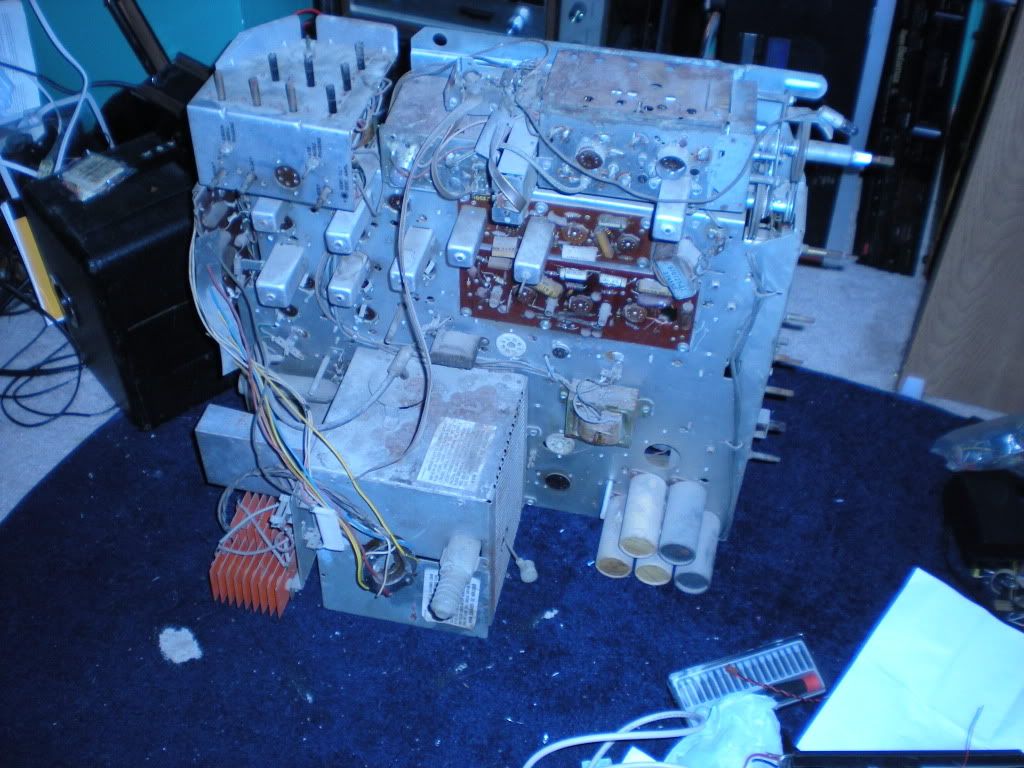  The fly looks good with only a pinch of wax dripped. 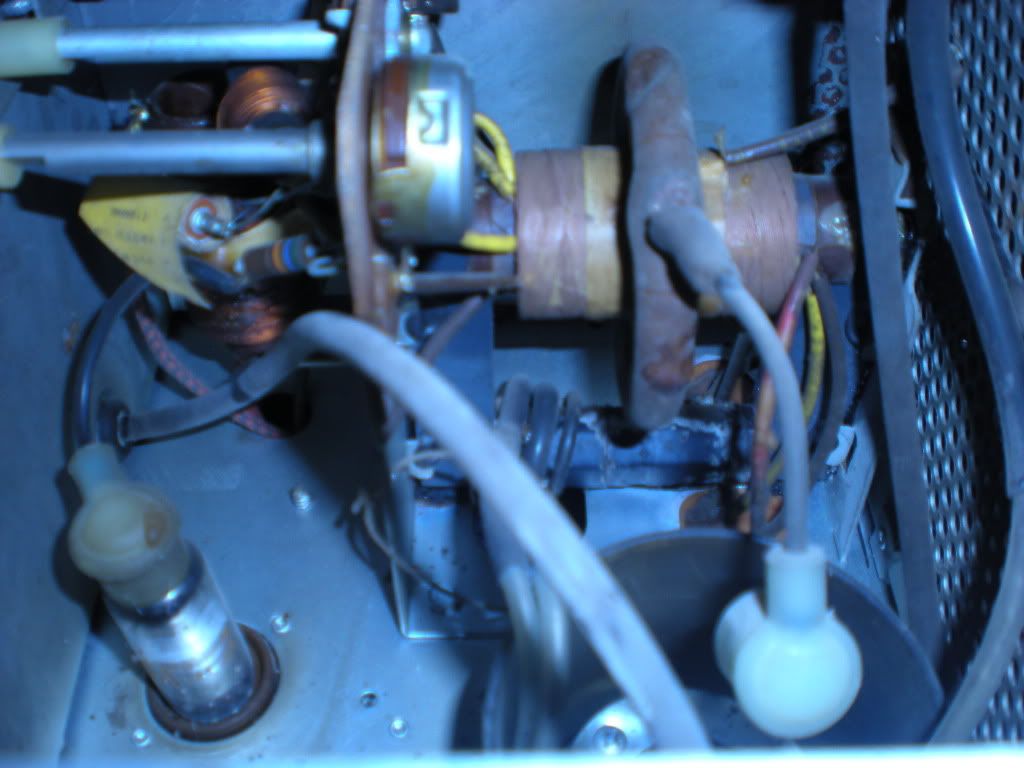  A fuse was blown and a replacement was slapped in at some point in the past. 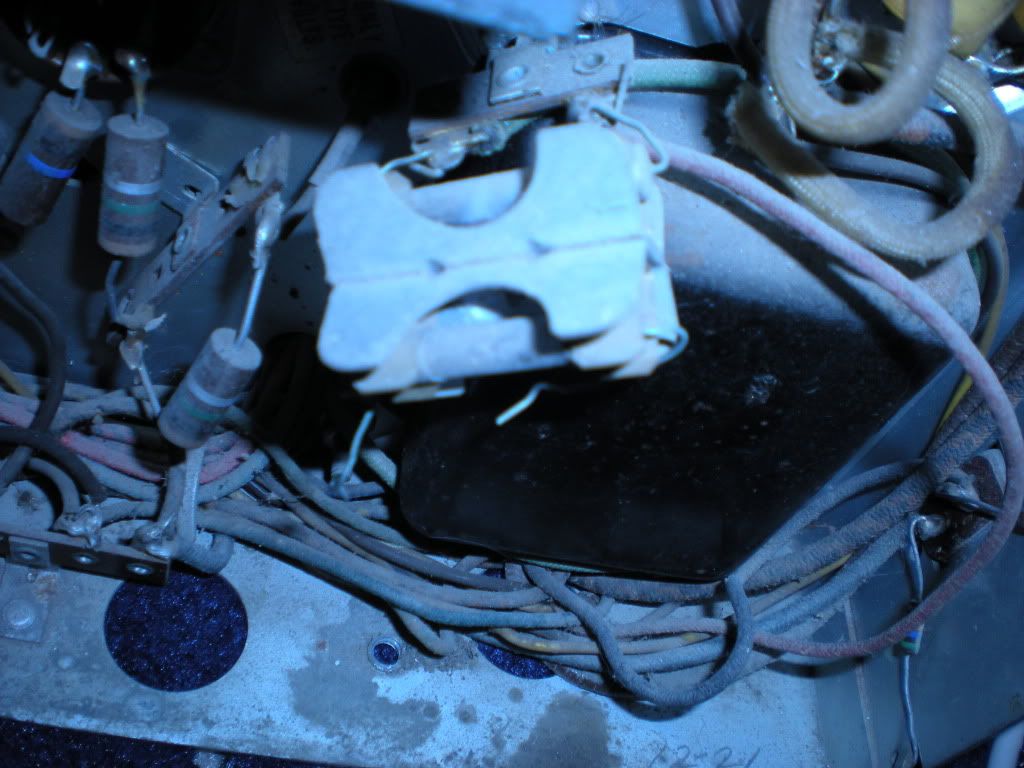 And this just looks like a hack job. 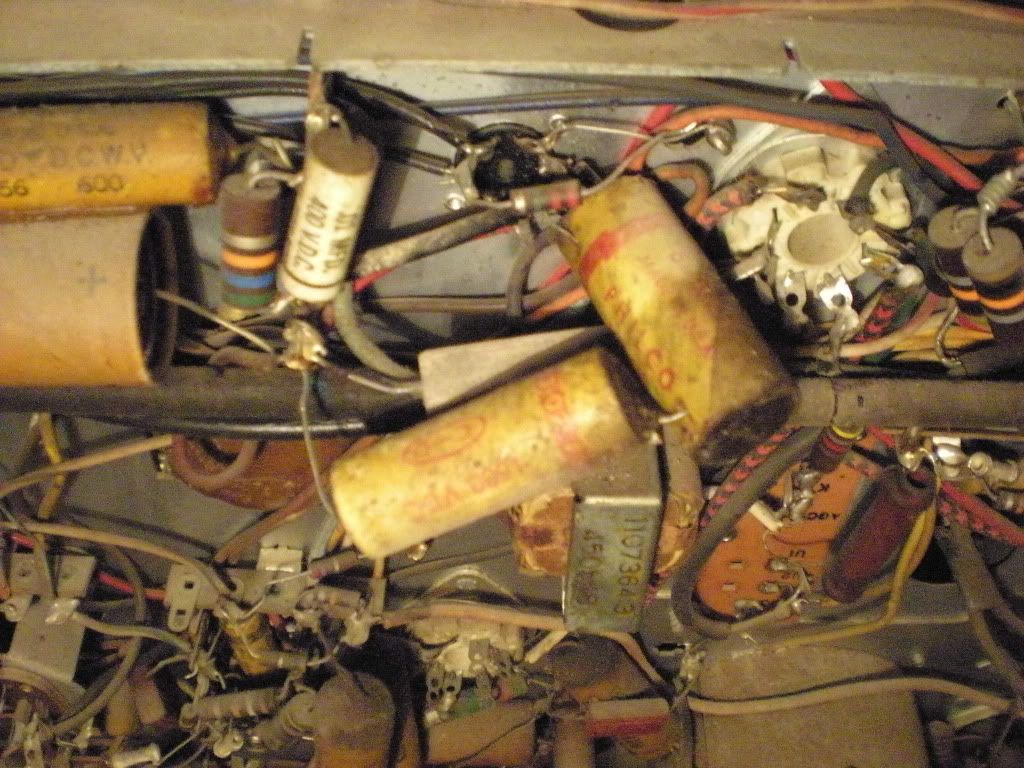 The set uses a metal color crystal. 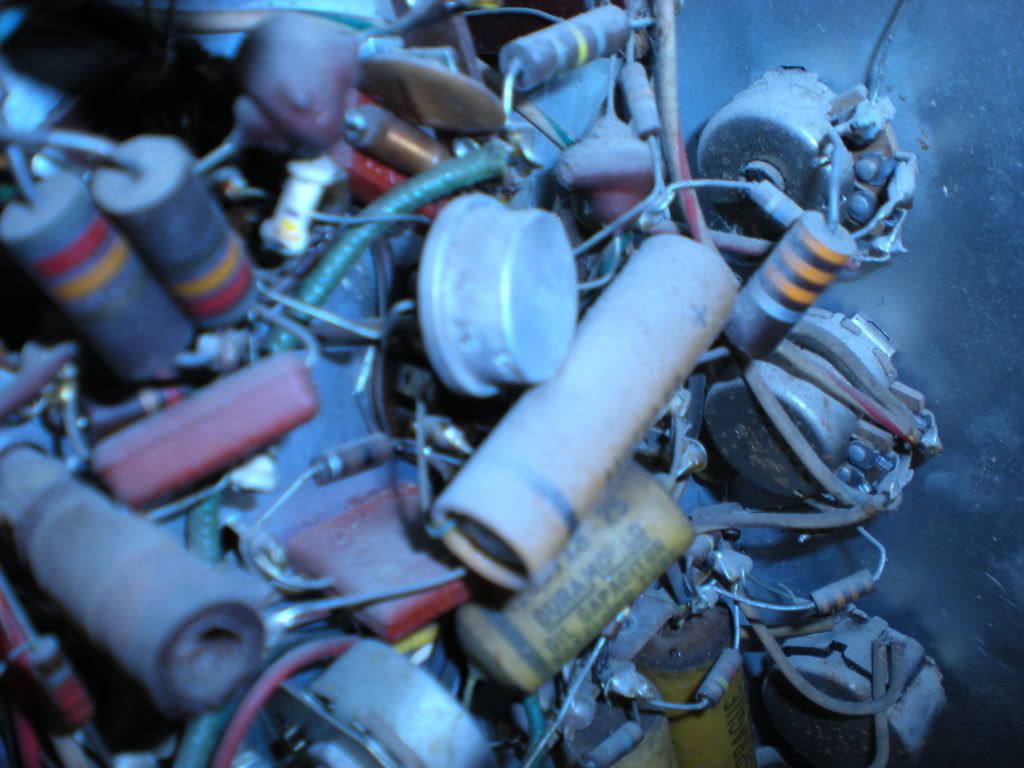 There is minor damage to the IF board where the transformer got busted off. 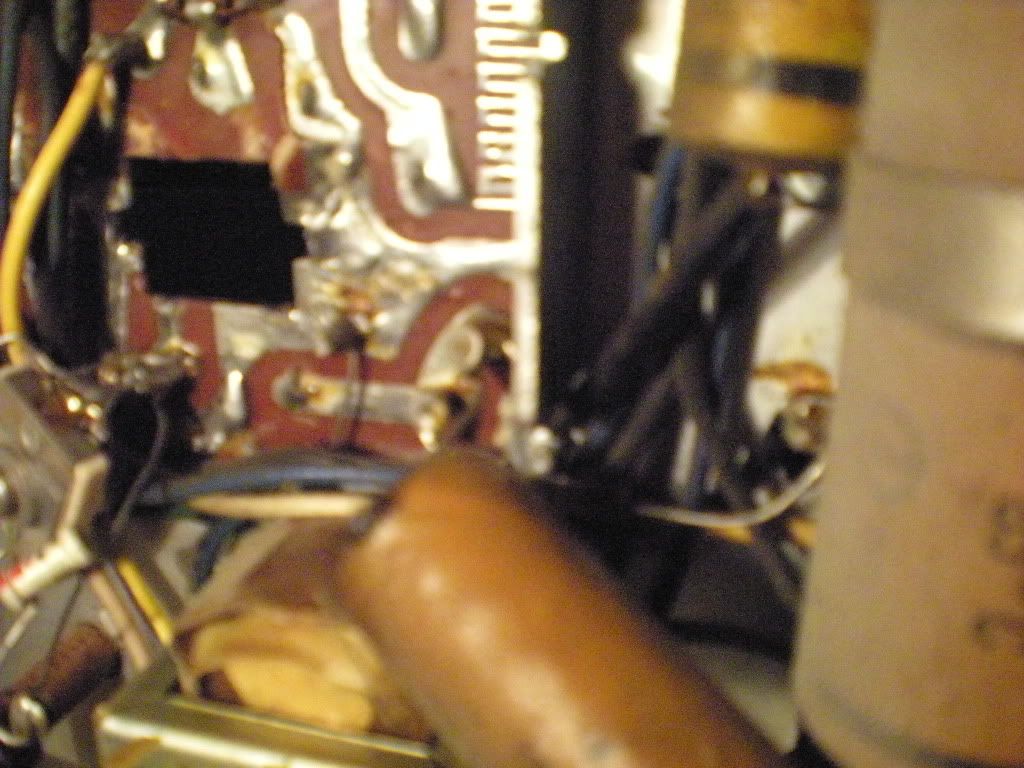 One of the CRT socket wires is snapped off. 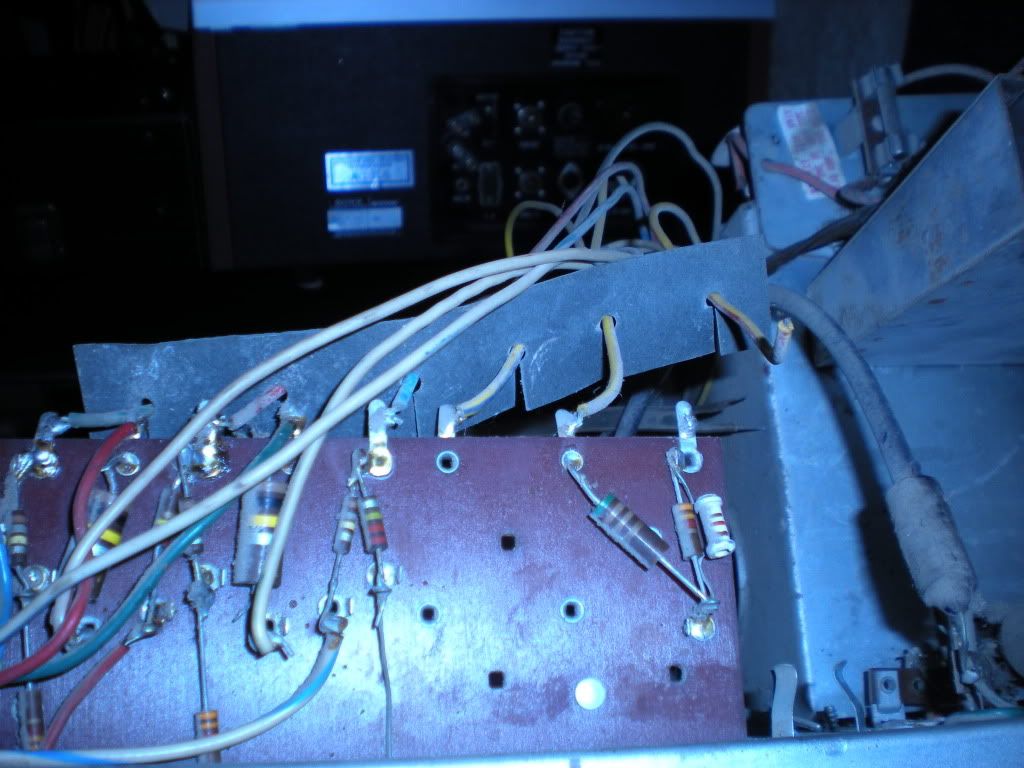 I see there have been more replies while writing this. Nick, I accidently left some of the controls on my tester up and when I connected it I got lots of purple quickly and the tester made some new sounds.... I quickly dialed everything back and did the test to confirm what the light show told me. Jr, all the heaters work, but I haven't seen the getthers yet because between about 57 years of grime and the neck hardware they ain't visible right now.
__________________
Tom C. Zenith: The quality stays in EVEN after the name falls off! What I want. --> http://www.videokarma.org/showpost.p...62&postcount=4
|
|
#9
12-19-2011, 08:33 PM
|
||||
|
||||
|
Congratulations on your acquisition of your first CTC-4, I am personally yet to get me a roundie colour set of any kind as they aren't cheap to ship to Australia haha lol, the day will eventually come when I can budget for one and when I do Videokarma will hear about it!
Anyhow best of luck with your restoration work, look forward to seeing a photo finish working CTC-4!!!
__________________
AUSSIE AUSSIE AUSSIE!!!!! OI OI OI!!!!!
|
|
#11
12-19-2011, 09:57 PM
|
||||
|
||||
|
4's are fun!
A few shots off my Haviland.
__________________
stromberg6
|
|
#12
12-19-2011, 10:20 PM
|
||||
|
||||
|
Far out - What a set
 Seeing that chassis makes working on black and white sets seem rather basic Good luck with your restoration of this beast! Cheers. Seeing that chassis makes working on black and white sets seem rather basic Good luck with your restoration of this beast! Cheers.
__________________
Visit my Vintage TV & Radio Page - http://nzvintagetvradio.blogspot.com/ My YouTube Link - http://www.youtube.com/user/glenz1975?feature=mhsn
|
|
#13
12-19-2011, 11:07 PM
|
||||
|
||||
|
Quote:
Thanks for the encouragement all. A humorous development is that the main power fuse that had a new one jumpered over it was actually replaced by one less than half the current rating of the original, and that device used to jumper it had a cracked rivet causing an open circuit. The replacement fuse was good so I have to doubt that this set saw any use since the time that the original fuse popped.
__________________
Tom C. Zenith: The quality stays in EVEN after the name falls off! What I want. --> http://www.videokarma.org/showpost.p...62&postcount=4
|
|
#14
12-20-2011, 03:53 PM
|
||||
|
||||
|
Gassy
"I would like to ask someone who is more knowledgeable than me, how a tube can still have enough vacuum for the heaters not to burn open, but yet have enough gas inside to fail to work....Shouldn't the getther be able to deal with the gas? "
The kind of leak we see in must gassy crt's is not a catastrophic leak, but one that took perhaps 50 years to get to the point where there are enough air molecules in the tube to interfere with the flow of electrons. Through our experiments with our Helium leak detector, we have terermined that the leaks almost always are caused by a microscopic defect somewhere on the weld, where the front and rear sections of the envelope have been weleded together. We also discovered that something as simple as oil from you fingers can temproarly seal the incredibly small leak. If left long enough, (maybe another 50 years) it is possible that eventually enough air will infiltrate the tube to enable the burning out of the filiments. There is no way that we have yet discovered to repair a gassy tube, except to rebuild it. And unless you locate the leak and repair it, the likelyhood of the rebuild working is very low. You have to remember that the higher the vacuum inside the tube is (10 -6 torr is where you need to be for a tube to function) the stronger vacuum is that is trying to suck the air into the tube. As the vacuum inside the tube degrades (say down to 10 -4 torr) the vacuum inside the tube is pulling less strong on the air outside the tube. So eventually you get to a point where the vacuum inside the tube is not pulling hard enough to suck air into the tube through the microscopic leak in the weld and you reach an equibrilium and no more air enters the tube. At that point you are left with a tube that has too much air inside it to function, however there is still a significent vacuum inside the tube. Enough to still make it implode if struck. In our experiments with the 15GP22 I probably removed the gun assemblies from at least a dozen tubes. Every one still had a huge amount of vacuum inside, but still the vacuum was nowhere good enough for the tube to function. Getter flashes are only intended to clean up the remaining air molecules left inside the tube after you reach 10 -6 torr. That would be 1 molecule in 1,000,000. 10 -6 torr is 1/1,000,000 of an atmosphere. A very good standard grade laboratory vacuum pump, like a Welch 1402, is capable of pulling a vacuum of .010 torr. A vacuum good enough to make a crt work needs to be 10,000 times better than a mechanical pump is capable of. To get a vacuum good enough to make a crt work, you need a diffusion pump or a turbo pump and the tube has to be elevated in temperature to around 600F to excite the gas molecules inside the tube to a point were they can be traped and pulled out of the tube by the diffusion or turbo pump over a period of several hours. So given the kind of vacuum needed to make a crt work, if the leak took 50 years to polute the tube, you can see how incridebly small the actual leak is. We are talking about a leak in a weld that is likely not much larger in size than an atom of Ozygen or Nitrogen. We use helium as the trace gas in the helium leak detector process, because the helium atom is many times smaller than an atom of Oxygen or Nitrogen (which is what composes the majority of gas in our atmosphere) and because the He atom is so small it can more easily get sucked through the microscopic leak so we can find the location of the actual leak. Ideally the best course to fix a leaky tube would be, cut the old gun off, locate the leak on the weld using a Helium leak detector, figure a way to fix the leak (that is the big issue), then retest the tube with the He leak detector to make sure you fixed the leak, and lastly to install a new gun assembly and evacuate the tube and seal it off. FYI we have already tried re-welding, and that only created more leaks than it fixed. We are presently thinking about either nickel plating over the weld, or using frit glass. But the project has come to a screeching hault because the only rebuilders left are located in France.
__________________
Vacuum tubes are used in Wisconsin to help heat your house. New Web Site under developement ME http://AntiqueTvGuy.com
|
|
#15
12-20-2011, 04:50 PM
|
||||
|
||||
|
Quote:
jr
|
| Audiokarma |
 |
| Thread Tools | |
| Display Modes | |
|
|











 Linear Mode

