Videokarma.org

Go Back   Videokarma.org TV - Video - Vintage Television & Radio Forums > Early B&W and Projection TV

Notices

We appreciate your help

in keeping this site going.
Reply
 
Thread Tools Display Modes
  #1  
Old 02-26-2012, 03:10 PM
Jeffhs's Avatar
Jeffhs Jeffhs is offline
<----Zenith C845
 
Join Date: Feb 2003
Location: Fairport Harbor, Ohio (near Lake Erie)
Posts: 4,035
Quote:
Originally Posted by ggregg View Post
1. Don't know where you are coming up with this post 1964 deal. I've seen plenty of fifties sets with UHF. Had a 53 or 54 Crosley with it a while back. UHF was big around here in rural areas.
The FCC declared that all television receivers made and marketed in the U. S. on or after April 30, 1964 must have UHF as well as VHF tuners. This was to ensure that all new TVs made after that date would receive the then-new UHF stations, although Blonder-Tongue and other manufacturers continued to manufacture and market UHF converters for some years after that date for those viewers with VHF-only sets (there were plenty of those still in service well into the 1970s, so B-T, et al. were in business well after the UHF mandate).

I mentioned in my post that all-channel TVs may have been available in television markets that had only UHF stations, but neglected to say that some of the first UHF stations in large cities were started in the 1950s on high UHF channels (do a search by call sign for UHF channels in any major city for more information on this), so there was a market for all-channel sets back then -- even in cities such as Chicago, New York, et al.

However, not all TV markets in this country had UHF television stations in the 1950s. I live near Cleveland and remember when the first UHF station came to the area. The year was 1965 and the station was WVIZ-TV on channel 25, an affiliate of what was then known as NET (National Educational Television), now PBS (Public Broadcasting Service). The Cleveland area did not get its first commercial UHF station (WUAB, channel 43, then an independent station, now NE Ohio's MyTV affiliate), however, until three years later.

But I digress. The point is that from 1948 (the date of the initial sign-on of WNBK-TV, the NBC affiliate in Cleveland, then on channel 4) until 1965, Cleveland had no UHF television stations whatsoever; the nearest one was in Akron, Ohio, some 60 miles southwest, and not receivable anywhere in the Cleveland area, so most residents of the Cleveland metro area had no use for UHF until WVIZ arrived in '65 -- and even then there were reception problems galore, as at the time the station was broadcasting with just one megawatt (one million watts) of power. I grew up in an eastern suburb of Cleveland which the signal did not reach worth a plugged nickel, unless large rooftop antennas were used. I remember trying to receive the station with a UHF loop antenna on my family's Silvertone 17" all-channel portable, and seeing mostly snow -- with a faint WVIZ test pattern showing in the background. The situation did not change until we got cable, in 1982.
__________________
Jeff, WB8NHV

Collecting, restoring and enjoying vintage Zenith radios since 2002

Zenith. Gone, but not forgotten.
Reply With Quote
  #2  
Old 02-26-2012, 07:32 PM
ggregg's Avatar
ggregg ggregg is offline
VideoKarma Member
 
Join Date: Oct 2010
Location: Minnesota
Posts: 702
Quote:
Originally Posted by Jeffhs View Post
The FCC declared that all television receivers made and marketed in the U. S. on or after April 30, 1964 must have UHF as well as VHF tuners. This was to ensure that all new TVs made after that date would receive the then-new UHF stations, although Blonder-Tongue and other manufacturers continued to manufacture and market UHF converters for some years after that date for those viewers with VHF-only sets (there were plenty of those still in service well into the 1970s, so B-T, et al. were in business well after the UHF mandate).

I mentioned in my post that all-channel TVs may have been available in television markets that had only UHF stations, but neglected to say that some of the first UHF stations in large cities were started in the 1950s on high UHF channels (do a search by call sign for UHF channels in any major city for more information on this), so there was a market for all-channel sets back then -- even in cities such as Chicago, New York, et al.

However, not all TV markets in this country had UHF television stations in the 1950s. I live near Cleveland and remember when the first UHF station came to the area. The year was 1965 and the station was WVIZ-TV on channel 25, an affiliate of what was then known as NET (National Educational Television), now PBS (Public Broadcasting Service). The Cleveland area did not get its first commercial UHF station (WUAB, channel 43, then an independent station, now NE Ohio's MyTV affiliate), however, until three years later.

But I digress. The point is that from 1948 (the date of the initial sign-on of WNBK-TV, the NBC affiliate in Cleveland, then on channel 4) until 1965, Cleveland had no UHF television stations whatsoever; the nearest one was in Akron, Ohio, some 60 miles southwest, and not receivable anywhere in the Cleveland area, so most residents of the Cleveland metro area had no use for UHF until WVIZ arrived in '65 -- and even then there were reception problems galore, as at the time the station was broadcasting with just one megawatt (one million watts) of power. I grew up in an eastern suburb of Cleveland which the signal did not reach worth a plugged nickel, unless large rooftop antennas were used. I remember trying to receive the station with a UHF loop antenna on my family's Silvertone 17" all-channel portable, and seeing mostly snow -- with a faint WVIZ test pattern showing in the background. The situation did not change until we got cable, in 1982.

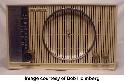
That's all fine and good but I have never lived near Cleveland. All I'm saying is that this 1954 Stromberg Carlson has UHF. I've also had a Crosley from the same vintage that had UHF. I've seen a number of other brands and models from this vintage with UHF. I don't care about the FCC rulings, when UHF came on the air, etc. I know many sets of this vintage didn't have it, but some did. That's all I'm saying.

Last edited by ggregg; 02-26-2012 at 07:37 PM.
Reply With Quote
  #3  
Old 02-27-2012, 12:00 PM
Jeffhs's Avatar
Jeffhs Jeffhs is offline
<----Zenith C845
 
Join Date: Feb 2003
Location: Fairport Harbor, Ohio (near Lake Erie)
Posts: 4,035
Quote:
Originally Posted by ggregg View Post
That's all fine and good but I have never lived near Cleveland. All I'm saying is that this 1954 Stromberg Carlson has UHF. I've also had a Crosley from the same vintage that had UHF. I've seen a number of other brands and models from this vintage with UHF. I don't care about the FCC rulings, when UHF came on the air, etc. I know many sets of this vintage didn't have it, but some did. That's all I'm saying.
If you don't care about the FCC rules regarding the UHF mandate, why did you even ask me where I got my information about it in the first place?

However, I admit that I did go too far when I rambled on about the history of UHF TV in Cleveland; for that I apologize. If you didn't care to read it, however, you didn't need to. I was only trying to explain why some TVs had UHF tuners as early as the 1950s, when UHF telecasting was still a novelty in the US.
__________________
Jeff, WB8NHV

Collecting, restoring and enjoying vintage Zenith radios since 2002

Zenith. Gone, but not forgotten.
Reply With Quote
  #4  
Old 02-27-2012, 01:05 PM
wa2ise's Avatar
wa2ise wa2ise is offline
VideoKarma Member
 
Join Date: Dec 2002
Location: USA
Posts: 3,147
New York City had lots of VHF channels, 2, 4, 5, 7, 9, 11, 13 so no real need for UHF, and as the few UHFs were in Spanish, English only speakers never missed UHF. Orginally 13 was a commercial station, but they folded and someone bought it out and made it an educational channel in the early 60s. So forget about trying to set up an English language UHF channel, if a VHF channel couldn't cut it. Market saturation. Until the mid 70s when New Jersey set up its own educational network of stations on UHF.

Speaking of educational TV, someone provided my grammar school TV sets in every classroom. Which the teachers never used, as educational TV never taught anything that would show on the annual achievement tests we had. Testing ala "No Child Left Behind" is nothing new...
__________________
Reply With Quote
  #5  
Old 02-27-2012, 01:22 PM
dieseljeep dieseljeep is offline
VideoKarma Member
 
Join Date: Jul 2010
Posts: 7,562
Quote:
Originally Posted by wa2ise View Post
New York City had lots of VHF channels, 2, 4, 5, 7, 9, 11, 13 so no real need for UHF, and as the few UHFs were in Spanish, English only speakers never missed UHF. Orginally 13 was a commercial station, but they folded and someone bought it out and made it an educational channel in the early 60s. So forget about trying to set up an English language UHF channel, if a VHF channel couldn't cut it. Market saturation. Until the mid 70s when New Jersey set up its own educational network of stations on UHF.

Speaking of educational TV, someone provided my grammar school TV sets in every classroom. Which the teachers never used, as educational TV never taught anything that would show on the annual achievement tests we had. Testing ala "No Child Left Behind" is nothing new...
Didn't you go to a private Catholic school. If so, You received a superior education over the public schools at the time. I know I did.
Reply With Quote
Audiokarma
  #6  
Old 02-27-2012, 01:34 PM
Jeffhs's Avatar
Jeffhs Jeffhs is offline
<----Zenith C845
 
Join Date: Feb 2003
Location: Fairport Harbor, Ohio (near Lake Erie)
Posts: 4,035
Quote:
Originally Posted by wa2ise View Post
New York City had lots of VHF channels, 2, 4, 5, 7, 9, 11, 13 so no real need for UHF, and as the few UHFs were in Spanish, English only speakers never missed UHF. Orginally 13 was a commercial station, but they folded and someone bought it out and made it an educational channel in the early 60s. So forget about trying to set up an English language UHF channel, if a VHF channel couldn't cut it. Market saturation. Until the mid 70s when New Jersey set up its own educational network of stations on UHF.

Speaking of educational TV, someone provided my grammar school TV sets in every classroom. Which the teachers never used, as educational TV never taught anything that would show on the annual achievement tests we had. Testing ala "No Child Left Behind" is nothing new...
In grade school, we had TVs that were moved from one classroom to another as needed. Channel 25, WVIZ, was the only educational station in Cleveland at the time (mid-'60s). In junior high we had TVs that were also more or less permanently set on WVIZ, except when the teachers wanted us to see shows like the Today Show or the local news on channel 3 (WKYC, NBC) in Cleveland, as part of our world-affairs classes. These TVs were not connected to a MATV (master antenna TV) system as my junior high school did not have one that worked worth a darn -- we watched channels 3 and 25 on rabbit ears, but I don't remember what the large RCA set in our world-affairs class had for UHF; probably a loop antenna that worked little better (at the time, I lived in an eastern Cleveland suburb that was at least 30 miles from all Cleveland television stations and got very poor reception of WVIZ on indoor antennas).

When I got to senior high school, there were TV jacks in every room, connected to both the master TV antenna installation and a closed-circuit TV system. The televisions in the classrooms were mostly used for viewing videotaped programming over the in-house CCTV system; however, I don't recall these sets ever being tuned to local Cleveland network stations, even for news or the educational station (NET, National Educational Television, at that time [early 1970s], now PBS).

For WA2ISE: I remember seeing a picture in Popular Science magazine years ago of a group of TVs, all tuned to New York City's channel 13 showing a test pattern -- only then the station was known as WNDT and was probably not an NET affiliate at that time.

I looked up WNDT on Google a while back, and discovered that the station was in fact a commercial station (New Dimension Television, hence the NDT in the call sign) in its early years. I don't recall if the article mentioned when WNDT became a public-TV station, but when it did it changed calls to WNET -- for National Educational Television, but remained on channel 13.
__________________
Jeff, WB8NHV

Collecting, restoring and enjoying vintage Zenith radios since 2002

Zenith. Gone, but not forgotten.
Reply With Quote
  #7  
Old 02-27-2012, 02:05 PM
cwmoser's Avatar
cwmoser cwmoser is offline
VideoKarma Member
 
Join Date: Dec 2009
Posts: 552
Quote:
Originally Posted by Jeffhs View Post
In grade school, we had TVs ... The televisions in the classrooms were mostly used for viewing videotaped programming over the in-house CCTV system; ...
You make me feel "old". There were no "video tape" mechanisms - at least at a consumer level. The first video recorder I had ever seen was when I was a senior in College working at a TV station were there was a big cabinet Ampex using something like 3" wide tapes on big reels.

Nary a Television in any school or college I attended ... then again, we did not have calculators either - just "slide rules" :-)

Carl
__________________
CW
1950 Zenith Porthole - "Lincoln"
Reply With Quote
  #8  
Old 02-27-2012, 02:21 PM
jr_tech's Avatar
jr_tech jr_tech is offline
VideoKarma Member
 
Join Date: Sep 2009
Posts: 4,573
Quote:
Originally Posted by Jeffhs View Post
For WA2ISE: I remember seeing a picture in Popular Science magazine years ago of a group of TVs, all tuned to New York City's channel 13 showing a test pattern -- only then the station was known as WNDT and was probably not an NET affiliate at that time.

I looked up WNDT on Google a while back, and discovered that the station was in fact a commercial station (New Dimension Television, hence the NDT in the call sign) in its early years. I don't recall if the article mentioned when WNDT became a public-TV station, but when it did it changed calls to WNET -- for National Educational Television, but remained on channel 13.
Interesting history here:
http://en.wikipedia.org/wiki/WNET
It appears that the WNDT calls remained for several years after the station became "educational"... some interesting union legal battles involving the teachers/actors on the station as well.

jr
Reply With Quote
  #9  
Old 02-27-2012, 10:19 PM
ggregg's Avatar
ggregg ggregg is offline
VideoKarma Member
 
Join Date: Oct 2010
Location: Minnesota
Posts: 702
I remember when I was a kid, the first TV we had in school was one of those big table Zenith's with the pop up speaker. The 4th grade teacher brought it from home. The next year we got a couple of new Setchell Carlson's. It seems SC must have had an in at schools in Minnesota, since they were made in MN, as for the next few years, every set at school was an SC.

As far as this Stromberg Carlson goes, at least I feel a little better now.
Attached Images
File Type: jpg stromberg carlson.jpg (32.8 KB, 33 views)

Last edited by ggregg; 02-27-2012 at 10:33 PM.
Reply With Quote
  #10  
Old 04-27-2012, 04:14 AM
W.B. W.B. is offline
VideoKarma Member
 
Join Date: Nov 2008
Posts: 134
Quote:
Originally Posted by Jeffhs View Post
I looked up WNDT on Google a while back, and discovered that the station was in fact a commercial station (New Dimension Television, hence the NDT in the call sign) in its early years. I don't recall if the article mentioned when WNDT became a public-TV station, but when it did it changed calls to WNET -- for National Educational Television, but remained on channel 13.
Actually, 13's status as a commercial station was under two call letters - WATV (1948-58) and WNTA-TV (1958-61). In 1961 - with the help of FCC commissioner Newton Minow - an educational group stepped in to purchase 13 from National Telefilm Associates which had owned the station since 1958 but was losing money hand to foot over it. It had been a non-commercial, educational outlet ever since it was reborn as WNDT in 1962. Within a few short years of that, it was airing NET programs. It was the last of the New York area VHF's to go color in 1967 (this was presumably when the pics of the color test pattern were taken off various color TV sets for that early 1968 issue of Popular Science referred to earlier - 13 most certainly was an NET affiliate by that point). The 1970 call change to WNET was the result of a forced merger between NET and the station's parent Educational Broadcasting Corporation.
Reply With Quote
Audiokarma
Reply


Thread Tools
Display Modes

Posting Rules
You may not post new threads
You may not post replies
You may not post attachments
You may not edit your posts

BB code is On
Smilies are On
[IMG] code is On
HTML code is Off

Forum Jump


All times are GMT -5. The time now is 09:13 PM.


Powered by vBulletin® Version 3.8.4
Copyright ©2000 - 2026, Jelsoft Enterprises Ltd.
©Copyright 2012 VideoKarma.org, All rights reserved.