Quote:
Originally Posted by ChrisW6ATV

This really surprises me, Pete. I have seen those sets, and they always looked quite detailed.
|
Perhaps running my f38310 with velocity modulation disabled accounts for lack of detail you mentioned. While I have no compunction against VCM, it seems, well, more civilized

without it, although it does make the image crisper.
The story surrounding the 38-in. diagonal wide-screen RCA/Thomson-developed CRT has gotta be fascinating, but my knowledge is fragmented. I know there were at least three different versions: the RCA f38310, the Proscan P38000, and a German variant I once saw in a high-end video retailer, Harvey Electronics, in an Eatontown NJ store.
I had both an early production P38000 (made I suspect about or before August 2001) and a late production f38310 (June 2002) side-by-side in my living room for a week or so around September 2002. The P38000 outshone the f38310 by a shocking margin; my 'test' signals were simply ATSC transmissions available in the New York City area. WCBS-DT was particularly important as CBS was converting their programming to digital much ahead of the competition.
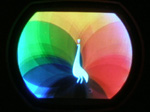
Anyway, the 'German' version and the early Proscan (I heard there was no difference between 'later' Proscan's and the f38310's) were the most impressive performers. The f38310 in my A-B viewing tests came in a noticeable second compared to the early P38000. That same f38310 is the one from which the screen shot in this thread came.
If memory serves, I understood it was these sets inability to display a million pixels that disqualified them as true hi-def ATSC sets. It would be interesting to learn more of the RCA/Thomson-era ATSC history.
Pete

 04-21-2012, 06:18 PM








 Hybrid Mode
