
|
|
|
#16
 08-08-2012, 08:49 AM
|
||||
|
||||
|
Jeff,
I have a 3.2 ohm speaker from a 70's era Zenith TV, I think its 4" are you interested? 
|
|
#17
08-08-2012, 12:50 PM
|
||||
|
||||
|
Quote:
Yes, thanks, I would be. I'll send you a PM with my name and address.
__________________
Jeff, WB8NHV Collecting, restoring and enjoying vintage Zenith radios since 2002 Zenith. Gone, but not forgotten.
|
|
#19
08-08-2012, 07:03 PM
|
|||
|
|||
|
I have been working on some Zenith sets form that era and most of the problems have been open resistors.
They seem to be worse than the caps in these years. After you recap, start by checking your DC voltages just to make sure you dont have a plate resistor thats way off or open. This radio should do very well. Ohm out the antenna to make sure its not open somewhere in the coil. After all thats done check the alignment. Its best to use a signal generator but you can tweak on it a tad and get a feeling if its way off. Mark the screws before turning them. Most of the radios I see the alignment is right on, the ones that are off are always off so far they hardly work. You can use an ohm meter to check the tuning cap. Check each section and see if it shorts below 800khz. I have had some of those just slightly bent that are hell to get straightened out Just some notes form the 20+ of these I have fixed in the past few months.
|
|
#20
08-09-2012, 12:02 AM
|
||||
|
||||
|
Quote:
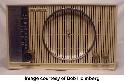
I don't have the proper alignment tool for the IF transformers. The IFs in the H511 series require what Zenith calls a "68-19" alignment wrench, which allows adjustments of the top and bottom coil slugs independently of each other. The wrench is almost certainly no longer available (NLA), since these radios were made over 60 years ago. While studying the schematic (I downloaded a copy from Nostalgia Air), I noticed at one corner of the document, to my surprise, a note stating that the 3-section electrolytic filter capacitor in the H511 Zenith radios is a special non-inductive type that cannot be directly replaced by a standard electrolytic -- if this is attempted, several additional components must be added to the power supply. I am wondering what is or was so special about these radios that they even needed a non-inductive B+ power supply filter capacitor in the first place. I realize the H511 series was one of the best series of table radios Zenith made in the mid-1950s and, therefore, the sets used high-quality components, but I can't for the life of me see how the filter capacitor would make any difference as long as it does its job. Did the non-inductive Zenith filter caps do a better job than ordinary caps of filtering noise and hum from the output of the rectifier tube, or would there have been a risk of damaging said rectifier tube if a standard filter capacitor (without the additional components I mentioned) was used?  Thanks much.
__________________
Jeff, WB8NHV Collecting, restoring and enjoying vintage Zenith radios since 2002 Zenith. Gone, but not forgotten.
|
| Audiokarma |
|
#22
08-09-2012, 04:04 PM
|
||||
|
||||
|
I have the Sams 147-13 on that radio. The cap seems like a standard two-barrel, 60 and 20 with a 1,000 ohm in between.
The cap you need to replace first is a .01 mfd (C7@10000 pf on the sams) from 35W4 pin 6 (mid-tap on heater) to the on-off switch load side (B-). That one blew up both the 35W4 and pilot light on my J615. I gots the tubes, but theres only so many in the world.
|
|
#23
08-09-2012, 08:05 PM
|
||||
|
||||
|
Quote:
__________________

|
|
#24
09-24-2012, 03:48 PM
|
|||
|
|||
|
Quote:
Tron
|
 |
| Thread Tools | |
| Display Modes | |
|
|




 Linear Mode

