
|
|
|
#1
 11-01-2013, 12:57 AM
|
||||
|
||||
|
Zenith T/O--local station overload problem
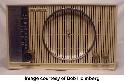
My Zenith TransOceanic 12-band radio, from 1966, works very well (and sounds great; no rattling or other noises, as have been reported by some other owners of these sets). However, I noticed recently that, with the radio in my bedroom, the local AM station in the next town (about two miles or so distant) is extremely distorted, as if the radio's batteries were weak or nearly dead. (The batteries are good.) However, other stations come in clearly with no distortion at all. When I take the radio into the front part of my apartment (the main living area), the local AM station comes in as clearly as it should. Moreover, I can hear many other AM stations with the radio in this location than I can with the set on my dresser in the bedroom.
Why would a small change in location make such a large difference in reception, and clear up the distortion on the local station?  The station is 1kw daytime, 500 watts at night. There is no distortion on FM or shortwave, just AM. If the distortion on the local station (which, needless to say, is putting in a very strong signal at my place, even for a 1kW station) were also apparent on all other stations received on the AM band and shortwave, I would suspect a problem with the AVC circuitry, but again, since there is no distortion on any other AM station or any of the radio's other eleven bands, that circuit isn't causing the problem. What else could be causing this? I don't listen to the local station that much, but I wonder about the difference in reception quality between the two locations in my apartment. Could the radio be picking up a much stronger signal in my bedroom, thus overloading the AM front end? This radio has an AM/SW RF amplifier stage, which may well account for the distortion on the strong local station. The signal is very strong as it is, but when it goes through that RF amplifier transistor, I'm thinking it would now be so strong as to overload the AM front end to death. The station is 1kw daytime, 500 watts at night. There is no distortion on FM or shortwave, just AM. If the distortion on the local station (which, needless to say, is putting in a very strong signal at my place, even for a 1kW station) were also apparent on all other stations received on the AM band and shortwave, I would suspect a problem with the AVC circuitry, but again, since there is no distortion on any other AM station or any of the radio's other eleven bands, that circuit isn't causing the problem. What else could be causing this? I don't listen to the local station that much, but I wonder about the difference in reception quality between the two locations in my apartment. Could the radio be picking up a much stronger signal in my bedroom, thus overloading the AM front end? This radio has an AM/SW RF amplifier stage, which may well account for the distortion on the strong local station. The signal is very strong as it is, but when it goes through that RF amplifier transistor, I'm thinking it would now be so strong as to overload the AM front end to death. That would not, however, account for why the local station clears up and is perfectly listenable elsewhere in my apartment, and why I can receive most of the AM stations in Cleveland clearly when in the main living area. The only explanation for this I can come up with is the manner in which the apartment is situated within the building. I am on the first floor, and my bedroom is just off the kitchen area. Could it be that the bedroom is actually closer to the radio station's towers than is the rest of the apartment, thereby presenting my T/O with a signal so strong it just overloads the radio? Thanks for any insight you can provide on this. I'm baffled as to why this is happening, but I guess I should be thankful the local station is only 1kW/500 watts (daytime/nighttime power, respectively) and not 50kW full time! Needless to say, the signal from a 50kW station at just two miles would swamp every radio I own (not just my T/O), and I'd probably be hearing it on the burner coils on my electric stove and even my bedsprings, not to mention my stereo system and/or the sound system in my television, when the sets are turned off. I now have at least a small (very small) idea of what folks living near the original 500kW transmitter of station WLW in Cincinnati, Ohio in the 1930s were having to deal with--lights they couldn't shut off until the station signed off for the night (there were reports of folks who couldn't turn off fluorescent bulbs and had to put them in closets), arcing, etc. My problem is nowhere near that severe (the nearest 50kW station to here is 35 miles distant), but I'm still wondering about the distortion issue and why my AM reception improves in different parts of my apartment. The only things I can figure that could cause the improved AM reception, again, are the way the apartment is situated within the building, or even the direction in which the entire building faces.
__________________
Jeff, WB8NHV Collecting, restoring and enjoying vintage Zenith radios since 2002 Zenith. Gone, but not forgotten. 
|
|
#2
11-01-2013, 07:37 AM
|
|||
|
|||
|
I've got an older "boom box" that has that problem with locals. It does really well with more distant stations (in my case FM) but I cannot use it above ground on many of the locals. (6 miles from downtown Columbus). Everything clears up nicely when I take it to the basement.
You might experiment with grounded shielding of some sort -- hardware cloth, sheet metal, etc. to see if you can locally attenuate the signal in the bedroom. If it has an external antenna connection, maybe try that with no actual antenna connected. If you have amateur gear antennas, any chance of them capturing and re-radiating the signal? That's kind of out of my league, but is might be a stealth cause of the curiously high signal levels. Chip
|
|
#3
11-01-2013, 11:36 AM
|
|||
|
|||
|
Obviously the AVC isn't doing its job. Perhaps a bad detector diode or a leaky AVC line filter capacitor. If you use a signal generator you can see just what the AVC does.
Also it's possible there is a wrong tube in the IF amplifier.
|
|
#4
11-01-2013, 11:57 AM
|
||||
|
||||
|
A few more things to consider:
1. The TO 3000-1 *does* apply AGC voltage to the AM RF stage. A 10uf/6V electrolytic (C-35) is used to filter the voltage. Perhaps it is leaky and limiting the action of the AGC. 2. Orientation... can you rotate the radio to reduce the signal of the strong station, and increase reception of the weaker stations? 3. Building construction... Some older structures with plaster walls have an "expanded metal" type of support for the plaster... perhaps some of your walls are constructed that way and provide some shielding of the signals. jr
|
|
#5
11-01-2013, 12:54 PM
|
||||
|
||||
|
Bob, jr_tech, et al.:
Thanks for the replies. First, the TO-3000-1 is all solid state and has no vacuum tubes, so there is no possibility of having a tube in an incorrect socket. Second, I do not have a signal generator or any kind of test equipment here other than a DMM (I gave up my workshop nearly 14 years ago when I moved to this apartment), so there is no way I can test the radio's AVC system. Third, I did try rotating the radio to null out the local station, but the signal is just too strong, even at night when it cuts its power to 500 watts (as I mentioned, I live only about two miles from the station's towers). The station does not sign off at night, even on Sunday nights for maintenance as many radio stations used to do years ago, so the frequency is always occupied. Because of this, I cannot tell if my problem disappears if there is no signal (or only very weak distant signals) on the station's carrier frequency (1460 kHz). I can sometimes hear weak signals from other stations when the station is only transmitting a carrier (no audio), such as at the top of every hour just before it airs a national newscast. One thing I did not mention in my previous post is that none of my other radios have this problem, only the T/O. I did have a problem with my Zenith C845 and weak/garbled reception on the local station, but I corrected it by resoldering an open connection on the AM antenna loop. That radio and every other set I own now work excellently on AM and FM. I also have a Zenith H511-Y AM-only 5-tube radio that works, but not very well (it gets the local station and a couple of Cleveland stations during the day, though I did hear Chicago talk station WLS-AM at dusk one evening a couple of years ago); however, it seems to work better at night after dark, when the AM band opens up for DX--I hear stations all up and down the East Coast and in the Great Lakes region at night on this radio. The speaker is shot (cone is torn up beyond repair, although it works well enough for talk radio); however, at this time I'm not concerned about restoring that set. It has at least one other issue (broken dial cord) that doesn't affect its operation, so I'm not concerned about that either.
__________________
Jeff, WB8NHV Collecting, restoring and enjoying vintage Zenith radios since 2002 Zenith. Gone, but not forgotten. Last edited by Jeffhs; 11-01-2013 at 02:01 PM.
|
| Audiokarma |
|
#7
11-01-2013, 09:23 PM
|
|||
|
|||
|
Quote:
In any case, try this just as a suggestion: With the T/0 on and displaying the problem, begin unplugging, one by one, every AC line-operated device in the apartment (not just turning off, but unplugging from the wall, every wallwart, electronic device, and appliance). See if the problem disappears or diminishes at any point. The problem sounds like a classic case of tunable hum*, in this instance re-radiation from the house wiring. This happens due to the power diodes in some device switching the re-radiated signal in and out, causing the distortion. *Another form of tunable hum can be caused by an open loop antenna in a tube radio (discussed in another thread).
|
|
#8
11-04-2013, 01:17 AM
|
||||
|
||||
|
AM overload problem solved; FM sensitivity improved 100%
I found the trouble, I think. I was trying to get the AM dial calibration to track across the band, and was able to do so for all local stations in Cleveland, although the tracking from about 800 down to 550 kHz is still off. As a nice bonus (I wasn't expecting this), once I got the tracking where it should be for the area's local stations (there are no Cleveland stations below 850, so I'm not concerned that the dial calibration is still off in that part of the broadcast band), I put the radio back in its normal location on the dresser in my bedroom, and--to my surprise--the distortion I had been hearing on the local station on 1460 was gone. The station was (and is) now perfectly listenable on this radio, as it should be.
I also corrected a problem with low sensitivity on the FM band I had been having for some time; charging the batteries and operating the radio on AC using the wall wart transformer did not help. I was trying to tweak the alignment just a bit, on the chance that it might be off; well, while adjusting one of the trimmers, I pressed down just a bit, and a local station I had had the radio set to suddenly blared out of the speaker. I tuned across the rest of the FM dial and heard almost every major FM station in Cleveland (even a low-power NPR translator at 89.1 MHz), some stations coming in reasonably well even with the FM antenna stored in the handle (all solid-state Trans-Oceanics, until the R-7000 series, had the FM/SW Waverod antenna mounted in the cabinet handle; to use this antenna, one pressed a latch on the right side of the handle assembly to release the antenna so that it could be raised to a vertical position, after which the Waverod could be extended to its full length). With the Waverod antenna extended, the sensitivity of this radio is incredible. I was getting just about every FM station in Cleveland, plus a couple of out-of-town ones, which is more than I can say for the set for most of the time after I won it in an eBay auction this past summer. That is, I was getting most local stations, but they were quite weak, requiring the volume control to be almost fully clockwise before I could hear much of anything. After correcting the problem with the loose connection on the trimmer capacitor, however, all stations now come in with reasonable volume and are listenable with volume to spare. Turns out there is nothing wrong with the radio's AVC or AGC systems. As I said in regard to my C-845 after reconnecting the AM loop and restoring reception, it is nothing short of amazing, the problems one little intermittent connection can cause. I actually don't know what connection I restored in my T/O to get the FM singing loudly as it should have all along (and restoring the FM sensitivity), but I'm not complaining and will not question it. The set works now as well as it should (better, actually, as I was listening to an FM station about an hour ago some 50+ miles distant with excellent sound quality), and that's all that matters to me. I remember reading somewhere (I think it was on the T/O 3000-1 page of Radiomuseum.org) that the TO 3000 was not built to be very sensitive on FM, being one of the first (if not the first) portable transistor radios to have FM coverage. Well, I think I may have found at least one way to improve the set's sensitivity on this band; at least it worked on mine, but as I said, I have no idea what I did other than to press down slightly on one of the FM trimmer capacitors. Since this radio was built on a metal chassis and has no PC boards anywhere, the poor connection may have been nothing more than slight corrosion on one or both terminals of the trimmer capacitor in question; pressing down on the trimmer may have broken through the corrosion, restoring the connection. I wish to express my thanks to everyone who replied to this thread, and for all the tips and hints. I may eventually print out those replies and file them so I can refer to them if, heaven forbid, the local station distortion problem should return; I'm not expecting it to, but in a 47-year-old radio you can never tell.
__________________
Jeff, WB8NHV Collecting, restoring and enjoying vintage Zenith radios since 2002 Zenith. Gone, but not forgotten.
|
|
#9
11-04-2013, 08:41 AM
|
|||
|
|||
|
Glad you got it sorted. Funny how the signal can jump all the way from Cleveland to your house, but can't jump that microinch of bad connection.
 A nice T.O. is on my must-get list... Chip
|
|
#10
11-04-2013, 02:27 PM
|
||||
|
||||
|
Quote:
The T/O 7000 series are also good radios, but only the first ones in the series were US made. The 7000s made near the end of the radio's production run were built offshore, and may not be of the same quality as the American-made ones; it is for this reason that I recommend you look for an early model R-7000 if you want a newer set. One word of caution if you go on eBay looking for a T/O of any type: Bidding can (and often does) get fierce near the end of the auction, with the winning bid often being quite a bit higher than the opening one. Be careful when bidding as well, as it is all too easy to put a bid on an item only to be outbid almost immediately. EBay is arranged so that the highest bidder at any given time will retain that status (the site is set up to automatically bid on your behalf up to your maximum bid), but once the system reaches your maximum bid, you will have to enter further bids manually; this is where a lot of auctions are lost. (I lost an auction for an R-7000 this way.  ) ) Good luck. As has been said by others, the T/O 3000 and its variants are very good radios, and you will enjoy it; I'm enjoying the heck out of mine, especially since clearing up the AM overload and FM sensitivity problems. Zenith did not skimp on anything when they designed and built these sets; since they were built on steel chassis with socketed transistors (again, until the last R-7000s), they are sturdy and solidly built, but they weigh the proverbial ton, even without batteries. If you get one of the 3000s or the 1000 series (Royal 1000 and 1000-D, the latter having an AC adapter jack), you will have a radio you can be proud of. The T/O 3000s are noted, however, for two problems, as I read on Radiomuseum.org's site recently: one, the sets have a tendency to rattle at high volume levels (due to two strips of double-sided tape holding the speaker baffle to the inside front panel of the radio drying out and falling off after years of use), and, as I noted above, low sensitivity on the FM broadcast band. The latter is due to the fact that the T/O 3000 was one of the first portable transistor radios with FM coverage. I was able to increase dramatically the FM sensitivity of my own 3000 by adjusting a trimmer capacitor, but I wouldn't expect this dodge to work on all such radios. Many times low sensitivity is simply the nature of the beast (early FM radios were notorious for this problem, requiring external antennas in many cases to get decent reception, even in good signal areas); when the T/O 3000 was new, FM radio in the US was in its infancy, with little if anything to listen to if you heard anything on your set; in fact, most early FM stations (until automation equipment became plentiful and affordable, allowing stations to program so-called "elevator music" until they could see their way clear to hire DJs for live broadcasts) simply rebroadcast the programming of a local AM station. Most FM stations in the '60s were located in major cities, so you had to be in or near (very near) one of these areas to hear much of anything on your FM radio. The log book that came with my T/O 3000 has FM station listings that were current at the time (1966, when my set was built); this listing showed very few suburban FM stations, most all of the listings being for stations in major cities. Today, many of these listings are incorrect due to stations changing call signs (because of ownership and/or format changes) and in some cases frequencies, with some listed stations now off the air for good due to financial difficulties or other problems, and of course new FMs went on the air as time progressed, many such stations being established in suburbs of large cities or outlying areas. There were no stations below 92 MHz listed, however, since non-commercial FM stations (college, university, etc.) probably did not appear in the US until probably the very late 1960s or seventies. In my own area near Cleveland, this listing omits several non-commercial stations that in fact were on the air in 1966 and have been on, in some cases, since 1950 (there are at least two such stations in Cleveland, one of which is a non-commercial religious broadcaster; most other FM stations in this area, and probably in most major US cities as well, rebroadcast local AMs in the '60s through the mid-seventies and, in many cases, carried the call sign of the station they were simulcasting).
__________________
Jeff, WB8NHV Collecting, restoring and enjoying vintage Zenith radios since 2002 Zenith. Gone, but not forgotten. Last edited by Jeffhs; 11-04-2013 at 02:38 PM.
|
| Audiokarma |
|
#11
11-04-2013, 06:30 PM
|
|||
|
|||
|
A little heads-up if you're using batteries.. on my 3000, the battery feed-through socket had developed leakage paths between lugs and between lugs and chassis. With batteries installed, there was 200 microamps of leakage with the radio off, which woulda drained the pack in a few weeks. Another 3000-1 owner also mentioned having a leakage problem in the feed-through socket that drained the batteries.
On mine, i replaced the plug and socket with model airplane style connectors since original parts aren't available. No more leakage.
|
|
#12
11-09-2013, 12:53 PM
|
|||
|
|||
|
I got lucky ,for a change, at a thrift, that I generally haunt.
I picked up a R7000, built in late 1968, in Chicago. There's evidence, that the voltage regulator circuit was repaired. Naturally, the A/C cord was missing. I know I have one somewhere, but where! I made up my own using a couple of insulated barrel connectors, as the pins are tiny and close together. Someone on that E place is selling a cord, that is really an electric razor cord, claiming it to be a replacement. Too bogus! BTW, my radio also overloads on the local AM stations. I does have an RF gain control, so I can back it off a bit, to avoid overloading. I'll check the AVC circuit sometime soon.
|
|
#13
11-11-2013, 01:17 PM
|
||||
|
||||
|
Quote:
If it works with your T/O 7000, I don't see why it should matter what the cord was originally made for.I found out by accident that an electric shaver cord will work with some late-model Zenith portables. I have a Norelco electric razor with a plug on one end of the coiled cord (the end that plugs into the male AC socket at the base of the razor) that fits the male AC socket on the back of my Zenith R-70 AM/FM portable just perfectly. (A similar AC cord designed for use with a Panasonic boom box also fits that socket.) This cord would almost certainly work as well with any Zenith portable radio using the same type of AC power socket. Your improvised AC power cord would work, of course, but I'd be sure the end of the cord that connects to the pins of the AC power socket are very well insulated (as you obviously have done, with those barrel connectors). The reason, as you mentioned, is that the pins on this socket are very close together; uninsulated connectors could short to each other, blowing the house fuse, tripping a circuit breaker, or even damaging the radio's power transformer (I'd guess the windings in the power transformer of any solid-state portable AC/battery radio are made of very thin wire, and cannot tolerate sustained current overloads). The cord you saw on eBay might well have been an exact replacement for an R-7000 or even R-70 AC cord. I've seen these advertised on the site in factory packaging, at reasonable prices.
__________________
Jeff, WB8NHV Collecting, restoring and enjoying vintage Zenith radios since 2002 Zenith. Gone, but not forgotten.
|
|
#14
11-11-2013, 08:00 PM
|
|||
|
|||
|
Quote:
 I used shrink sleeving to maintain the proper spacing.  I have the original replacement cords somewhere in my collection
|
 |
| Thread Tools | |
| Display Modes | |
|
|




 Linear Mode

