
![]() |
|
|
|
#1
|
||||
|
||||
|
There were other plastic-coated paper caps, without stripes, that are just as unreliable as bumblebees. The pink caps in this photo are examples:
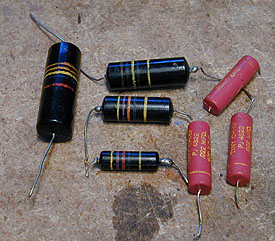
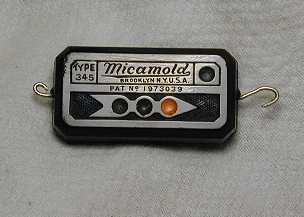
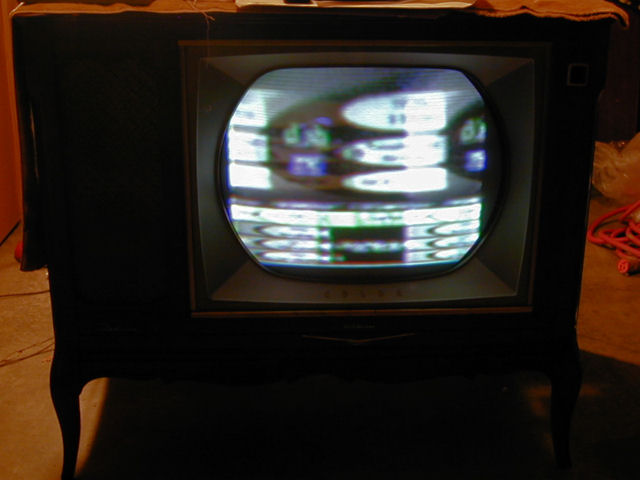
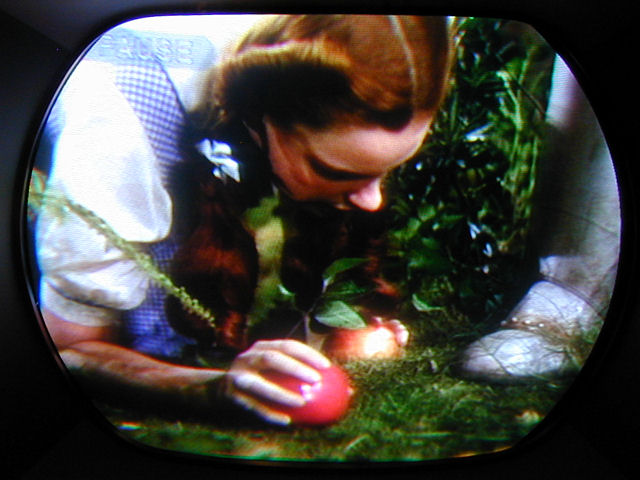
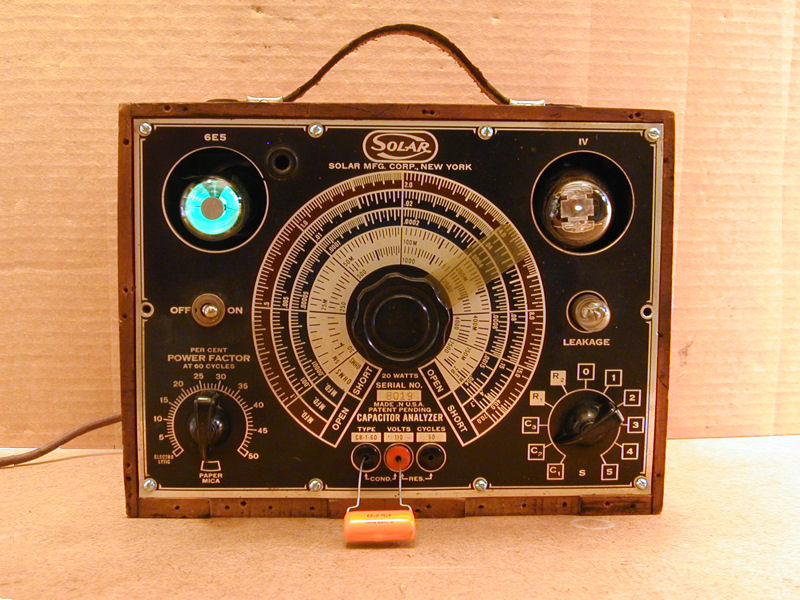
![]() They can also be in black cylinders with printed values rather than stripes, etc. Another type of plastic-coated paper cap is flat and rectangular, similar to this: ![]() Some people call those "micamolds" after that company's name, but they were also made by Solar and other companies. All of those caps use paper inside and they are just as bad as wax paper caps. No need to test them unless you are curious -- they are garbage inside, even if the plastic case is still shiny and new-looking. I'd guess that in a 1964 set, "drop" type caps -- similar to orange drops, but they can be colored maroon, brown, blue, green, etc. -- are iffy. In my 1961 RCA CTC-11s, both sets worked, kinda, sort of, with the old "drops" in place, but they didn't work well until I replaced them. With all of the original drops in place, my 1958 CTC-7 showed a weak picture with bad vertical & horizontal sweep and little or no color. ![]() The more maroon drops I replaced, the better it looked, until I got this: ![]() If you want a cap checker, you must get one that can apply the cap's actual working voltage (i.e., don't rely on a modern handheld meter). Here's one that I use: ![]() There are other brands & models; I also have an EICO 950B. Any vintage cap checker will need restoration, like a radio or TV of the same age. I use mine mainly to test mica caps. I don't test paper caps, for the same reason that I don't check the air pressure on a tire that's obviously flat. Maroon drops . . . maybe, although I can replace one in about the same time it takes to haul out a tester and check it. Phil Nelson Phil's Old Radios http://antiqueradio.org/index.html |
|
#2
|
||||
|
||||
|
When you do not have any color in the picture, turn the color killer control so that color killer is off. Color may come back because killer was set for a strong TV signal. With killer off you may see floating colors. This means the color oscillator is off frequency. Short the test point (grid of reactance tube) to ground and adjust frequency coil until colors stay still. If a color picture only has greenish hue, the 3.58 oscillator is dead. Try a new crystal or tube.
__________________
"You want it WHEN?" |
|
#3
|
||||
|
||||
|
In the 1960's when I checked paper/wax condensers (caps), I used a 225 volt photoflash battery in series with a disconnected condenser and a Simpson 260 VOM. If there was any leakage volts, I replaced the condenser. We bought Sprague condensers ( black beauty and orange drop) 100 at a time and got an extra discount on them.
__________________
"You want it WHEN?" |
|
#4
|
||||
|
||||
|
Quote:
Thanks for the rundown on how well some of these caps that are a bit newer are holding out. In older sets the old wax paper is a given to get out of circuit, but there are many stories of people having fairly well working and a bit newer color sets do well with the maroons and such. Again, I saw several black, plastic coated (probably Sprague) caps with yellow values printed that I wanted to get out along with a big blue electrolytic that I think is in one of the video circuits. After seeing your results I think I will take this a little further.
__________________
"Face piles of trials with smiles, for it riles them to believe that you perceive the web they weave, and keep on thinking free" |
|
#5
|
||||
|
||||
|
Cap checkers are simpler devices than TVs, so restoring them is usually straightforward. Here are articles about the Solar and EICO checkers.
http://antiqueradio.org/SolarCB-1-60...orAnalyzer.htm http://antiqueradio.org/EICO950BBridge.htm These items generally go cheap at swap meets. Phil Nelson |
| Audiokarma |
![]() |
| Thread Tools | |
| Display Modes | |
|
|