
|
|
|
#1
 12-11-2014, 12:54 AM
|
||||
|
||||
|
Selenium rectifiers in Zenith radios
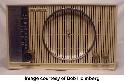
I have two Zenith AC-DC AM/FM table radios from the 1960s; one, a Zenith C845, is pictured as my avatar. They both work amazingly well for their ages, and still have the original selenium B+ rectifiers. The seleniums in these radios are quite small. What are the chances of these small rectifiers shorting after all these years? Since these seleniums are so small, they could not have had to handle that much current. I can see having to replace the large seleniums in TV sets (like the ones in my folks' second TV, a 21" Crosley console) after 50+ years, but the tiny ones in radios? These radios do not draw more than 35-40 watts at most from the AC line, so these small rectifiers should last indefinitely unless there is a power surge, a short in a filter capacitor, or some other problem that sends too much current through the rectifier. In all the time I've been in electronics (40+ years as a radio amateur), I have never even once smelled a defective selenium. Do these things actually give off a toxic gas (as I have read) when they short or become defective? I would think that if they short, the house fuses or circuit breakers would open immediately since they are in a position to short the AC line directly to ground.
__________________
Jeff, WB8NHV Collecting, restoring and enjoying vintage Zenith radios since 2002 Zenith. Gone, but not forgotten. Last edited by Jeffhs; 12-11-2014 at 01:00 AM. 
|
|
#2
12-11-2014, 09:11 AM
|
|||
|
|||
|
In 30+ years in the trade, I never saw a selenium (even big ones in TVs) short out. As they age, they do develop reverse leakage in addition to increased forward resistance, which leads to overheating and eventual failure. The hottest cell in the stack determines the failure point, releasing noxious fumes described as smelling like rotten eggs.
|
|
#3
12-11-2014, 12:42 PM
|
||||
|
||||
|
House fuses and breakers don't always catch failures. When I was a kid I had a 60's GE TOASTER-oven (looked more like a toaster) with the original rubber cord. I had put it out of use because the house wiring would hum when it was on, but one morning I had to make my own food as we were in a rush to pick up Dad from the airport and I dragged it out to make my food. Well it hummed the whole time it was on, finished it's cooking cycle, and a moment later...POW the insulation between the leads at the plug failed, and it let out a bunch of smoke and a pinky red flame from the plug after a moment of surprise I grabbed the cord away from the plug and gave it a good yank which managed to unplug it. The aftermath: a good 1/4" of one of the cord wires starting at the plug moving towards the toaster was vaporized, and the outlet and plate that I had changed months earlier was charred and had to be replaced. The fuse never blew!
In my next house before I knew my way around a DMM I tried to find which two leads on a 4 pin connector for a portable set were 120V by looking for 120V with a DMM...Well I had the test leads in the 10A current measurement position which is a dead short between the leads...I put the test leads in the pin holes in the plugged in cord, and knew I had found 120V when smoke came billowing out of those holes...The breaker did not trip then either.
__________________
Tom C. Zenith: The quality stays in EVEN after the name falls off! What I want. --> http://www.videokarma.org/showpost.p...62&postcount=4
|
|
#4
12-11-2014, 01:45 PM
|
||||
|
||||
|
Quote:
Your account of your experience with a DMM smoking from the range selector jacks reminds me of a similar problem I had, now forty-plus years ago, with a small, cheap Olson Electronics (made by the now long defunct Olson Company of Akron, Ohio) analog multimeter. This meter had several pin jacks into which the test leads were plugged to change ranges. Well, one day I wanted to check the line voltage at a multi-outlet AC power box (six AC outlets arranged in two rows, in a large box with a master switch and, of course, a fuse) in my workshop at the time. I forgot to change the test leads from the resistance to voltage jacks on the meter, and when I threw the master switch on, I saw a small plume of smoke coming from one of the range selector jacks. Needless to say, I yanked the test probes out of the outlet immediately. The meter, amazingly, was not seriously damaged; in fact, the only damage I could see was that the plastic casing surrounding the zero adjust potentiometer had melted slightly. However, that experience taught me a lesson I knew I would never forget (and never have, even to this day): Always check the range switch on a DMM before measuring anything, be it current, resistance or voltage, and be absolutely certain said switch is set to the correct range for whatever you are measuring. Trying to measure voltage with the meter set on one of the resistance ranges, for example, can and often will ruin the instrument in an instant, even though most DMMs (including my current Velleman one) are fused to prevent accidents. Even then, however, one should never put blind trust in that fuse, for the very reasons you mentioned. In fact, my DMM has a warning right on the front panel to the effect that one of the current ranges (the 10-amp one, if I remember correctly) is not fused. Connecting any level of voltage to this jack will almost certainly destroy the meter immediately. Your statement that your house wiring hummed when a toaster oven was plugged in suggests a potentially dangerous situation. I don't know how old your wiring was, but if it hummed when a high-current appliance was plugged in and switched on, I would think the electrical system in that house was almost certainly pre-'60s, even World War II or earlier vintage, and the toaster oven was overloading said wiring. These wiring systems were not designed to handle very high current appliances (except electric stoves, which had their own dedicated circuits), and would often blow fuses or the wiring would hum if overloaded. My grandmother had a summer cottage, built just before WWII, that had a separate circuit for the electric range, but that was the only high-current appliance in the place at the time. The only other electric appliances in that cottage, in fact, were a couple of table lamps, an overhead light in the kitchen, a small radio, and, much later, a TV set I put out there for her. This was a 1950s Emerson table set with a defective power switch, so when it wasn't being used, it was unplugged from the AC socket so there was little chance of a fire hazard when she wasn't there. There was also a "crowfoot" outlet in the living room of the cottage, but it was connected to the standard 120-volt electric service; this, of course, was likely because the cottage had been constructed in 1939, two years before Pearl Harbor, and repair parts for just about anything were in short supply at that time. Building contractors had to use what was available; if that meant using a 220-volt AC outlet to replace a defective standard one, that is exactly what was done.
__________________
Jeff, WB8NHV Collecting, restoring and enjoying vintage Zenith radios since 2002 Zenith. Gone, but not forgotten. Last edited by Jeffhs; 12-11-2014 at 02:32 PM.
|
|
#5
12-11-2014, 02:16 PM
|
||||
|
||||
|
Quote:
__________________

|
| Audiokarma |
|
#6
12-11-2014, 04:47 PM
|
||||
|
||||
|
Okay, misinterpretation fixing time:
@ Wa2ise the portion of what I wrote about that you quote was when I lived in a house that was built in the 40's (original toilet was dated 1948 IIRC, and inspectors thought parts of the wiring were made prewar). No breakers in the place. The DMM story was the house that had the breakers, and that was built in the late 70's to early 80's. @Jeffhs: It was not the lead connectors on the DMM or any part of the DMM that smoked, but rater the female socket on the TV end of a proprietary TV power cord. The cord socket smoked when I stuck the DMM probe tips in to it....Surprisingly both the cord and the DMM survived that incident essentially undamaged. The wiring in that house ALWAYS had a faint hum in some places...It was cloth insulation and rather brittle...Not my problem anymore. I have killed many DMMs from leaving them on the wrong settings...I'm too impatient and scatter brained to always check the settings, and I often rapidly switch between hot voltage checks and cold resistance checks when trouble shooting so it happens from time to time...Which is why I don't buy pricey DMMs. DMMs and soldering irons I cheap out on because depending luck, what I'm working on, and how focused I am when working I can go 1-2 years without killing one or have three die in one day, and I mourn my equipment less when it is cheap junk. I never worry about power cords on tube era devices unless they are obviously damaged, and as long as the schematic and parts layout suggests there is nothing connected across the line when off that could cause a fire I don't worry about leaving tube stuff plugged in (especially if I've worked on the set). I view seleniums this way: If I'm keeping the set, it works with the originals, and there are no signs of low B+, or hum then I leave them alone...Otherwise replacement usually happens when I have them open. I don't freak out over lead asbestos or selenium...I spent the first 12 years of my life in a house that had lead EVERYTHING and have had blood lead levels that freaked out the doctors back then.Yet I can think and operate just fine...heck I'm probably smarter than the average guy my age! And about 3-10% of the sets I work on have asbestos in them (which I usually remove and toss if the sheets are loose or easy to pull out), if either of these things were significantly affecting my health I'd notice and reduce my exposure, but they are not....Granted I don't TRY to poison my self with them either. It is the dosage that makes the poison. Water and table salt are both poisons if consumed in sufficient quantity. A bit of selenium ain't gonna hurt you to breathe if you catch the set smoking in a reasonable period of time, and deal with it. But if you let it fill your room like a roach fogger and instead of opening a window sit in it until it's gone then what happens to you is your fault. Seleniums smoked up many homes back in the day yet there is no period media scare of people dying of selenium inhalation during TV failures...What does that tell you?
__________________
Tom C. Zenith: The quality stays in EVEN after the name falls off! What I want. --> http://www.videokarma.org/showpost.p...62&postcount=4
|
|
#7
12-11-2014, 04:54 PM
|
|||
|
|||
|
Quote:
That's where, the new arc-fault circuit breakers, come into play! They're supposed to open, when it senses a arcing condition is present, as referred to, with the failure of the high current cord on the heating appliance. That also could be traced to, back stabbed or loose receptacles, poor wire-nut connections, etc. There has been problems, regarding oversensitive AFCI breakers, but that problems seems to be addressed.
|
|
#8
12-15-2014, 07:41 PM
|
||||
|
||||
|
I have replaced the selenium's in all my Zenith radios (about a half dozen) with a diode and 10 watt dropping resistor. I left the old one on it's mount, and hid the new parts underneath the chassis on my two H845's.
And as far as safety goes, I have added fuses to several of my restoration projects. I have seen too many breakers that failed to trip due to a dead short.
|
|
#9
12-16-2014, 09:57 AM
|
|||
|
|||
|
I always by-pass the Selenium rectifiers on my Zenith Universals, and TT Trans-Oceanics. I have never lost a Selenium rectifier either but is is so easy, and cheap to prevent all together I just do it automatically.
|
|
#10
01-05-2015, 10:41 PM
|
|||
|
|||
|
I have yet to find a bad selenium in a radio, I have replaced lots of them in TV's. In a radio they are not stressed as they are in some other applications. Some solid state diodes produce rf which really messes up a TO, they are also subject to transients and they fail shorted which means you are going to loose some tubes and other parts, seleniums fail open. Selenium's are still used in some high amperage power supplies. I have never heard of anyone even becoming sick or ill from selenium fumes.
Dave
|
| Audiokarma |
|
#11
01-06-2015, 11:15 AM
|
||||
|
||||
|
For the literal pennies that a 1N4007 diode costs, I put them in unobtrusively and leave the selenium in there out of service for "looks." Not worth the worry or argument.
__________________
Reece Perfection is hard to reach with a screwdriver.
|
|
#12
01-06-2015, 12:41 PM
|
||||
|
||||
|
My decision point on changing to silicon is if it seems that the selenium is negatively affecting the B+, or heating up, or if the set is going to be used by someone else.
__________________
Tom C. Zenith: The quality stays in EVEN after the name falls off! What I want. --> http://www.videokarma.org/showpost.p...62&postcount=4
|
|
#13
01-06-2015, 02:46 PM
|
||||
|
||||
|
I have smelled only 1 selenium rectifier go, and it was in the ct-100 in our school BOCES
set back in '79..... It did stink, last time that set was on that I know of.... I got them in several old sets, and I'm going to leave them..... .
__________________
Yes you can call me "Squirrel boy"
|
|
#14
01-17-2015, 04:36 AM
|
||||
|
||||
|
I didn't see this anywhere in this thread, but if I missed it we can just call it a good reminder. In regards to both VOMs and DMMs and measurements of current (Amperes) I submit the following: The meter must be wired in series with the circuit being measured. So, unless you have an "amp clamp" meter or attachment, you must break the circuit open wherever you choose and connect each lead to each end of the broken circuit. Current measurements can not be made in parallel.
Also, the range selector must me set to Ampere measurement and the leads inserted into the correct jacks specifically designated for Ampere measurements. Anything different will cost you money. To what amount depends the meter type.
__________________
"Face piles of trials with smiles, for it riles them to believe that you perceive the web they weave, and keep on thinking free"
|
|
#15
01-17-2015, 07:07 AM
|
||||
|
||||
|
Quote:
Add one more thing here: Meters have a duty-cycle derating on them. So if your meter has a 20A AC range, that means it can measure current draw up to 20.0 A, but you can't do that indefinitely. Usually its specified as "Continuous up to X Amps, no more than one minute in five between X and Y Amps, and no more than 30 seconds in 10 minutes at Z Amps." with X commonly being 4, Y being 10, and Z being the max rating of the meter. Failing to abide by this results in a cooked current shunt inside the meter, or at the very least wildly inaccurate measurements due to thermal issues. Also note that the derating curve is very different for the AC Amps and DC amps settings, try not to confuse the two.
|
| Audiokarma |
 |
| Thread Tools | |
| Display Modes | |
|
|







 Linear Mode

