
|
|
|
#1
 06-22-2016, 09:07 PM
|
||||
|
||||
|
Philco Predicta Debutante
Here is the picture of my recapped board and replaced out of tolerance resistors on the main board.

|
|
#2
06-22-2016, 09:09 PM
|
||||
|
||||
|
Progress so far, but there is still a lack of raster at the bottom of the screen. Not to figure out this issue.
|
|
#3
06-22-2016, 09:51 PM
|
||||
|
||||
|
Have you tried adjusting the height and vertical linearity controls? Their location is shown in the Sams manual.
Hard to tell from your photo exactly what else is going on. Was the picture rolling or stationary when you took the photo? Phil Nelson Phil's Old Radios http://antiqueradio.org/index.html
|
|
#4
06-22-2016, 10:04 PM
|
||||
|
||||
|
You were right Phil! After twiddling with the vertical linearity control, I was able to fill the screen. The rolling black lines are just camera sync issues, the screen had a nice steady raster. I'll get the electrolytics mounted a little neater next and apply a video source.
|
|
#5
06-22-2016, 10:09 PM
|
||||
|
||||
|
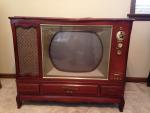
Almost forgot a pic of what the set looks like. It's the hotel white model with the instructions on the top of the cabinet for the user. I'm missing the contrast and volume knobs too.
|
| Audiokarma |
|
#6
06-22-2016, 11:35 PM
|
||||
|
||||
|
Looks nice. Are you leaving the couplates original?
|
|
#7
06-23-2016, 07:23 AM
|
||||
|
||||
|
Yes, I was advised by a Predicta restorer to leave them in unless there is a problem in those circuits.
|
|
#8
06-23-2016, 11:20 AM
|
|||
|
|||
|
Quote:
Thanks. .
|
|
#9
06-23-2016, 09:53 PM
|
||||
|
||||
|
Here's the label on my set...still. Trying to figure out why I'm not getting anything when I hookup a pattern generator to the tuner leads.
|
|
#11
06-24-2016, 12:45 AM
|
||||
|
||||
|
Quote:
Be sure you are connecting the right output from your generator to the right spot on the TV. If your generator has an RF output and you connect that to the antenna terminals (and tune both generator and TV to the same channel), then you should get a pattern on the screen when you're TV is working normally. Phil Nelson Phil's Old Radios http://antiqueradio.org/index.html
|
|
#12
06-24-2016, 11:21 PM
|
||||
|
||||
|
So here's another case of a tube testing good, but doesn't work in the set. I changed out the 6AW8 video tube and finally got a crosshatch image!
|
|
#13
06-24-2016, 11:46 PM
|
||||
|
||||
|
Wahoo!
Now, can you adjust the vertical linearity so that the squares are more the same height on the top & bottom? Often, you need to go back & forth between the vertical linearity and the height adjusters to get this right, since each adjuster may affect the other somewhat. If you do find that they're affecting each other (for instance, changing linearity also affects height), tweak each one a little bit each time, rather than trying to make it perfect all in one adjustment. The vertical linearity shown in your last photo isn't awful, but if you can easily make it better with a little adjustment, why not? Phil Nelson Phil's Old Radios http://antiqueradio.org/index.html
|
|
#14
06-25-2016, 12:14 PM
|
||||
|
||||
|
Yes, I'm gonna work on that next. I briefly tried yesterday and too much adjusting of either control will cause the set to quickly collapse to a horizontal line and flicker back.
|
|
#15
06-25-2016, 06:37 PM
|
||||
|
||||
|
Almost finished, but now I have no sound. I'm hoping it's a bad audio output tube or dirty pin sockets. I do get a buzz coming from the speaker.
|
| Audiokarma |
 |
| Thread Tools | |
| Display Modes | |
|
|




 Linear Mode

