
|
|
|
|
|
#1
 05-06-2017, 11:45 AM
|
|||
|
|||
|
Quote:
Hey thank you guys for all the assistance and resources! I really appreciate it. I didn't have much time, but I messed around with the sine wave adjustment and it didn't produce any real change until it was at the end of its travel. Next week I will be able to sit down and figure out what capacitors I need and work on giving the horizontal section a re-cap and going from there. Since I've never done any real tv repairs I have a few concerns. Firstly, how does one properly discharge the tube? And is there anything I should know in the way of possible dangers? 
|
|
#2
05-06-2017, 06:05 PM
|
|||
|
|||
|
You shouldnt need to lift the rubber like this video shows, but otherwise its right. https://www.youtube.com/watch?v=-jbnFuVWTdk Keep your hand on the handle of the screwdriver.
Keep one hand in your back pocket when working on it if it hasnt been discharged. That prevents voltage from going thru your heart if you get zapped. Stay away from the caged area where the flyback is and the wire that goes to that hole you are discharging. I did a recap a year ago on a large rca of that year but the chassis is different. A lot of the caps I had to crush, loop the ends, and solder new cap on. Most of the important resistors were easy to test and replace. You may want to replace the electrolytic caps too.
|
|
#3
05-14-2017, 06:44 PM
|
|||
|
|||
|
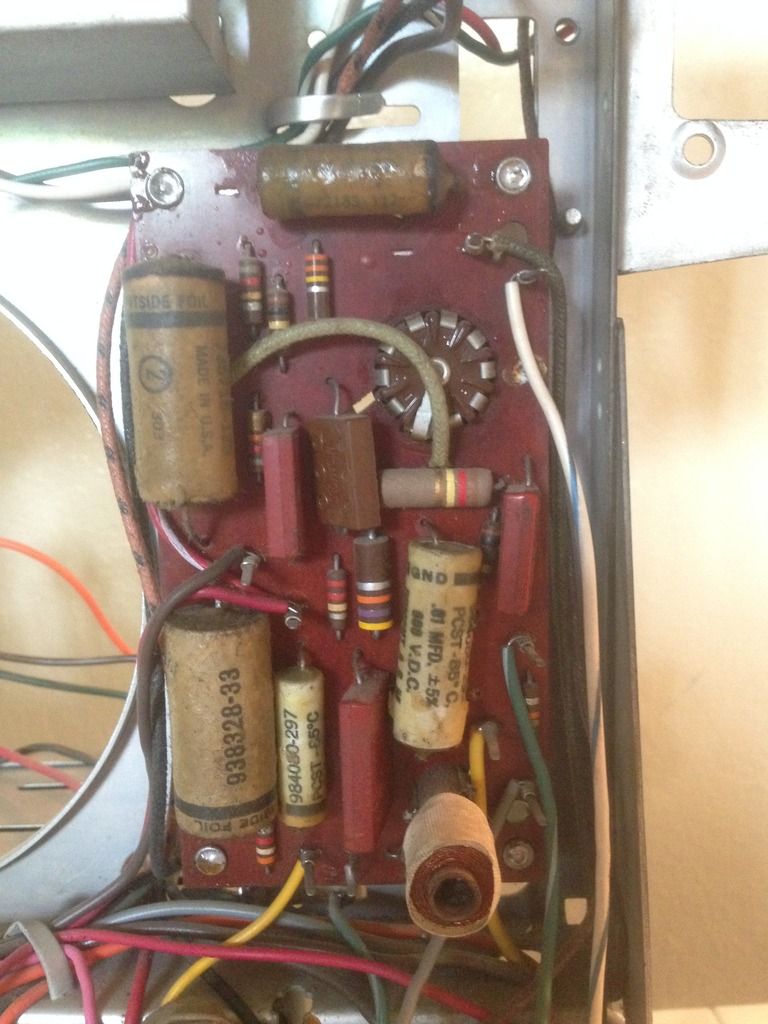
Finally got time to work on it today. Got the chassis removed and identified the Horizontal Osc. board. Now to get to work on identifying the cap values and sourcing replacements. Anything seem suspicious just from looking at it? The top capacitor is covered in a goop, almost seems like it leaked.
|
|
#4
05-14-2017, 07:27 PM
|
||||
|
||||
|
Quote:
jr
|
 |
| Thread Tools | |
| Display Modes | |
|
|


 Hybrid Mode
