
|
|
|
#16
 04-28-2025, 12:17 AM
|
||||
|
||||
|
Quote:
__________________
=^-^= Yasashii yoru ni hitori utau uta. Asu wa kimi to utaou. Yume no tsubasa ni notte. いとおしい人のために 
|
|
#21
04-28-2025, 10:43 AM
|
||||
|
||||
|
Basically, you would remove the 723 and pass trandsistor.
7805 "IN" connects where the pass transistor collector was "OUT" connects where the pass transistor emitter was GND goes to ground 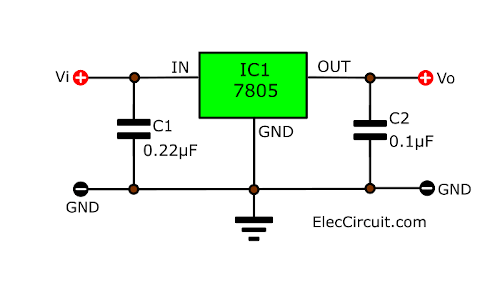 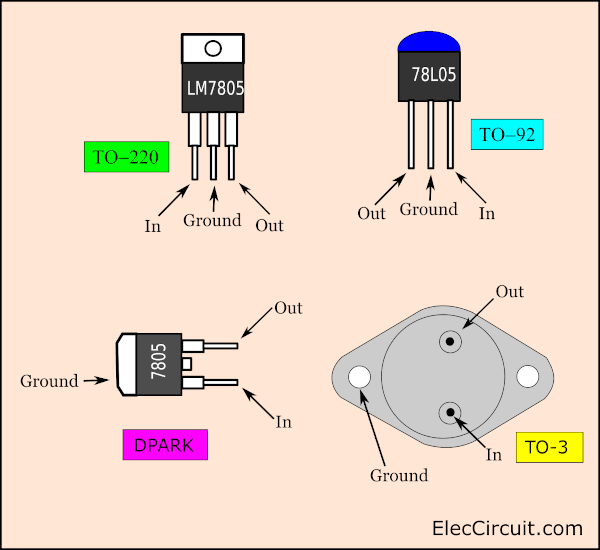
|
|
#22
04-28-2025, 10:58 AM
|
||||
|
||||
|
__________________
=^-^= Yasashii yoru ni hitori utau uta. Asu wa kimi to utaou. Yume no tsubasa ni notte. いとおしい人のために
|
|
#23
04-28-2025, 12:32 PM
|
|||
|
|||
|
Quote:
Couple of questions. What would be the problem solving strategy behind this replacement given the failure of the original and replacement 723? Is the 7805 more robust so whatever is damaging the 723 wont affect it or is the logic I just got a bad out of the box replacement 723 and I might as well replace it with something more modern and reliable? I have both on order so should I just replace the 723 again, give it some time, and if it fails go with the 7805? I know what I would do but I'm just checking if my thoughts align with what you are thinking.
|
|
#24
04-28-2025, 12:42 PM
|
||||
|
||||
|
Yes, 7805 is more robust. Also, this eliminates issues with the pass transistor or any of the other 723 support components.
BTW you can click 'post reply' rather than 'quote' to avoid duplicating all the images. Or you can edit them out of your post.
|
|
#26
04-28-2025, 06:58 PM
|
||||
|
||||
|
The 723 is used for a reference with a series transistor for higher current capacity. I would have to guess there's something more wrong in the circuit besides the 723. The 723 is likely doing what's designed to do, protect the power supply in the event of a over current.
|
|
#28
04-28-2025, 09:31 PM
|
||||
|
||||
|
My concern would be how HP has the current limiting set, vs how a stock 7800 series regulator will provide whatever max current it can. If there's something down stream loading the power supply, you don't really want to provide unlimited current...
On the regulator circuit board that toasty looking .56 ohm resistor is the current sense resistor(in series with the output voltage). The 723 monitors voltage drop across that resistor through pin 1(current sense), which in turn limits current to some set value. Off hand I don't know how to calculate the current limit. The pass transistor for that 5 volt supply is supposedly mounted on a heat sink attached to the chassis. The two transistors on the circuit board are for the + - 15 volt supplies. How big physically is that series pass transistor?
|
|
#29
04-28-2025, 11:54 PM
|
|||
|
|||
|
I’ll get on that and back to all of you midday tomorrow. I don’t know how much drift from the 0.56 ohm the regulator function tolerates and my comment earlier that it is “spot on” isn’t exactly accurate. My test leads have around 0.3 ohms of internal resistance and I’m getting around 0.9 ohms when I measure it so accuracy to within 0.01 ohms isn’t something my DMM can do.
|
|
#30
04-29-2025, 10:05 AM
|
||||
|
||||
|
I've studied the circuit and HP has the 723 5 volt regulator configured with fold back current limiting (quite aggressive pullback). I think if the charred looking R12 .56 ohm current sensing resistor has drifted high in value(possibly more so when hot), it could very well be the cause your 5 volt supply voltage backing down. In the parts list R12 is specified as wire wound, .56 ohms, 5%, 2 watt. Personally I would try a new resistor before attempting the 7805 conversion. Attached a really good article from MODERN ELECTRONICS / February 1987 explaining the capabilities and design setup of the 723 regulator.
|
| Audiokarma |
 |
| Thread Tools | |
| Display Modes | |
|
|





 Linear Mode

