
|
|
|
#16
 12-02-2025, 11:00 AM
|
||||
|
||||
|
I have heard of that source, but as you said they supply manufacturers. Their minimum order is 500 with a 20 week lead time.
__________________
From Captain Video, 1/4/2007 "It seems that Italian people are very prone to preserve antique stuff." 
|
|
#17
12-02-2025, 01:15 PM
|
||||
|
||||
|
Try mouser then. It's rare that both of them won't have a minimum quantity of 1 option for a part...both sites work wonky on a smartphone which is all I can use to post from during business hours.
__________________
Tom C. Zenith: The quality stays in EVEN after the name falls off! What I want. --> http://www.videokarma.org/showpost.p...62&postcount=4
|
|
#18
12-02-2025, 02:50 PM
|
||||
|
||||
|
Quote:
Just learn to use the parametric search function and you'll be able to find whatever you need. Here's four choices for you: https://www.digikey.com/en/products/...3JIKjY%2BJVygA
|
|
#19
12-02-2025, 04:05 PM
|
||||
|
||||
|
Quote:
https://octopart.com/
__________________
From Captain Video, 1/4/2007 "It seems that Italian people are very prone to preserve antique stuff."
|
|
#21
12-02-2025, 10:34 PM
|
||||
|
||||
|
Quote:
Octopart is actually a secondary market seller. They do have some basic stock, but they primarily source parts from other places when orders are placed for most things. I would avoid using them as they charge a premium for "finding" stock. You're better off just ordering directly from a resale place like Digikey or Mouser. If it's too rare for that, then go directly to ebay and look for a seller with good feedback.
|
|
#22
12-02-2025, 11:05 PM
|
|||
|
|||
|
I've not seen Octopart, good to know, interesting they are a secondary seller.
Mouser Part # 667-ECW-HA3C182H4 Panasonic .0018uf (1800pf) 1.6kv 3% 600+ In-Stock, $.46 each with a Qty. of 10. They do advise: "A tariff of 44 % may be applied if shipping to the United States."
__________________
Beam_T
|
|
#23
12-08-2025, 06:57 PM
|
||||
|
||||
|
Oh frustration...
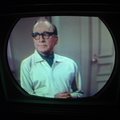
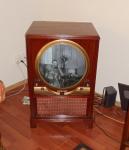
The new caps have been installed. HV is down where it should be (as is focus voltage per the "corrected" Sam's). Focus is now worse than ever. Best focus is now at the extreme clockwise (it was almost perfectly centered earlier). Whereas before, the picture was "watchable" it's now a blurry mess. Although, as before, lower brightness does improve the focus, but anything approaching normal requires an almost invisible picture. Photos show a dark and "normal" screen HV readings 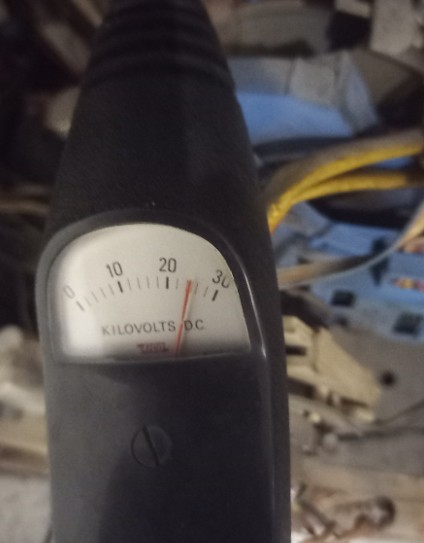 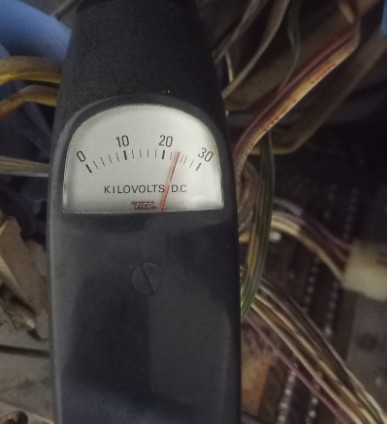 Beyond the safety caps, I did notice a 10mfd @300v cap right next to one of the "middle chassis" safety caps that had to be open, it pretty much fell apart in my hands. Luckily I have a decent electronics store at literal walking distance, so I was able to buy this cap in a 350v rating. I don't have my laptop/Sams nearby, so I'm not sure which circuit this involves. 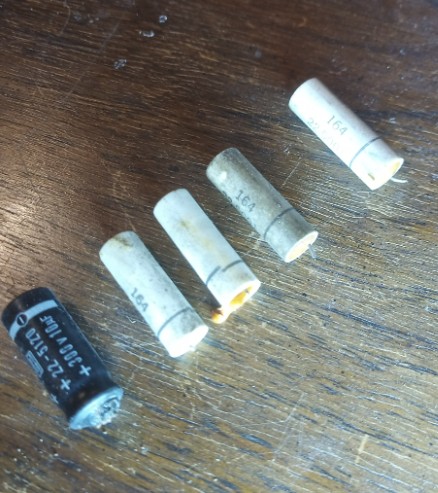 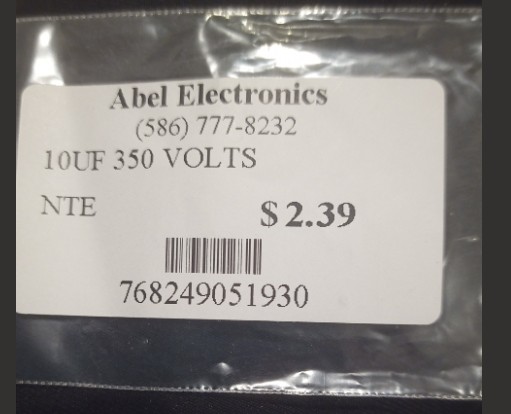 I'd be inclined to think I really screwed something up except that by "specifications", (HV and focus V readings), I'm better than before. What gives?!
__________________
From Captain Video, 1/4/2007 "It seems that Italian people are very prone to preserve antique stuff."
|
|
#24
12-08-2025, 07:51 PM
|
||||
|
||||
|
If it uses a focus divider start with that. They usually crack, bulge, change color or melt. There may be a kit ( 800-616 ) but you need to up sub
from the OEM 63-#### I can help you with that. If no divider the tripler just has focus out ( to CRT ) and control lines. The cap was probably the boost cap. It would get too much DC on it if the HV goes high & it brews up. Keep it in mind. It is one of the most common fail on ALL brands from apx 1978 til the end of TV. It can cause MANY different symptoms. C U Later Zeno LFOD !
|
|
#25
12-08-2025, 08:02 PM
|
||||
|
||||
|
Use the high voltage meter to check and see if you get any voltage on the focus pin of the CRT with the socket unplugged. If there's leakage from the anode connector to the focus pin inside the CRT it can cause the focus voltage not to track with the high voltage. If you measure voltage, use a grounded clip lead and touch the focus pin, if it "pops", like discharging the anode, it may correct the problem.
|
| Audiokarma |
|
#26
12-08-2025, 10:05 PM
|
||||
|
||||
|
Quote:
__________________
From Captain Video, 1/4/2007 "It seems that Italian people are very prone to preserve antique stuff."
|
|
#27
12-08-2025, 10:11 PM
|
||||
|
||||
|
The cap I replaced is number 270 in the schematic. 10 mfd @ 300v
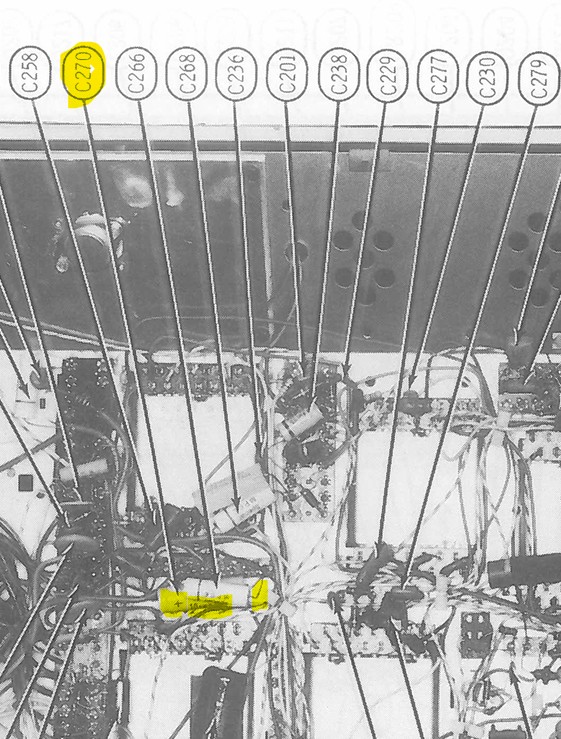 It's an electrolytic, but I'm still not sure of the circuit yet. I was always taught to trouble shoot by first looking at what has changed... I changed caps that tune the HV circuit, it brought down my HV and focus voltage. Now the picture looks worse than before when there were open caps. Seems to me the issue has to be related to that, not a coincidental new failure?! I will give that focus pin discharge a shot in the morning.
__________________
From Captain Video, 1/4/2007 "It seems that Italian people are very prone to preserve antique stuff."
|
|
#28
12-09-2025, 02:17 PM
|
||||
|
||||
|
I did try to discharge the CRT focus pin. No pop and wasn't able to read anything. No change in the picture.
I measured focus voltage again and it seems low, although this type of meter isn't exactly precise. As I mentioned earlier, the SAMS has a hand-drawn correction that says 3.5KV. One could argue this is almost 1/3 of the way to 10KV. The focus divider isn't showing any physical issues. Are there other voltage points I should try?
__________________
From Captain Video, 1/4/2007 "It seems that Italian people are very prone to preserve antique stuff."
|
|
#29
12-09-2025, 03:02 PM
|
||||
|
||||
|
Quote:
|
|
#30
12-10-2025, 09:35 AM
|
||||
|
||||
|
Might be worthwhile to readjust the screen/G2 controls for the CRT. Proper setup varies with HV.
__________________
Tom C. Zenith: The quality stays in EVEN after the name falls off! What I want. --> http://www.videokarma.org/showpost.p...62&postcount=4
|
| Audiokarma |
 |
| Thread Tools | |
| Display Modes | |
|
|





 Linear Mode

