
|
|
|
|
|
#2
 10-01-2006, 11:08 AM
|
||||
|
||||
|
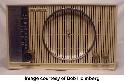
I have one of these receivers that I have restored and have been using for e few years now. They work great and are well worth the effort to bring back. You will want to replace ALL paper caps and electrolytics. This is a good transformer powered set so you don't want any parasitic loads. I have a schematic for this radio and if you need any information, please let me know.
I will start you off right by giving you the schematic. On mine, I restrung the dials, replaced the front panel toggle switches and much more. It was well worth it. The S-53A is one well built radio.
__________________
Just look at those channels whiz on by. - Fred Sanford 
|
|
#4
10-01-2006, 11:36 AM
|
||||
|
||||
|
Compucat, thanks for the offer, but the link that Tom Bavis posted above has a nice scematic.
Regarding the capacitor replacement, they are listed in the manual as either 1) Ceramic 2) Tubular 3)Trimmer Assembly, 5 sections, antenna stage and Trimmer Assy. , 6 secs., oscillator stage 4)mica or silver mica 5) Folded Paper 6) Electrolytic (only one- the big can with 3-capacitors inside) Of these, obviously you mentioned that you replaced the folded paper and electrolytic....but the rest are fine? I am not clear on what the manual means by "tubular" Thanks!
|
|
#5
10-02-2006, 07:20 AM
|
||||
|
||||
|
The tubulars are most likely plastic encased paper caps. It has been a while since I worked on mine. They should be replaced. The ceramics and micas should not be bad. The trimmers should not need replacement unless they are physically damaged.
Also, you will want to check and/or replace any high value resistors in the power supply and audio output stages. Resistors rated at 1 Megohm or above tend to drift upward in value.
__________________
Just look at those channels whiz on by. - Fred Sanford
|
| Audiokarma |
|
#6
10-03-2006, 08:19 PM
|
||||
|
||||
|
I took the radio out of its metal cabinet tonight, and you are right...the tubulars are paper...coated with wax or soft plastic. Access may be a little tight in some places, but no worse than any other table top radio, I suppose. Thanks again for the advise. I will update when I manage to find some time to replace these parts.
|
|
#7
10-03-2006, 11:43 PM
|
||||
|
||||
|
I would definitely replace the 3-section electrolytic cap as a matter of routine. As for the spark when you plug the receiver into AC power, that is a red flag if I ever saw one--there is definitely a short somewhere, and probably close to the input to the power transformer. I'd replace the cord first, before plugging the receiver in again. The S-53 dates back to at least the 1950s; yours may well have a dry-rotted cord that should have been replaced long ago--you will get a huge spark as you described if bare wires from the cord short against the chassis or each other, although I'm surprised the house fuse (on that circuit) didn't blow as soon as you saw the spark. I had a floor lamp in my apartment that shorted out from the same cause (bare wires shorting against each other) a few months ago; I saw a huge spark at the base of the lamp, after which the circuit breaker in the basement of the apartment building tripped.
When you had the receiver plugged in and switched on, did anything on the chassis (power transformer, filter caps, etc.) feel abnormally warm after the set had time to warm up? If the transformer felt extremely warm or so hot that it would burn your fingers, pull the plug immediately. The transformer is either shorted (a high-resistance short will not blow a line fuse, but a low-resistance short will) or else something in the radio is drawing much more current than it should. If the filter caps are warm or hot, yank the plug as well, as the capacitor(s) is/are dead shorted--these capacitors are in a position to blow the house fuses (because they are connected effectively directly across the AC line) if they short. If the short in your S-53 were anywhere after the AC input, it should have blown the receiver's own fuse if it has one, which it should--Hallicrafters communications receivers were all equipped with a line fuse that will blow in case of any major low-resistance short, such as a shorted rectifier tube or a short in the power transformer, to name just two such shorts that should indeed blow that fuse if it's the correct size. As to all but one of the tubes glowing when you had the receiver plugged in, that's a dead giveaway that the unlit tube is dead as a doornail and must be replaced. In fact, the unlit tube may very well be the reason why the radio won't work (if the dead tube is in an audio stage, for instance, you won't hear a thing from the speaker). However, until you at least replace the cord, don't plug the receiver into an outlet. As it is now, the radio has a dangerous short that must be found and corrected (not to mention being a shock hazard) before the set can be used. Kind regards,
__________________
Jeff, WB8NHV Collecting, restoring and enjoying vintage Zenith radios since 2002 Zenith. Gone, but not forgotten.
|
 |
| Thread Tools | |
| Display Modes | |
|
|







 Hybrid Mode
