
|
|
|
#16
 02-23-2008, 07:03 PM
|
||||
|
||||
|
Quote:
But when doing an antique resto what the heck is money....?  The solution would be as someone suggested earlier that happened in IIRC Electrohome, which would be to have the second gang switch on the on-off control introduce a stored + DC voltage to the cathode circuit, which would supply enough reverse bias to make the CRT cutoff until the HT bled down and the heaters cooled sufficiently. (I may need to rescind my resonse to that post and apologize, as what was said about involving B+ seems to be making more sense than it was at the time--talk about clumsy reverse-engineering here....  ) )..... 
|
|
#17
02-24-2008, 03:12 PM
|
||||
|
||||

Quote:
__________________

|
|
#18
02-26-2008, 07:04 PM
|
||||
|
||||
|
Further comment on the Electrohome spot-killer
Hello everyone,
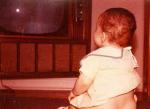
Reading all these contributions, and looking back at the schematic I posted a few days ago, I remembered something. This TV was purchased by my parents in 1961, when I was less than a year old. As a child I would sometimes play with the controls, and I found that if I set the brightness to the max, the spot would not be killed when the TV was turned off, which may explain the presence of the small burn. If you take a look at the schematic, you see that when brightness is set high, the wiper of the control is grounded, so that the positive bias applied by S401 has no chance of reaching the CRT cathode. So this circuit design was far from perfect... Despite what I mentioned above, I was not too hard on this set, nor was the rest of my family, as it has survived to this day. I used to run it a few tens of hours every year but the last time I tried (last year), it was dead except for the pilot light, pointing the way to a busted LV rectifier (5V3 tube). I should start a serious restoration effort this year.
|
 |
|
|




 Linear Mode

