
|
|
|
#332
 09-26-2003, 11:17 PM
|
||||
|
||||
|
Philco 12"
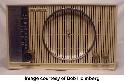
This arrived in the mail today... a Philco 50-T1403. Got it from eBay a few weeks ago. Cabinet is in pretty good shape. Needs a little cleaning. The insides are all there and major components look okay. Might take it out tomorrow to look at the underside. The 12LP4 checks out in the "questionable" zone on the tester. Probably good enough to make a decent picture. Chassis is pretty dirty, but looks like it should clean up nicely. The set is a little larger than I was expecting.
__________________
Charlie Trahan He who dies with the most toys still dies. Last edited by Charlie; 03-07-2010 at 11:17 AM. 
|
|
#333
09-27-2003, 09:57 AM
|
|||
|
|||
|
Charlie,
Sure took a beating in transit, look the top corners have been completely rounded!  But seriously, how the heck can you send something like this in the mail? How do you pack it to survive? How big of a stamp do you need? OH BTW, nice set!  I have a similar Philco with squared corners and the 12LP4 measures like new. I have a similar Philco with squared corners and the 12LP4 measures like new.
|
|
#334
09-27-2003, 10:31 AM
|
||||
|
||||
|
Quote:
__________________
Charlie Trahan He who dies with the most toys still dies.
|
|
#335
10-12-2003, 12:43 AM
|
||||
|
||||
|
Old TVs and cable
Big Dave,
You need not have all the channel strips in the tuner if you only use the set on cable (as you discovered). In fact, for a set such as yours running on a cable box, all you really need is one strip, for the output channel of your cable converter. As a matter of fact, back in the 1950s and early 60s, some people would remove all the unused channel strips from a turret tuner, leaving only the strips for their own area's local channels. I read of this in an old DIY TV repair book years ago. It was also mentioned that this dodge would save wear and tear on the tuner, as it would be possible to arrange the strips in numerical order for the channels in one's local area. One could then switch instantly from one network station to the next, without having to flip through unused channel positions. (Great for sets with remote or front panel power tuning.) Another trick was to set your TV's fine tuner to midrange, then set the oscillator slugs in the channel strips for a properly tuned picture and sound. This way, one could flip from one channel to another without having to adjust the fine tuning. Of course, normal oscillator drift over time would require the set owner to readjust the slugs, which could be why this dodge never really caught on; most people found it far easier to readjust the fine tuning when changing channels. The only advantage I can see to presetting the oscillator slugs would be, again, for sets with remote power tuning, so the set owner would not have to get up and manually adjust the fine-tuning control when changing channels with the remote.
__________________
Jeff, WB8NHV Collecting, restoring and enjoying vintage Zenith radios since 2002 Zenith. Gone, but not forgotten.
|
| Audiokarma |
|
#337
10-17-2003, 10:41 PM
|
||||
|
||||
|
It looks like RCA had a theme going with the "brick wall" look of its speaker grilles for the 1954 model year. The set pictured above, a few other '54 RCA B/W consoles I've seen, the CT-100 and the RCA field test color models. I have a few books in my tech library with pictures of an RCA color field test set. The set very closely resembles the Merril with the very obvious difference being the placement of the operator controls right out on the front panel instead of being concealed behind the "pencil box" control door as on the final production model we know as the Merrill.
Here's a recent photo of my display room. There has been one other set added since this was taken. Pictured sets (L-R) are ... RCA 8-T-241 Fada TV30 RCA 721TS Zenith 14-1440 Not pictured is an Admiral 19A1. I just recently found time to troubleshoot the cold solder joints in the restoration work of the eBay seller of that set and add tie points to support the junctions of series-connected 3kV capacitor pairs he had used as replacements for the 6kV deflection coupling caps. The cabinet isn't bad, but still needs some work including replacement of its non-original knobs. I also just finished creating two VHS cassettes of test patterns. The "Indian Head" pattern is great for rectangular-mask sets, but the "WNBT" test pattern appears to have been designed with round-mask sets in mind. The main circle of the "WNBT" pattern is great for portholes.
|
|
#339
10-21-2003, 10:38 AM
|
||||
|
||||
|
Another 721TS
Here's my second 721TS with one of the strongest used 10BP4's I've ever seen. I just picked up this 10BP4 and another really good one over the weekend and decided to put it in the 721 since that set had the weakest 10BP4 of the ones in my collection. Photo taken with my cheap camera.
Last edited by jshorva65; 10-21-2003 at 10:42 AM.
|
|
#341
10-21-2003, 11:40 AM
|
|||
|
|||
|
John,
That is such an attractive looking set! Nice bright CRT too. I really must restore mine someday, just way too much on my plate these days. Speaking of really bright 10BP4's. Here is a screen shot from my 1947 Admiral 30A13 that completely overloaded my digital camera. This CRT is bright! The actual picture is perfect. This might be a 10FP4 in there though. I'm not certain. The only repair I needed to do to make it run was replace an open power resistor on top of the chassis in the HV cage which I was able to do without pulling the chassis. I'm pretty certain this set was completely re-capped and re-tubed before I got it.
|
|
#342
10-21-2003, 11:00 PM
|
||||
|
||||
|
The set inventory
Having spent a lot of time on the very good AROL website, I am new to here via the good fortune to know Chuck A. I jumped in on the thread about “Lesser” televisions and got quite a nice response. My CTC9 and Sightmaster can be seen over there.
Ok, here is the list of sets in the Dave A. collection in SE Pennsylvania in a very small house. They have all been gathered since 1985 when I decided that as a television director, I should pay attention to the history of what pays the mortgage…and my retirement. Not all have model #’s as they are buried and the numbers are not to be seen any time soon. NW=non working. W=working. Pre-war sets; Baird T-5 (1936,) NW Baird T-23 (1937), NW HMV 900 (1936), W modified to 525 (barely) RCA TRK-120, W (daily viewer) Post-war sets; Philco 48-1000, W (daily viewer) RCA 621TS Blonde, W RCA 621TS Mahogany, W RCA 630TS Mahogany, W Emerson AM/TV portable, NW Air King 630 type, NW Crosley 7” suitcase, NW Philco 10” Blonde Radio/phono/TV console, W Philco 701 7”, NW Philco 702 7”, NW Pilot TV-37, W Admiral 17” Blonde console, W Fada 730 10”, W Fada 890 projection, NW Sentinel 7”, W Sightmaster 15-S-2, W Radio Craftsman Chrome RC-200 (chassis & tube only), NW Natalie Kalmus “Combination” 24” Radio/phono/TV, NW (just arrived) Various RCA metal sets, W & NW Various RCA and Philco 50’s consoles Round color sets; RCA CTC-100 under restoration RCA 21CT55 under restoration RCA 21-TMD 21” Studio color monitor, W and connected to my computer video editing RCA CTC7 “Pensbury”, W RCA CTC7 “Abington”, W RCA CTC9 “Caulfield”, W (daily viewer) Philco TV123 21” color 1956, parts set Philco TV123 21” color 1956, not delivered yet All the other stuff; Zenith/RCA/Stromberg console radios, W Atwater Kent Model 84 GE G-95 “Pianoforte” console radio (no dial), W Assorted 20’s battery radios, W Bendix 526C Catalin, W RCA 19” tube color portable (last tube version), W Assorted tabletop “All-American” radios, W & NW Fisher 500B stereo receiver, W and restored Peter Yanczer Mechanical Camera/Television reproduction, W Col-R-Tel Color converter, W (not dedicated to a B&W set yet) RCA TK-31 field B&W camera, modified for CCD image/LCD viewfinder, on loan to Sarnoff Library in Princeton, NJ If you noticed, most of the sets are unique for one reason or another. Having collected televisions since 1985 and radios since 1968, the one thing I learned is not to buy every/any set that came along. Old though they may be, not all of them are special. And I am allergic to vaporizing veneer and mundane mahogany. Slow and easy wins the race. The best thing any television collector can do is get very involved with your local radio club. The radio collectors want nothing to do with sets and will take pity on you and pass on all sorts of leads, not to mention hundreds of free tubes and parts that they do not want. I’ll post pix as I can find time to display the sets. Stay tuned, Dave A
|
|
#343
10-21-2003, 11:54 PM
|
||||
|
||||
|
A couple of notes on two posts I saw here this evening. The first one has to do with polaraman's two sets in his post. I recognize them both. His Stromberg-Carlson set rings a bell in my mind because my aunt had a TV exactly like that one in the '50s, except in a white cabinet. (How many different cabinet styles were there for that particular set?) The RCA rang a bell because my folks' first TV was an RCA console almost exactly like that one, except theirs had the speaker at the side of the cabinet and two small decorative metal bars (if I remember correctly) at the bottom of the cabinet, where the speakers are in polaraman's set. If not for these differences, these sets could have been twins.
I also saw the picture of jshorva65's TV display room. Very nicely done; I like it. However, I wonder. How on earth was he able to check those sets out for proper operation after repairing them? I ask this because every set in his display room is VHF-only; Warren, Ohio is a suburb of Youngstown, which only has UHF stations (21, 27, 33, 39 and 45). I didn't see UHF converters atop any of those sets. How does he know that the RF and IF stages are working? The only way I can think of he could have air-tested these sets (aside from hooking them up to cable) is to have hooked them up to an outdoor antenna and tested them on signals from Pittsburgh's three VHF network stations (channels 2, 4 and 11), or if his antenna was really good, he could also test using the air signals from Cleveland's channels 3, 5 and 8. BTW, js, I like your avatar. I did a double take the first time I saw it, but later I realized it was a test signal generated from a color bar-dot generator, and the callsign/channel number was superimposed on it, like the color-bar test patterns TV stations used after round patterns went out of style and before TV broadcasting went full-time. Here near Cleveland we have a UHF station that still uses a color-bar pattern after it signs off, but the station's call sign, over-air channel number and network affiliation [it's the WB network affiliate for northeastern Ohio] are inserted in the black area below the color bars--not superimposed on the bars themselves. The PBS station in Cleveland used to do that too, when it signed off for the night around midnight--before it went to 24-hour operation several years ago.
__________________
Jeff, WB8NHV Collecting, restoring and enjoying vintage Zenith radios since 2002 Zenith. Gone, but not forgotten.
|
|
#344
10-22-2003, 12:10 AM
|
|||
|
|||
|
Dave A,
That is a really nice collection. I copied your post over to the color TV forum where a thread got started listing everyone's TV collections whether B&W or color. http://www.audiokarma.org/forums/sho...3188#post83188 I had to do it as a quote for some reason rather than a simple move. All I seem to be empowered to do is move or copy entire threads, not individual posts.  In this thread we really encourage posting photos of the vintage B&W tubed sets of your collection. I do hope you can share more photos with us here!
|
|
#345
10-22-2003, 06:28 PM
|
||||
|
||||
|
I feel that the Classic 21 is newer than the Chinese Classic. I have included a picture of my yellow Stromburg-Carlson Chinese Classic. It has a 19AP4 CRT. I have seen them in RED, White and yellow. Quite an expensive set in 1951. Cost about $900 fully equipped with a AM/FM, record changer and the tv. Mine has all three. All that works is the audio on the tv. I have collected all the tubes and caps to bring it back to life. Tv alone has 28 tubes.
On top of the S/C is a Crosley. (model F-17TOLU) It has both UHF and VHF. Paid a whopping $10 for it. Have yet to attempt to get it running. On the right is a Philco. One of those split chassis sets. It also has UHF and VHF.
|
| Audiokarma |
 |
|
|




 Linear Mode

