
|
|
|
#31
 10-11-2011, 12:33 PM
|
|||
|
|||
|
Quote:

|
|
#32
10-11-2011, 01:05 PM
|
||||
|
||||
|
most of the fuses were newer (I tended to do stuff that would blow them when I was younger than that. No coins, slugs, or tokens were ever used to replace a fuse by my folks, and none were ever found to my knowledge.
I was told a story by my folks that when they first moved in the lights were dim, and would flicker, and after a tornado which took out a large tree in the back yard which in turn took down the over head utility wires, a utility worker came in to inspect the fuse box, and discovered that the main cartridge fuses had been replaced by the previous owners with UNDER rated replacements that were limiting the power supplied to the place.
__________________
Tom C. Zenith: The quality stays in EVEN after the name falls off! What I want. --> http://www.videokarma.org/showpost.p...62&postcount=4
|
|
#33
10-11-2011, 02:35 PM
|
||||
|
||||
|
I have used CFLs for over 10 years and have not seen a failure that involved more than a small amount of burned resistor smell in the room. By last count, I have about 30 of these devices in my house.
For grins, today I cut open 3 failed units (I save them for recycle because of the tiny amount of mercury in each tube). In the oldest unit (which had been in service since 4/28/01), a small fuse (marked 4A) was the first component in the circuit before a cap and the diode bridge. In two newer units, a small 1/4 watt 4.7 ohm resistor and a coil wound with very small wire preceded the cap and diode bridge. In one unit, the resistor was open, in the other (which was replaced because it had started to flicker somewhat, when cold) the "fuse" resistor was ok. Nothing that I found in the units that I autopsied gave me any cause for concern. I also did a "flame test" (using a match) on small piece of plastic from one of the bases and found that it only melted, and did not appear to support combustion after the match was removed. Perhaps some earlier units or obscure brands were not fused, I don't know! Mine were marked "GE" , "N:Vision" and "Commercial Electric". jr
|
|
#34
10-11-2011, 02:41 PM
|
||||
|
||||
|
Just found a Sylvania and took it apart... it had a 3 Amp glass fuse covered with shrink fit between the board and the center contact of the screw-in socket. I like this design, as it possibly could provide somewhat better protection in the case of a over-voltage line spike, which might create a charred path if the fuse or fuse resistor were mounted on the circuit board.
jr Last edited by jr_tech; 10-11-2011 at 05:08 PM.
|
|
#35
10-11-2011, 07:50 PM
|
||||
|
||||
|
Quote:
I dragged the beast by the power cord out of the studio and hit it with the fire extinguisher. The important point I made in my report was that the monitor had a 0.25 amp fuse in the B+ line to the flyback and a 2.5 primary line fuse. Both were the right value and NEITHER FUSE BLEW during the excitement. So much for fuse safety. Cliff
|
| Audiokarma |
|
#36
10-12-2011, 02:33 AM
|
||||
|
||||
|
Quote:
__________________
tvontheporch.com
|
|
#37
10-12-2011, 07:43 AM
|
||||
|
||||
|
A fuse is an all or nothing proposition. Something else must have caused the flickering. Agree. In an old house, there are lots of mechanical splices that oxidize and cause intermittent circuits. In one old house I lived in, one day a table lamp slowly went out, then flickered low. I went in the basement and traced the knob-and-tube wiring from that outlet to a friction-taped splice where I could see a blue glow through the loose tape! That got taken apart and soldered.
__________________
Reece Perfection is hard to reach with a screwdriver.
|
|
#38
10-12-2011, 09:16 AM
|
||||
|
||||
|
Quote:
__________________

|
|
#39
10-12-2011, 11:50 AM
|
||||
|
||||
|
Quote:
Charles 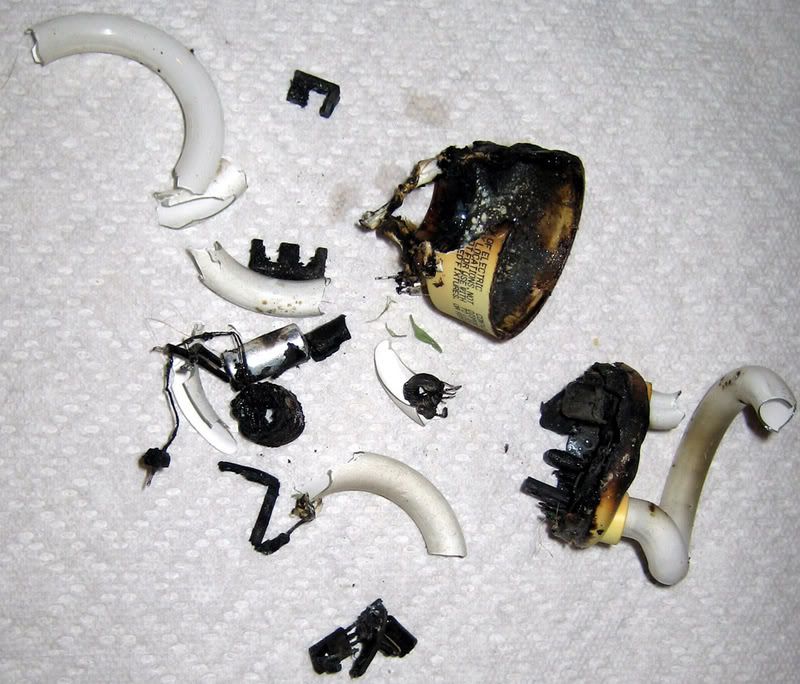 
__________________
Collecting & restoring TVs in Los Angeles since age 10
|
|
#40
10-12-2011, 12:22 PM
|
||||
|
||||
|
The only place I have these is in the lamps outside the front door - the kids inevitably slam the door and CFLs don't have weak filaments to break. After reading this thread, I think I'll use rough-service shop light bulbs when replacement time comes, and paint them amber myself.
__________________
AUdubon5425 Youtube Channel
|
| Audiokarma |
|
#41
10-12-2011, 12:34 PM
|
||||
|
||||
|
Quote:
 Thanks for the heads up! interesting comment about the fire marshal as well. Could you tell from the charred remains if the lamp was indeed fused? jr
|
|
#42
10-12-2011, 12:35 PM
|
||||
|
||||
|
I know a fuse is either a short or an open, and what my folks told me did not make sence to me either. It is possible that the fuse was mechanically too small and was making poor contact, or there was another issue the guy corrected and did not tell them about.
Wow that CFL is really toasted. There is an office in my school that is usually left open that has a desk with a CFL that burned at the points the tube enters the base. I think it is on permanent display as it has sat there for over 1 year now.
__________________
Tom C. Zenith: The quality stays in EVEN after the name falls off! What I want. --> http://www.videokarma.org/showpost.p...62&postcount=4
|
|
#43
10-12-2011, 01:18 PM
|
|||
|
|||
|
Quote:
|
|
#44
10-12-2011, 06:08 PM
|
||||
|
||||
|
Guess you shouldn't leave your Sony Brevia playing unattended, either. Sony just recalled 1.6 million of them due to fire risk:
http://www.bloomberg.com/news/2011-1...levisions.html Phil Nelson Phil's Old Radios http://antiqueradio.org/index.html
|
 |
|
|





 Linear Mode

