
|
|
|
#121
 02-01-2011, 10:34 AM
|
||||
|
||||
|
HOT Current vs Fuse Current #2
I am now using a 22mf electro across the analog VOM for HOT current measurements. I corrected the posting where I measured 128ma using a DVM. It now reads 180ma at both Hot cathode and at the HV fuse. Seems reasonable since current in is current out in these simple circuits. Ultor / HV reg current only amounts to a 1 or 2ma difference if you want to be nit picking.

|
|
#123
02-01-2011, 05:56 PM
|
||||
|
||||
|
glad to hear that tom got his set performing properly.thats what we are glad about
|
|
#125
02-01-2011, 07:59 PM
|
||||
|
||||
|
i am sure the "misinformation"wasnt purposely intended to peeve you.i find tom s posts very informative,well written and enlightening.no competition here in this forum.some of us are still learning,others teach and then there is the one who knows everything.i am still learning and glad to associate with these fine fellows.
i personally dont have a pet peeve.just realize everybody has different looks,tastes,actions,etc.can you imagine a forum where everybody was the same?how would you like to talk with people just like you?it would get boring very quickly.as a matter of fact,i am bored with this post.goodnight
|
| Audiokarma |
|
#126
02-01-2011, 08:12 PM
|
||||
|
||||
 Don't get mad - get GLAD.
__________________
AUdubon5425 Youtube Channel
|
|
#127
02-08-2011, 07:51 PM
|
||||
|
||||
|
FBX Setup is OK
I just made a major capital equipment purchase, a Heathkit HV Probe for $39 including shipping. When used with my 1950 Heathkit VTVM I was finally able to setup my 6BK4 HV reg after I cleaned the 66m resistor with lacquer thinner. It was reading 24m with 50 years of crud on its body. Now the ultor is held at the desired 27KV constant at all brightness levels. Some important readings:
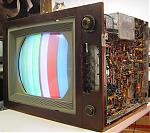
At ac in of 115vac, B++ is 424v, horz system current at fuse is only 172ma (same as HOT cathode), boost is 725v, focus is 5.5kv, Ultor is 27KV. After > 2 hours operation, the FBX primary and HV doughnut were barely "body temp", < 110F! The last major effort will be the horz dynamic convergence system. The latest pics are with only vert convergence: Last edited by Tomcomm; 02-09-2011 at 08:56 AM.
|
|
#129
02-09-2011, 11:56 AM
|
||||
|
||||
|
Those screen shots look pretty good to me.
Dummy question here: What's the reason that HOT circuits typically don't incorporate some type of current regulation circuitry? The way I understand it, is that if you loose Horizontal drive, you end up with a melt down. Kevin
|
|
#130
02-09-2011, 12:34 PM
|
|||
|
|||
|
My attempt at a dummy answer--
Seems to me that the tuning of the HOT / flyback is already delicate enough under good circumstances. Adding another circuit or two for protection in the case of complete horizontal drive failure might have made the whole thing even more unreliable. How often were there cases of complete horizontal drive failure? Easy enough to do in the IC age (and they were probably more concerned with keeping HV/x-rays under control than protecting any circuitry)
|
| Audiokarma |
|
#131
02-09-2011, 12:50 PM
|
||||
|
||||
|
Maybe I should have stated current limiting instead of regulation. Probably wasn't a threat back in the day when OEM parts were available. But I've heard horror stories of very early paper coupling capacitor failures on mid 50's sets.
Kevin
|
|
#132
02-09-2011, 02:54 PM
|
||||
|
||||
|
Quote:
|
|
#133
02-09-2011, 04:40 PM
|
||||
|
||||
|
I suppose if the HOT was self-biased, then it would not provide a large enough current spike as required. Are those running something like a class C TX output?
Kevin
|
|
#134
02-09-2011, 10:08 PM
|
||||
|
||||
|
Quote:
|
|
#135
02-09-2011, 10:16 PM
|
||||
|
||||
|
So, another way to describe the HOT ckt would be like a "switching power supply", I reckon, and class "C" is not too far off.
As we know, in an SMPS, the switch transistors must be on or off, and nOT much in between..or WAY too much current--and then destruction--immediately follows.
|
| Audiokarma |
 |
|
|






 Linear Mode

