
|
|
|
#16
 06-04-2025, 11:12 AM
|
||||
|
||||
|
Quote:
__________________
 We're all in the same boat. 
|
|
#19
06-05-2025, 04:16 PM
|
||||
|
||||
|
Quote:
Personally, I have one of those cheap ones, but I also have a real LCR meter. Between the two of those things (and my DMM) I'm able to test most anything I need to. Honestly, I've seen you around here enough that at this point you probably want to have some tools to make your life a little easier. You have to consider how much your time is worth, stabbing around in the dark and replacing component hoping it will help.
|
|
#20
06-09-2025, 02:06 PM
|
||||
|
||||
|
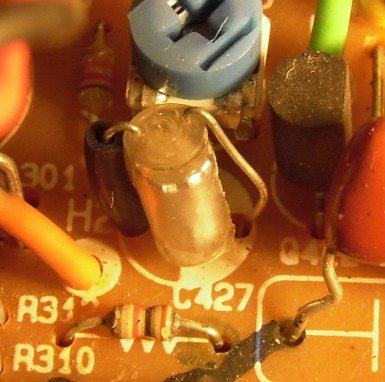
I pulled C322 and C427 today but the cheap LCR-T4 I bought only measures their capacitance, not ESR.
C322 rang up as 50pF on both the LCR and my multimeter! It should be 220nF. The code on the package is 224J which means 22 x 10^4 = 220000pF with 5% tolerance. The second line says MP400 which I assume means rated 400V DC. https://files.catbox.moe/7prbnh.jpeg I’ll find a replacement mylar cap on DigiKey but let me know if there are any special considerations to be made. Here is C427. Measured capacitance was close enough to 330pF. https://files.catbox.moe/w1rpj1.jpeg Should I replace it? I still don’t know its ESR.
__________________
We're all in the same boat. Last edited by luRaichu; 06-09-2025 at 02:13 PM.
|
| Audiokarma |
|
#21
06-09-2025, 03:36 PM
|
||||
|
||||
|
Quote:
Quote:
Quote:
I believe that 330J is a 33pF code (33 for the digits and "0" for the number of places). What does it measure? Also, the cheapo testers sometimes don't go down very low, and they definitely can't go up very high. So it might be outside of it's limits.
|
|
#22
06-09-2025, 07:45 PM
|
||||
|
||||
|
Quote:
Quote:
Quote:
__________________
We're all in the same boat. Last edited by luRaichu; 06-09-2025 at 07:48 PM.
|
|
#23
06-10-2025, 11:07 AM
|
||||
|
||||
|
Quote:
Okay, nevermind. I got myself confused about it because we were talking about pF. 330J is 33nF, which is the same thing as 330pF. Last edited by vol.2; 06-10-2025 at 05:44 PM.
|
|
#24
06-14-2025, 08:40 PM
|
||||
|
||||
|
Here’s the C322 replacement I picked.
https://www.digikey.com/short/5c3crh37 Hopefully it’s appropriate.
__________________
We're all in the same boat.
|
|
#26
06-21-2025, 09:35 PM
|
||||
|
||||
|
After replacing C322 the XGA mode works again. Here's a picture.
The brand new 220nF cap measured 30Ω ESR on the cheap LCR
__________________
We're all in the same boat. Last edited by luRaichu; 06-22-2025 at 06:58 AM.
|
|
#27
06-22-2025, 09:10 AM
|
||||
|
||||
|
Quote:
Quote:
Also possible that it's just not super reliable. I generally use my cheap tester as go/no-go tester and I don't rely on it for precision. If you decide to get something that is specifically more reliable for ESR, people seem to like the PEAK devices. I decided to get a DE-5000 LCR meter after watching a bunch of reviews, and I'm happy with it. It is not quite as convenient to use as the PEAK meter, but it's got a wider range of functions and seems to be pretty accurate according to the hobbyist community.
|
|
#28
06-23-2025, 06:51 AM
|
|||
|
|||
|
Perhaps a not so good ESR meter can measure with low frequency so low value caps, not being electros of high µF, will end measuring reactance and not ESR.
__________________
So many projects, so little time...
|
|
#29
07-12-2026, 09:14 PM
|
||||
|
||||
|
Got the monitor out from storage today and it made two loud snap/crackle noises when I tried to turn it on. Power LED won't light now, fuse not blown. Not sure what's up
__________________
We're all in the same boat.
|
|
#30
07-13-2026, 08:13 AM
|
||||
|
||||
|
Quote:
Monitors of this era typically had x and y film caps that tend to self-destruct after some years. They are usually packaged in plastic that was not yet known to become brittle and crack
|
| Audiokarma |
 |
|
|


 Linear Mode

