
|
|
|
|
|
#1
 12-24-2021, 11:05 AM
|
|||
|
|||
|
Quote:
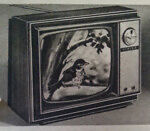
 Bought and sold a set like that about 60 years ago. Mine was an earlier model that used a 3BY6 instead of the better circuit using a 3BU8. The outward appearance was similar. 
|
|
#2
12-24-2021, 11:21 AM
|
||||
|
||||
|
Quote:
 ) soldering iron I'm able to heat the ground lugs and squeeze them straight with a flat nose pliers, then carefully wiggle them free. Space permitting you certainly could hack them off using a Zona saw while they're still attached to a chassis. ) soldering iron I'm able to heat the ground lugs and squeeze them straight with a flat nose pliers, then carefully wiggle them free. Space permitting you certainly could hack them off using a Zona saw while they're still attached to a chassis.
|
|
#3
12-24-2021, 12:40 PM
|
|||
|
|||
|
Quote:
But now I have a new problem, one of my Video IF tubes was bad (which is why I'm not getting anything from the tuner) which is a 3CB6 and I tried subbing in a 6CB6 (because I have a whole butt load of them) and it seems the TV doesn't like them, because they just glow white and then just die after 3 seconds (and it doesn't matter which 3CB6 socket its stuck in, it does the same thing in all 3 sockets) and I was hoping I could get away with not having to order a new tube for the TV (as I don't have any 3CB6 tubes in my stash.) Is it normal for a 6.3V Tube to glow white hot and then burn out after 3 seconds in a socket originally meant for a 3V tube in a series string set? I was thinking that it was possible to install a higher voltage tube in a lower voltage tube spot in series string radios and TVs (like how you can sub in place of a 35L6 a 50L6 on old Series string radios and it would run fine.) Am I missing something here? 
|
|
#4
12-24-2021, 01:18 PM
|
||||
|
||||
|
Quote:
Congratulations on a major victory putting that missing B+ wire back in place. Although I can't believe how much time we've been chasing tail because of that very simple oversight.  You really need to post more photo's of your handiwork when asking for advise. My suggestion to you is to take very detailed pictures before you remove any original components so you can refer back to them. And you would do us all a big favor by getting a couple books on understanding very basic DC circuits so you have a better grasp of how to trace voltages in a power supply circuit. Read up on Ohms Law and understand how to apply it. You really need to post more photo's of your handiwork when asking for advise. My suggestion to you is to take very detailed pictures before you remove any original components so you can refer back to them. And you would do us all a big favor by getting a couple books on understanding very basic DC circuits so you have a better grasp of how to trace voltages in a power supply circuit. Read up on Ohms Law and understand how to apply it.
|
|
#5
12-24-2021, 01:55 PM
|
||||
|
||||
|
“ Your 6AQ5 is a 450ma tube, so you're really pushing that one as well. “
For grins, I connected a 6AQ5 to a constant current power supply set to 600ma and measured the voltage drop across the heater. The heater voltage stabilized at about 10.5 volts! This is indeed really pushing it for a 6.3 volt tube... I suggest that proper 5AQ5 be ordered as well. jr
|
| Audiokarma |
|
#6
12-24-2021, 02:05 PM
|
|||
|
|||
|
Quote:
|
|
#7
12-24-2021, 04:13 PM
|
||||
|
||||
|
Quote:
X2 at what everyone said abot taking pictures beforehand. Saves a lot of headaches. It sure beats the old days of writing notes down on paper.
|
|
#8
12-24-2021, 02:27 PM
|
|||
|
|||
|
Quote:
|
|
#9
12-24-2021, 03:14 PM
|
|||
|
|||
|
Quote:
Last edited by old_coot88; 12-24-2021 at 03:43 PM.
|
|
#10
12-24-2021, 08:48 PM
|
|||
|
|||
|
OK, so the tube in the TV that I thought was a 6BU8 was actually a 3BU8 tube it was a GE branded replacement tube dated 39th Week of 1963, there was a bunch of dirt buildup on the tube designation number and the way GE does their tube numers in a "stencil" font the dirt buildup made the 3 look like a 6.
And then as far as the 5AQ5 goes, I took it and rechecked it in another tube checker I had laying around (a B & K DynaJet Model 666/606 Tube Tester) and the tube checked fine (no shorts in it anymore) so I wonder if I somehow blew off whatever was causing the short in the tube, I know that can happen sometimes. So it looks like all I need is that 3CB6 tube and a 6CN7 tube which I don't happen to have in my stash anywhere, the 6CN7 tube in the TV which is an original Zenith badged GE tube dated the 20th Week of 1956 only had one section that tested good, the other 2 sections tested completely dead.
|
| Audiokarma |
|
#11
12-24-2021, 01:54 PM
|
|||
|
|||
|
Quote:
A little factoid worth bookmarking: A series circuit is constant current thru the whole string. A parallel circuit is constant voltage across the whole (i.e., the voltage across each component is the same, tho each may draw different current). Quote:
Quote:
|
 |
| Thread Tools | |
| Display Modes | |
|
|




 Hybrid Mode
