
|
|
|
#1
 02-02-2007, 01:57 PM
|
|||
|
|||
 New member, just got my first old radio
Hey everyone,
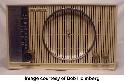
I just found your forum last night and found myself really enjoying the passion that you all obviously feel for your radios. I am the same way myself, although so far it has mainly been with defunct video technology like Betamax and the RCA Videodisc system, as well as the precursor to laserdisc, Discovision! Anyway, several months ago I found Coast To Coast AM on the dial and that was it, I've been hooked on radio ever since. And slowly, but surely I've been buying radios since then. Admittedly, the radios have been modern so far, but it's helped me to build my interest in the hobby. My GE Superadio III really cemented my relationship with radios, and I love that radio to death (I hope that's not sacreligious here since it is not an antique tube radio, but it's still a really great machine). Anyway, long story short. I recently purchased my first antique tube radio (although I've owned one prior that was a gift - more about that cool old radio later), a Zenith K731. I have some questions and could really use some advice about the radio based on what I have read so far, and what I might like to do with the radio. It seems you are all really knowledgable about this stuff and could offer me some good advice. First, let me tell you about the radio itself and it's current condition. I got it on E-Bay for about $40 including shipping. Based on what I have read so far, I know this much about it. The radio has the Early Americana cabinet and the cabinet is in near perfect condition. The grill is perfect and the dial pointer is nearly straight up and down. Cosmetically the only flaw I can see is that behind the knobs on the stems themselves there appears to be a little bit of gunk that I am hoping can be cleaned. When the radio arrived yesterday at work, I plugged it in (my co-workers love to come by my desk when my latest piece of technology arrives to see what ancient equipment might be making it's way to my house now) and after about fifteen seconds the radio came to life. I keep a small radio on my desk and we were blown away by the sound of this Zenith. The voices were booming out of the unit and I've never heard a radio with sound like that. It sounds better than my Superadio and that truly surprised me. I was also impressed that the reception was better than the radio on my desk and new I had found a new partner for my late night journeys across the AM band. You will probably appreciate that a few co-workers were quite envious of this radio and I've got a feeling that a few of them might be looking for something similar soon (it helps that I've been spreading the Coast To Coast bug). The only sound problem I noticed was when I adjusted the volume. It got a little scratchy until I found the volume I wanted. Reception is good acorss both bands and the dial appears to be well calibrated. As I type this out I am listening to a great old Jazz station from Newark, NJ at 88.3 FM, WBGO. The radio sounds simply beautiful. Certainly better than when my co-worker switched it yesterday to Hot 97, it just struck me as wrong somehow to hear the radio playing hip-hop, kinda surreal. LoL. The radio has the CD markings on the dial, so I guess that means it is pre-1963, and I know that it has the 7K07 chassis. My questions about the radio in general are this; 1. What are the differences between the 7K07 chassis and the one I hear most people mention, the 7M07 chassis? 2.. It seems, based upon the number of threads for this particular model that it must have been quite popular. Is it considered to be a good radio? 3. I haven't had a real opportunity to compare it with the Superadio yet, but I was wondering how it might be expected to perform as far as AM reception. I know the GE is considered one of the best ever, but I have read that these old radios could really pull them in as well. Thoughts? and finally, when it comes to advice, I wonder this: Should I attempt to change the tubes if the radio is working? Would a new set of tubes potentially improve performance? I priced a full set of tubes for the radio at $40 from vacuumtubes.net, is that a good price? How can I correct the scratchiness when adjusting the volume? Are repairs on these radios something that a layman can do? I've never soldered anything before, but I am always game to work on electronics and not intimidated at all. Should I be concerned about wheter or not this radio has a Selenium thingee, and is it OK to leave it plugged in and turned off when I go to work? Or perhaps I should just sit back and enjoy the radio and leave well enough alone? Oh, and one last question: I have read on another thread that some models of this radio had a lighted pointer, and some had a lighted dial. Mine does not appear to have either option functioning, this I definitely would like to fix. Any suggestions on how to accomplish this would be greatly appreciated. Thanks in advance for any advice you can give me, tonight I will open the radio up and take a look inside and report on what I see. Attached is an actual picture of the radio I purchased, not the best pic, and I don't think it does the radio justice, but I am happy to post a pic of my new friend  Thanks, Scott PS - The other old radio I once owned was a Hallicrafters S-38. I was attempting to restore it (wasn't doing the best job I imagine as I had not done enough research) and finally, the boyfriend decided that the radio had to go. Well, this time, the boyfriend is going and the radio is staying

|
|
#2
02-02-2007, 02:37 PM
|
||||
|
||||
|
The Zeniths are some of the nicest radios of the time - I have several Zenith AM/FMs from the '50s and '60s, including a stereo one - one of the last tube radios.
The tubes are probably fine - _I_ wouldn't replace any unless they test bad (but then I have two tube testers...). The 'K' indicates a 1963 model, I think. I have the index to Sam Photofacts (service info) and it's in 653-12 from 1963. I probably don't have that folder, but somebody will... it'll have the schematic, parts list, pictures of component layout. I'm not sure about this one, but some of the later Zeniths have the knobs captive - you have to pull the chassis out, and the knobs stay with the cabinet. Odd feature, but it keeps you from exposing the metal shafts, which could be a shock hazard. I had one of similar vintage, and most of the capacitors were film type, and still good. Only a few years earlier, most radios used paper capacitors, which are now uniformly BAD. If there are any black tubular ones with colored stripes, they are bad - mine had only one. I'd definitely replace the selenium rectifier with a silicon diode. The volume control can be fixed with contact cleaner spray.
|
|
#3
02-02-2007, 05:56 PM
|
||||
|
||||
|
The Zenith models which had an lighted dial usually used a 28 volt bulb which recieves power through a dropping resistor from the 120 volt AC line.
I have retrofitted those which were not originally designed to be lighted with some neon bulbs and resistors mounted on a terminal strip behind the dial. Usually the only tube problems in these I have seen are the FM converter tube (12DT8) If it works well the tubes should be fine, they do not degrade just sitting around unused (whereas capacitors do). To my knowledge none of the Zenith tube type table radios ever had a light in the pointer itself. Some GE's had a lamp which tracked behind the pointer though. As Tom says a new silicon diode (1n4007) would be good plus a fuse in the power line. Some of the later Zeniths already upgraded to the silicon diode. I would go ahead and replace the electrolytics and any paper caps if present while I had the set apart...that way you won't have to worry about its performance for a long time. Be careful as the power line connects directly to the chassis. Last edited by Chad Hauris; 02-02-2007 at 05:59 PM.
|
|
#4
02-03-2007, 07:40 PM
|
||||
|
||||
|
See http://antiqueradio.org/recap.htm for advice on replacing electrolytic capacitors, and paper or plastic caps if present. Newer film caps, which are probably OK, will resemble the "orange drop" caps shown in that article, but may be a maroon-ish or brown color.
Phil Nelson http://antiqueradio.org/index.html
|
|
#5
02-03-2007, 10:15 PM
|
|||
|
|||
 Thanks!
Thanks everyone for all of the advice. Last night I opened the back and got a good look inside. I suppose my initial impression was that it was really dusty in there. Can anyone recommend a good method of cleaning the chassis and attached equipment without causing any damage. I mean I imagine using Fantastic is not the best idea, LoL. Also, I was able to locate the selenium piece which I have believe I should replace, and took a look at the caps. Only one was black with stripes which I had previously read should probably be replaced. Unfortunately, I was unable to locate the location of the lightbulb for the dial, can anyone point me in the right direction.
Please forgive me in advance for the amateurish questions, this is totally alien to me, but I am a quick study and appreciate every bit of advice and information you can give me. To be totally honest, I have never soldered anything in my life before, however, as I work in a bookstore, I have access to tons of books on basic wiring and electronics, etc.... and plan to pick one up and toy around with some basic electronics kits to get proficient in everything before I attempt to change out any capacitors or filters. For starters I am most interested in repairing the lighted dial look, cleaning out the inside and using contact cleaner to clean the volume connection as the radio crackles when I turn the radio knob before settling on a particular volume level. Will let you know how it goes as well as post a couple before and after pics Thanks again! Scott
|
| Audiokarma |
|
#6
02-04-2007, 12:26 AM
|
||||
|
||||
|
If you cannot see a dial lamp it did not come with one from the factory and you will probably need to do a retrofit such as with NE-2 neon bulbs and resistors on a terminal strip.
Those black caps with color bands can short out and explode! so it would be best not to use the radio till you replace them. All you really need to fix this radio are good soldering skills and electrical safety skills as opposed to extensive troubleshooting skills. Most of what you need to do is preventive maintenance as the radio works for the most part already...however it will not stand up to much use with those old caps in it. Having a Sams Photofact schematic will make it a lot easier as all parts are identified on a photograph of the chassis in addition to a wiring schematic. Last edited by Chad Hauris; 02-04-2007 at 12:31 AM.
|
|
#7
02-04-2007, 09:44 AM
|
||||
|
||||
|
To the best of my knowledge none of the seven-tube Zenith table radios came with a dial lamp; except the X334 and variants (Zenith chassis # 7N07). Several, like the old Bakelite, center speaker, circular dial models come with a red power indicator by the power/volume knob.
Of the eight-tube models, I’m pretty sure only the H 845 had an illuminated dial. Illuminated pointer? That's a feature found only on the MJ 1035 I believe, which has a power indicator lamp and a bulb indicating stations behind a round plastic screen. One color for FM, another for AM...oh, those crafty Zenith engineers... I'd *still* love to see how your neon-bulb retrofit looks Chad!
|
|
#8
02-05-2007, 12:59 PM
|
||||
|
||||
|
Welcome to AK.
I've been interested in radio and electronics most of my life (I'm 50 years old; started fooling with this stuff 42[!] years ago), and am also a ham radio operator (first licensed in 1972). I have a collection of antique and vintage Zenith radios, among them a K-731 with the 7M07 chassis. I like the '731 a lot. As you noted, the K731 is a great-sounding antique radio, thanks to its two-way speaker system (5x7 oval speaker and 3-inch electrostatic tweeter) and 35C5 output stage. I live in an apartment building, so can't make a lot of noise, but I'd think this radio could blow the roof off the building  (figuratively speaking, of course) if I ever dared turn the volume all the way up. (figuratively speaking, of course) if I ever dared turn the volume all the way up. Zenith was one of the best manufacturers of radios (and later televisions) from the company's inception in Chicago in 1918 (the name "Zenith" comes from the ham radio call letters, 9ZN, of one of its founders). The firm remained in Chicago from its founding until about the early '80s, when they began manufacturing their audio products in Korea. Their televisions soon followed, with the entire Zenith plant itself being moved to Korea in the latter part of the decade. The company was sold to GoldStar, a Korean electronics firm, recently, which rang the curtain down on Zenith for good. The Zenith lightning bolt, which from the company's inception until sometime last year was their trademark, was used even on GoldStar TVs until just a few months ago. I for one was very sorry to see Zenith fade into oblivion this way, as I have liked their TVs, radios and audio gear for years. I've had several Zenith TVs over the years and still own one today, a 19" Sentry 2 table model from 1995 that still works as well as when it was new; the only thing really wrong with it, if one could call this a fault, is that the grayish paint on the cabinet is flaking off in spots. But the set still makes a great picture. Zenith had a clock radio in the 1970s which had a small LED in the dial pointer, which was used as a tuning indicator that worked on AM and FM. This was Zenith's F472W "Circle of Sound" radio, which had the speaker mounted upside down so that the sound would radiate 360 degrees around the base of the set. (The sound from that inverted 5"[?] speaker was great.) This radio also was available without the clock. I had one of the clock models which had a broken function switch; the clock itself failed soon afterward (the clocks in these sets were cheaply made and apparently not meant to last very long  , as these were the old backlighted moving-tape clocks; the flip-type clocks used in other models of these radios were just as bad as far as reliability and longevity were concerned). I removed the clock and rewired the power circuit to use a push-button switch. The radio worked every bit as well without the clock as it did with it. I lost the set when I moved seven years ago; I wish now I had kept it, as it would have been a nice addition to my vintage/antique Zenith radio collection. , as these were the old backlighted moving-tape clocks; the flip-type clocks used in other models of these radios were just as bad as far as reliability and longevity were concerned). I removed the clock and rewired the power circuit to use a push-button switch. The radio worked every bit as well without the clock as it did with it. I lost the set when I moved seven years ago; I wish now I had kept it, as it would have been a nice addition to my vintage/antique Zenith radio collection.Some models of the K-731 had the CD (Civilian Defense) markings on the AM tuning dial; some did not. The sets made during the Cold War era (1953-63) did have these icons, so yours is probably pre-'63 vintage. My own '731 does not have the CD symbols on the AM dial, so that puts it probably somewhere in the late 1950s. Also, the K731 was offered for sale in two different cabinet styles: the Early American design (as yours is) and a style with short legs (reminiscent of console TVs of early-1960s vintage). Again, the cabinet style can help pin down the vintage of your set. K731s of 1950s vintage are in Early American style cabinets; later models (until 1965) came in the newer style cabinet with the short legs. The K-731 was discontinued after 1965, when radio and TV manufacturers (including Zenith) slowly converted to injection-molded plastic cabinets and circuit-board (as opposed to point-to-point hand-wired) construction. The end of the K-731 was, IMHO, the end of an era, as these radios (not to mention the C-845, Zenith's other high-fidelity table model radio) represented a level of quality and sound excellence we will likely never see again in this age of outsourcing and high-speed automated assembly lines. Enjoy your K-731. As I said, they (and all other vintage/antique Zeniths) are great radios, and are built to last. Hang on to yours as long as you can. They sure as anything don't make them like that anymore. Kind regards,
__________________
Jeff, WB8NHV Collecting, restoring and enjoying vintage Zenith radios since 2002 Zenith. Gone, but not forgotten.
|
 |
|
|







 Linear Mode

