
|
|
|
#1
 01-11-2009, 06:49 PM
|
||||
|
||||
|
Zenith 701 - Just Got It
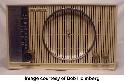
I just picked up a Zenith 701 table top.
Made in 1933. It has a very scarry resistive line cord! I know it has scratches but I couldn't go wrong for $25.00. It is a 5 tube radio with 2x 6D6, 25Z5, 75, 43. Cool knobs. An interesting note - Riders lists it in both Volume 3 and Volume 5. Last edited by jonboy55; 03-06-2009 at 10:48 PM. 
|
|
#2
01-11-2009, 09:36 PM
|
||||
|
||||
|
I just looked at the tube layout and instruction label on the bottom of the radio, and am wondering why it lists the specifications (in part) as "105-125 volts, any cycles . . ." What power line frequency was this radio actually designed to operate on, or could it actually work on any available power source regardless of frequency?

__________________
Jeff, WB8NHV Collecting, restoring and enjoying vintage Zenith radios since 2002 Zenith. Gone, but not forgotten.
|
|
#4
01-12-2009, 08:48 AM
|
||||
|
||||
|
I don't think the frequency is important with this set because it is an AC or DC set. There is a note saying that if you are using DC and the set doesn't work, just reverse the plug!
As far as the resistive line cord it won't be difficult to fix, just a large wattage 125 ohm resistor will be needed. It will be a fun project.
|
|
#5
01-12-2009, 12:23 PM
|
||||
|
||||
|
I would put that on a flat bed scanner and copy the instructions, then photoshop them and get a good new copy. Copy it in black and white. Whether you would want to replace the original right away, or keep the new copy against future use, would be up to you. But the old one is pretty brittle.
Reece
__________________
Reece Perfection is hard to reach with a screwdriver.
|
| Audiokarma |
|
#8
01-12-2009, 11:29 PM
|
||||
|
||||
|
Quote:
BTW, I Googled "Zenith 701" a few minutes ago, looking for information on this radio. I got back several pages of links and information in regard to the Zenith Aircraft Corporation, but nothing regarding the radio we are discussing here. I didn't realize there was an aircraft company using that name. Always thought "Zenith" was a copyrighted trademark of the Zenith Radio Corporation of Chicago. If the word is not or was not in fact a copyrighted trademark or service mark of the ZRC, how many other American companies used the name Zenith before that company went out of business in the US and outsourced to Korea in the late '80s-'90s?
__________________
Jeff, WB8NHV Collecting, restoring and enjoying vintage Zenith radios since 2002 Zenith. Gone, but not forgotten.
|
|
#9
01-13-2009, 12:37 AM
|
||||
|
||||
|
Quote:
--Bob
|
|
#11
01-15-2009, 01:55 PM
|
||||
|
||||
|
While reading the replies to this thread, and especially those regarding my question as to power line frequency, it dawned on me that some areas of New York City had DC power (mainly for elevator motors) until very recently. I don't know if NYC still uses DC anywhere, or whether their elevators (motors) now run exclusively on AC power. What were ther advantages (if any) of running elevator motors on direct current as opposed to AC? I'd think a motor winding wouldn't care if it were fed AC or DC power; the motor would run, regardless, unless there is some characteristic of line-operated motors that does make them sensitive to the type of current flowing through their windings. Come to think of it, I seem to remember reading something in an old electronics book or magazine years ago that stated if an AC motor were run on DC (intentionally or by accident), the windings would burn up immediately. I do know this can happen with any kind of equipment powered by a transformer, say a TV or radio. Plug one of these into a DC source and the transformer will burn out at once. I had an aunt who accidentally ruined a radio this way when she and her husband were on their honeymoon in the late '40s. They were in Canada (or some part of the US that still used DC power at that time), IIRC, and she or he accidentally plugged a radio designed for AC only into a DC outlet, or perhaps it was a 117-volt radio on a 220-volt circuit. Needless to say, however, the radio was immediately ruined.
As to 25/50 cycle power, when I read Reece's reply that some areas of New York state, especially Niagara Falls, had 115-volt 25-cycle AC power I was surprised. With the rest of the US mainly on 60-cycle AC certainly by the '50s, it seems strange to me that an area such as Niagara Falls would still be using 25 cycles. Maybe that area's proximity to Canada had something to do with it? Some parts of Canada may have had 50-cycle AC for some time into the '60s, even after the US had converted most of its power grids to 60 cycles.
__________________
Jeff, WB8NHV Collecting, restoring and enjoying vintage Zenith radios since 2002 Zenith. Gone, but not forgotten.
|
|
#12
01-15-2009, 02:01 PM
|
||||
|
||||
|
Quote:
A phonograph that operates on AC or DC? I can see the amplifier running equally well on either source since series tube strings will operate on either type of power, but I'd think DC power would burn out a synchronous phonograph motor in no time flat, as soon as the motor was switched on.
__________________
Jeff, WB8NHV Collecting, restoring and enjoying vintage Zenith radios since 2002 Zenith. Gone, but not forgotten.
|
|
#13
01-15-2009, 03:21 PM
|
||||
|
||||
|
Quote:
John
|
|
#14
01-15-2009, 05:24 PM
|
||||
|
||||
|
Quote:
--Bob
|
|
#15
01-15-2009, 07:21 PM
|
|||
|
|||
|
We had that set over here in the U.K; Ive seen a couple of them, we call them all-American 5's and they were badged "Belmont". There is a famous one belonging to a famous collector over here that has been on Tv several times. Its his favourite little set...............IANJ
|
| Audiokarma |
 |
|
|






 Linear Mode

