
|
|
|
#16
 02-03-2009, 09:34 PM
|
||||
|
||||
|
Quote:
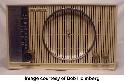
This one may (and probably should) pick up some of the more common 50kW stations at night, such as KYW, WBZ, WLS-AM, WABC, WCBS, etc. in the east and KABC, KCBS, et al. if within 50 miles or so of Los Angeles, among others--I've heard the big 50kW east-coast powerhouses here in northern Ohio after dark, using nothing fancier than a cheap 6-transistor portable radio with a loopstick antenna. However, I do agree that a radio with this simple circuit (not much better than a glorified crystal set) would fail miserably if one were trying to snag a 0.5-kW station in, say, Kansas while he/she was in Ohio, even if the radio were attached to a 50-foot outdoor wire. I once owned a Zenith integrated stereo system with an AM tuner probably not much better than the one being discussed here. It was so bad it wouldn't pick up anything other than local stations in the daytime, and even some of those weren't readable depending on weather (I was about 15 miles from Cleveland at the time); at night I was hearing SW broadcasts in the middle of the broadcast band. I wouldn't be surprised if whomever built the radio we are discussing took his or her cues from Zenith of Korea or Taiwan (!), as the set looks as cheaply built as the AM tuner in my stereo system must have been. The digital AM/FM tuner in my present bookshelf stereo isn't much better; it picks up one local 1kW (0.5kW nights) AM station 5 miles from here at 560 and 1460 kHz, 0.9 MHz apart. The station's assigned frequency is 1460 kHz. The FM tuner is not that bad, but not excellent either. I am some 40 miles from Cleveland's FM stations; this tuner won't get any of them in stereo using a standard T-dipole antenna. I bought a Terk tower AM/FM antenna which works better, but when using the amplifier, I have to be careful not to run the gain control too high, or else it overloads the tuner something terrible--even in this moderate signal area just beyond the suburbs of Cleveland. BTW, when did you move to Seattle? I ask because I looked at your listing on the Buckmaster ham radio callsign server today and found that WA2ISE is still listed as being in Oradell, New Jersey. Did you move west just recently? 
__________________
Jeff, WB8NHV Collecting, restoring and enjoying vintage Zenith radios since 2002 Zenith. Gone, but not forgotten. 
|
|
#17
02-03-2009, 09:59 PM
|
||||
|
||||
|
Quote:
That's too funny, jonboy, now you have to restore the unit! --Bob
|
|
#18
02-03-2009, 10:11 PM
|
||||
|
||||
|
I've seen similar looking 120V bulbs used as the dial lamp in '40's and '50's radios with selenium rectifier based power supplies.
|
|
#19
02-03-2009, 10:12 PM
|
||||
|
||||
|
Not a good set for DX ?!? I was gonna offer to swap my EK-07 or one of the R-3XXs on it.... Seriously, I've found that a LOT of these seemingly "dead" otherwise less-than-stellar sets come alive if you give 'em a halfway decent antenna...I took my KIWA MW Loop over to a bud's house one Sunday after, he had a late '30s catherdral that he'd re-capped, changed a few tubes in, done eveything by the book, but it was still deaf as a hammer. We hooked the KIWA up to it, & it CAME ALIVE...Little one & two lunger local-service daytimers from way up in Virginia & Kentucky bloomed...It was amazing. I wouldn't let him keep my KIWA, but he did run a line from his house about 75' to a tree. His set sings fine now...
__________________
Benevolent Despot
|
|
#20
02-03-2009, 10:27 PM
|
||||
|
||||
|
Invariably C6 bulbs were in an 8-lamp string. They were designed to operate at 14-15 volts.
|
| Audiokarma |
|
#21
02-03-2009, 10:55 PM
|
||||
|
||||
|
Quote:
Quote:
Quote:
__________________

|
 |
|
|







 Linear Mode

