
|
|
|
#1
 03-17-2009, 11:30 AM
|
||||
|
||||
|
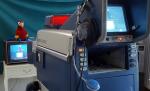
Marconi colour television camera
anyone know what kind of camera is this. the caption of the photo says "TV Studio 50's in America" seems to me rather technical tests.

|
|
#3
03-17-2009, 12:19 PM
|
||||
|
||||
|
I suspect it's not the 50's either.
The photo has the look of dupack (two-color maroon-green) process (as with very early color movies, and some modern Japanese magazines).
|
|
#4
03-17-2009, 02:05 PM
|
||||
|
||||
|
the look of the clothes would seem American, but the camera marconi is manufactured in England. anyone can clarify what
|
|
#5
03-17-2009, 02:11 PM
|
||||
|
||||
|
Color Television Demonstration
Gloria Clarry, poses for the camera during a demonstration of color television broadcasting, directed by studio manager, Norman Phelp (r), at Marconi House. After three years of research, Marconi have developed a color camera which uses two tubes, as opposed to the usual three, and sends out full colour pictures which can also be picked up on ordinary sets in black-and-white. Image: © Hulton-Deutsch Collection/CORBIS Collection: Historical Standard RM Date Photographed: May 11, 1954 Experimental colour, MkII series Early colour 2 x 3" I.O tubes Last edited by firenzeprima; 03-17-2009 at 02:20 PM.
|
| Audiokarma |
|
#6
03-21-2009, 03:16 AM
|
||||
|
||||
|
Although the image looks orange-green, it does have blue, which indicates that the image is just really faded. Look at the ribbons under the chair near the lower middle of the image.
I'd bet this was part of an early NTSC/405 "colour" test.
|
|
#7
03-21-2009, 08:23 AM
|
||||
|
||||
|
I have scanned the pic from a magazine.
Experiments of television with the two tubes I attended in 1979 with the engineer Jaegher in Florenze, The camera using was a Hitachi 1000 FPC modified. Jaegher argued that the tube of the color blue was unnecessary, but nevertheless the results were not significant ....
|
|
#8
03-25-2009, 04:19 PM
|
||||
|
||||
|
Hi
You might be interested in this page http://www.tvcameramuseum.org/marconi/marconithumb.htm and a few notes about the marconi:- Use of two tubes, one normal resolution luminance and one for the two low definition colour signals. This used a grid giving a definition equivalent to 1.5Mc/s, half the normal definition. This makes use of the eyes inability to see the fine detail of colour. General Description Looks like a tall Mk2. It used two tubes. Some reports say there was no viewfinder fitted (3). References 1. WW September 1954 page 436 and "British Radio and Television” June 1954 page 121. 2. Problems of television cameras and camera tubes, by L.H. Bedford. Journal of the British Institution of Radio Engineers, Oct 1954. 3. Journal of the Television Society, 1954 page 241 and page 503. regards Brian
|
|
#9
03-25-2009, 05:45 PM
|
||||
|
||||
|
Quote:
__________________

|
|
#10
03-29-2009, 06:22 PM
|
||||
|
||||
|
It might be a Canadian picture. I seem to remember that the CBC used a lot of Marconi equipment that had been modified or built for 525 line NTSC. Some CBS affiliates used B&W Marconi's in the U.S., but I don't think they ever purchased color cameras from them.
David
|
| Audiokarma |
|
#11
03-29-2009, 10:45 PM
|
||||
|
||||
|
I think it was never sold commercially, and since the same personnel appear in both photos, they must both be taken at Marconi house. I'd be willing to bet that only one was ever built. I think the caption "in America" is a mistake.
|
|
#12
03-29-2009, 10:50 PM
|
||||
|
||||
|
By the way, it's hard to explain the colors in that picture as being due to fading. The reddish skin tones would indivate that the yellow ink has faded, while the green tones would argue that it has not.
|
 |
|
|







 Linear Mode

