
|
|
|
#7
 03-20-2009, 08:18 PM
|
||||
|
||||
|
Quote:
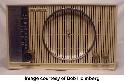
I'd hang on to that H503, as it is an example of quality (in build and in sound) we will never see again. I have several vintage Zenith radios here and have no intention of getting rid of any of them--they work too well and sound too good. In fact, I think the RF signal circuits in my C-845 may be working too well. This radio has a 6BJ6 RF amplifier that works on both AM and FM, and I swear, the radio is so sensitive because of that circuit it picks up TV horizontal oscillator harmonics all across the AM dial in the daytime (I live in a 12-unit apartment building). At night the reception is better, as I can hear stations up and down the East Coast and Great Lakes all night long. An example: I live in a part of northeastern Ohio that is geographically closer to Philadelphia, Pennsylvania than to Chicago, but my C-845 will get every major AM station from both cities equally well after dark--using just the built-in Wavemagnet antenna. I also hear WBZ newstalk radio 1030 in Boston, WRVA talk radio 1140 in Richmond, Virginia, et al. quite well at night. However, try as I might, I cannot hear stations from Wisconsin, Indiana (except Fort Wayne), or Michigan (except Detroit). I'm sure these states have 50kW stations that should cover most of the Great Lakes region (including Ohio) as well as their own metropolitan areas at night (as do Detroit's WJR-760 and Fort Wayne's WOWO-1190), unless they have strictly limited antenna signal patterns and/or run lower power after local sunset. Hmmm.  BTW, if the dial cord is slipping on your H503, you should be able to turn the dial pointer by hand if the cord should break. I have an H511Y on which the dial cord broke years ago; that's exactly how I tune it, by moving the red dial pointer with a finger. Your H503 looks as if the dial pointer is exposed as well, so manual tuning should be possible in an emergency. BTW (2): You mentioned that the former owner of your H503 attached a new line cord to the radio by means of splicing the cord to a stub of the original, using wire nuts. Even if it works (as you say yours does), I'd take those wire nuts off and solder those connections, insulating the joints with electrical tape--or better yet, going under the chassis and soldering the new cord directly into the circuit, clipping off and disposing of the remains of the original cord. Wire nuts are fine for temporary splices, but I wouldn't use them for long-term fixes. The problem is that connections made with wire nuts are not soldered, so they can corrode and cause problems down the road.
__________________
Jeff, WB8NHV Collecting, restoring and enjoying vintage Zenith radios since 2002 Zenith. Gone, but not forgotten. Last edited by Jeffhs; 03-20-2009 at 08:24 PM. 
|
|
|




 Threaded Mode