
|
|
|
#1
 08-28-2010, 09:31 PM
|
|||
|
|||
|
Vintage TV Found
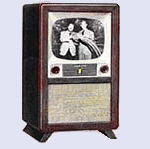
I was going through the attic in my new apartment that is shared with another tenant. She said everything up there was there when she moved in and mostly everything was left by other tenants. I found an old General Electric Insta-View TV up there and was wondering if anyone could give me some info on it. Model name, year and how much work it would be to get it working or if it would be worth anything in its current condition.
Thanks, Jason 

|
|
#2
08-28-2010, 10:30 PM
|
|||
|
|||
|
Wow!!!
That must be extremely rare and in my opinion a most valuable set to keep and restore. I think it is from GE's first rectangular line up prolly '66 but somebody here will give the exact info soon. I always heard those GE's were awful like the early Motorola's but I think it is awesome to see those less desired sets operating as they would have when new. Plus, I find it very interesting that a huge corporation like GE would sell something that was not as good as it could have and should have been based on thier obvious capabilities to produce something on par with the best at the time which were RCA and Zenith.
|
|
#3
08-28-2010, 10:47 PM
|
||||
|
||||
|
It looks like a black & white set to me, 1964-ish.
|
|
#4
08-28-2010, 10:48 PM
|
||||
|
||||
|
I am fairly certain (but not 100%) that this is black & white. A color would have more controls up front and, on a GE, it would have their "3 shields" color emblem. I would agree that it probably dates from about 65-67. "Insta-view" means that it has a feature where the tubes are kept on at lower voltage even when the set is turned off, allowing the TV to spring to life very quickly when turned on. When energy prices went up in the early 70s, this practice was discontinued. I don't think it became common until later in the 60s. Instant-on tended to be hard on picture tubes, causing them to wear out prematurely.
If this is a b/w set, it has little value, although it would have been one of GE's better b/w sets at that time. It would have more value if color. Either way, it could be brought back to life. Who knows, it might even work as-is. Best to take some precautions before trying it...but I'll leave that advice to someone else. The set should be saved as not many of these are left.
__________________
Bryan
|
|
#9
08-30-2010, 09:26 PM
|
||||
|
||||
|
Quote:
GE along with Motorola developed the 1-tube color section, called the "SODPIL" - "self oscillating detecting phase injection lock." The Motorola chassis with this innovation had some of the worst color ever (weak greens that tended to turn either brownish or bluish), and required a third color adjustment to balance the R-Y and B-Y DC outputs. Motorola touted this as a feature allowing the customer to select sepia or bluish tones for both black and white and color programs.
|
|
#10
08-30-2010, 09:49 PM
|
||||
|
||||
|
Quote:
In person I can spot a color set with little trouble, but when first starting out I had to look closer. There were times that I actually stared at the phosphor to figure it out!
__________________
Bryan
|
| Audiokarma |
|
#11
08-31-2010, 02:22 PM
|
||||
|
||||
|
Quote:
|
|
#12
08-31-2010, 02:36 PM
|
||||
|
||||
|
Quote:
|
 |
|
|




 Linear Mode

