
|
|
|
#16
 06-24-2011, 05:45 PM
|
||||
|
||||
|
Someone in another thread had some luck with conductive silver epoxy, especially if they're snapped off too close to the glass to easily solder to.
If the leads are straight, maybe giving them a coat of that would help? 
|
|
#18
07-08-2011, 07:54 PM
|
||||
|
||||
|
Yep. Temps probably get somewhere similar to your average light bulb, considering the tubes also have black-body radiation coming from the filament.The leads/glass themselves will of course get nowhere near as hot. I think if you can get something rated for over 150 deg. C you should be ok; the solder usually begins to soften around 200 (and melts at 250), and you don't want to go anywhere near that during normal operation.
|
|
#21
07-08-2011, 08:29 PM
|
||||
|
||||
|
Anything at or over 150 should do the job. (Yeah, it was kinda buried in the middle of the post
 ) )
|
|
#22
07-10-2011, 10:02 AM
|
||||
|
||||
|
Thanks. I was actually looking at this paint. My idea is to drop a little bit of the paint where the lead is surrounded by glass, then soldering the new lead to the dried paint. I'd then take some heat shrink tubing and wrap up the whole she-bang to prevent arcing. Finally, I'd wrap up the old leads, then thread on the socket and use a heat resistant adhesive to hold the base on. Solder the base's leads and call it good.
|
|
#23
07-10-2011, 10:49 AM
|
|||
|
|||
|
You might want to look at the method Phil Nelson ended up using on his Capehart's CRT. Down around post# 57 onward..
http://www.videokarma.org/showthread...=251233&page=4
|
|
#25
07-10-2011, 10:59 PM
|
||||
|
||||
|
The epoxy repair that I did on my Capehart's CRT seems to be holding up, although I haven't powered the tube for more than about 15 minutes altogether, so far. The advantage of the silver-filled epoxy is that it makes a strong physical bond as well as an electrical connection.
Phil Nelson
|
| Audiokarma |
|
#26
07-11-2011, 09:54 AM
|
||||
|
||||
|
I wonder if it's possible to make your own conductive epoxy?
I know an old trick if you need thermal epoxy is to just mix heatsink paste+epoxy and it works quite well for general purpose. Be interesting to see how far you'd get if you got some really fine metal powder and mixed it with epoxy.
|
|
#27
07-11-2011, 02:08 PM
|
||||
|
||||
|
Isn't J-B Weld epoxy with metal powder mixed in ? I don't think it's very conductive though

|
|
#28
07-11-2011, 07:44 PM
|
||||
|
||||
|
I think you should solder to it even if you have to use hair thin wire from an i.f. coil it will still have less resistance than using an epoxy, or epoxy conductive glue. You can do it with a fine point solder iron, and good rosin cleaner. And the thin wire will not torque the solder joint too much at all as you remount the plug base. Even if you have to get a dremmel tool with a pointy thing on it and dig out some of the glass around the broken wire. Wear a face mask and do it in the garage.
__________________
Yes you can call me "Squirrel boy"
|
|
#29
07-11-2011, 09:21 PM
|
||||
|
||||
|
I don't think JB Weld is very conductive, if at all. I have used it to repair phenolic switch wafers that were damaged by B+ arcing.
The silver conductive epoxy is designed for electronic repair. Suggested uses include repairing PC boards. Phil Nelson 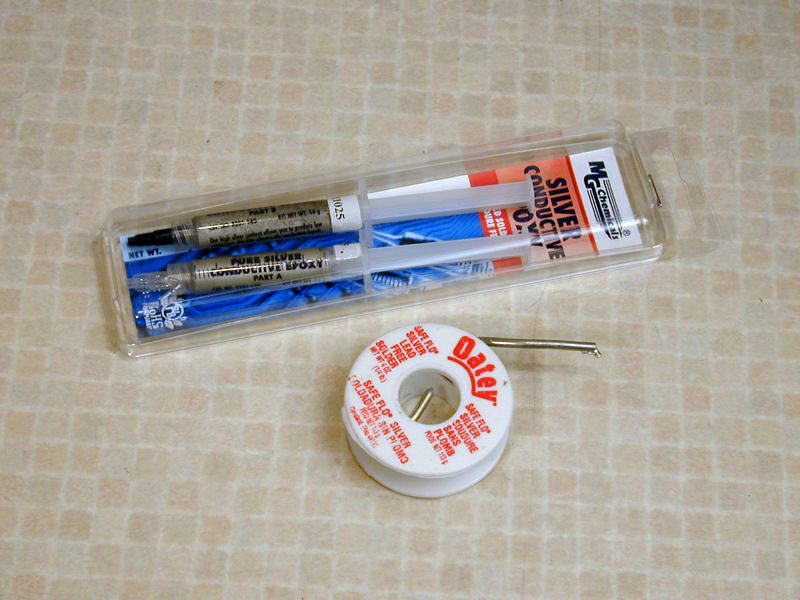 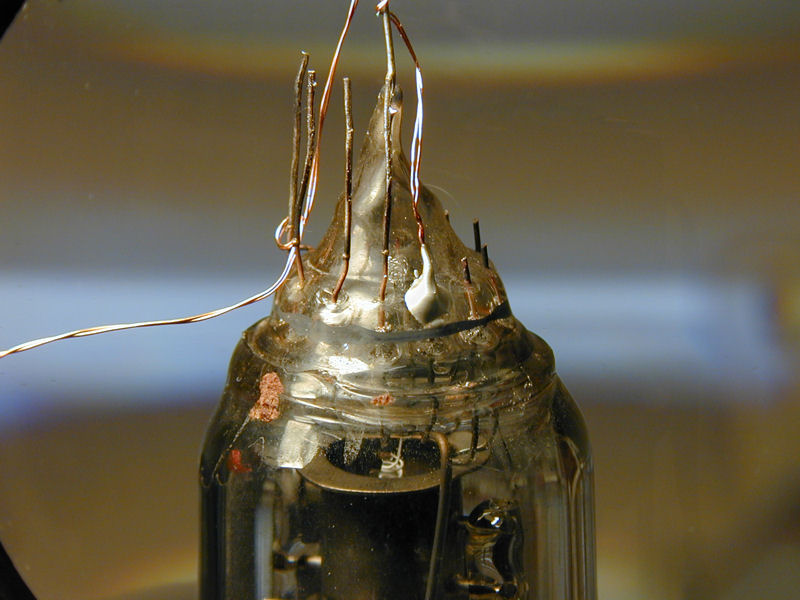
|
|
#30
07-12-2011, 07:25 AM
|
||||
|
||||
|
The silver epoxy is good stuff. While it has a higher resistivity than copper wire, it's still negligible. It adheres really well too. The normal heat from operation of the CRT isn't going to hurt it either.
|
| Audiokarma |
 |
|
|





 Linear Mode

