
|
|
|
#16
 01-26-2012, 09:39 PM
|
||||
|
||||
|
Big news! First, let me say this: it used to be that if I wanted to just casually talk TV I would do it here, but for technical advice I usually had to turn to posting on ARF. Well, that has changed. The depth of talent here is getting better all the time.
With a lot of skepticism, when I got home tonight I took a good, close look at the "bad" side of the flyback. Poking and prodding revealed, hey, that break just might be accessible after all. Sure enough:  You'll notice the corrosion. I picked this set up back in the 90s from a guy I knew through work. He had it stored in an old shed with a dirt floor. It killed the finish but the chassis, overall, isn't bad. No rust, for instance, but some of the tube pins/sockets are a little corroded besides these wires. Anyway, as you can see, I had enough to work with here. I carefully soldered an extension, slipped on a piece of insulation, and took an ohm reading...continuity! I put the cage back on and gave it a whirl:  The dog has been tamed! Thank God for the guys on Videokarma! Now, on to some smaller issues. I was able to get the audio running after some fiddling. There are some problems which seem to be temperature related. The set has to warm up for about 5 minutes before the audio will work at all; at the same time, the AGC drifts the longer it plays. The horiz hold is also at the end of its travel. I'll take some voltage measurements with it cold and then see what happens. Got my can of freeze spray at the ready. Oh, and one part of the intermittent audio turned out to be a bad output transformer, which is now open. I should have something in my stash close enough for that one. I'll keep everyone posted.
__________________
Bryan 
|
|
#18
01-28-2012, 01:12 AM
|
||||
|
||||
|
Nice work!
__________________
Chris Quote from another forum: "(Antique TV collecting) always seemed to me to be a fringe hobby that only weirdos did."
|
|
#19
01-28-2012, 11:38 AM
|
||||
|
||||
|
Yee-hah!
Phil Nelson
|
|
#20
01-28-2012, 10:29 PM
|
||||
|
||||
|
I'm sure happy about this one. I just about have the audio figured out. Tonight I spotted a 680K resistor going to the B+ line at the 6K6 instead of the grid. Maybe I did it while swapping caps? That didn't entirely fix the delayed audio, though, at least not consistantly. Just touching the B+ line with a resistor to ground (or cap to ground) will sometimes get it to work and stay working after I remove the component. But nothing seems intermittent. This is minor stuff, though. I was able to tweak the horiz osc coil to center the travel of the horiz hold; it now will not tear at either end of the travel, which is how I want it. With nothing but the connection to the digital converter box, it tunes the FM radio band quite well-much better reception than I expected. I didn't mention it in this thread, but this uses a Mallory Inductuner. When I first went to pull the chassis I could not, for love nor money, get the tuning knob off. I tried heat, cold, lube, and all kinds of pressure. Brute force eventually got it off but also destroyed the inner workings of the tuner. I have Bill Cahill to thank for the NOS one installed now. (I bet Bill has forgot about that-it's been a few years!)
__________________
Bryan
|
| Audiokarma |
|
#21
01-31-2012, 01:14 PM
|
||||
|
||||
|
Quote:
__________________
Jeff, WB8NHV Collecting, restoring and enjoying vintage Zenith radios since 2002 Zenith. Gone, but not forgotten.
|
|
#22
01-31-2012, 02:34 PM
|
||||
|
||||
|
Ever wondered why the wires coming from a flyback core to the terminals on the phenolic board are always covered with some kind of 'goop' where they attach to the terminal and head back towards the flyback? The reason is these wires have a insulation coating which is designed to vaporize when heated for soldering, as these very fine wires would be near impossible to strip if covered with regular enamel. The wires are also often covered with a piece of tubing to give some mechanical protection.
All of this leaves the wires going to the flyback vulnerable to corrosion over time. Any nick or ding in the wire, or excessive heating during soldering, or poor coverage by the 'goop', will leave the tiny wires prone to corrosion.
__________________
John Folsom
|
|
#23
01-31-2012, 10:36 PM
|
||||
|
||||
|
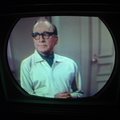
Here is a final shot with the set back together:
 I installed the "optional" capacitor to the 6K6 circuit and the audio is now reliable. There is a hiss in the sound, like it isn't tuned in well enough, and that might have to wait until I'm better equipped to do an alignment. After a few minutes of warm up this is a very stable, decent performing set.
__________________
Bryan
|
 |
|
|








 Linear Mode

