
|
|
|
#1
 04-14-2012, 08:21 PM
|
||||
|
||||
|
Oz color difference
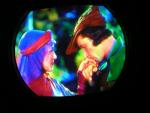
i have two different screen shots of what I call "Bye To Oz". One is a screen shot taken directly from my CTC-4, and the other was posted on this blog. The one with the white clouds is the one I got from the blog, and the other is the CTC-4 shot. Wondering if I'm crazy, or if there is a good reason for the difference in color.
Kevin 
__________________
stromberg6 
|
|
#2
04-14-2012, 08:37 PM
|
||||
|
||||
|
I recall being at nicks (likely during the color proto-CRT test) and hearing that a while back OZ had been remastered with the original technicolor footage(I seem to recall that this footage had one film strip per-primary like color TV), and that the older tapes and discs of it were copied from lower quality film and the color looked lousy in comparison.
I could have some details wrong from my recall, but I think the difference is the recordings the sets are playing.
__________________
Tom C. Zenith: The quality stays in EVEN after the name falls off! What I want. --> http://www.videokarma.org/showpost.p...62&postcount=4
|
|
#3
04-15-2012, 12:09 AM
|
||||
|
||||
|
I could joke about the nick name for NTSC, "Never Twice the Same Color", but what you see is probably a mix of several reasons. One is the gray-scale/color-temperature difference between the two sets as well as differences in basics such as color level and contrast settings. The next is differences in how one camera records a picture compared to another. The third is what Tom mentioned, that The Wizard Of Oz has been remastered, in fact more than once in the last twenty years if I remember right. There are even two different versions in HD, not to even count versions on DVD, Laser Disc, or SD broadcast.
__________________
Chris Quote from another forum: "(Antique TV collecting) always seemed to me to be a fringe hobby that only weirdos did."
|
|
#4
04-15-2012, 01:26 AM
|
||||
|
||||
|
Quote:
Is there one by another distributor? Cliff
|
|
#5
04-15-2012, 08:39 AM
|
||||
|
||||
|
Obviously, yr CTC-4 is DEFECTIVE...Please send it IMMEDIATELY down here to me, I will take care of it...Seriously, it could just be the difference in sets, broadcast qualities, whatever.
__________________
Benevolent Despot
|
| Audiokarma |
|
#6
04-15-2012, 10:42 AM
|
||||
|
||||
|
I am no expert in this area, but I would doubt that the issue is the DVD.
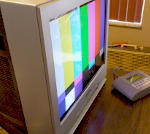
It has been my experience that if you have the correct alignment in the color section of your chassis, you will get good color balance. I have had this sort of problem when the quadrature adjustment is off. If that adjustment is off you will not be able to get the correct balance between the 3 colors. You can use a scope, as John Folsom has taught me, to view the stairstep waveform on a scope to balance the colors correctly, which is a more accurate way to get the perfect balance. You can tell easily if you put a NTSC color bar pattern on the screen. I try to get the proper color balance by looking at the yellow bar on the left, the aqua bar to the immediate right of the yellow, and the magenta bar between the blue and the red. IF those 3 colors are ballanced properly, with the 3 primarys red, blue and green, then you will have a fairly correct representation of the color that your DVD is producing. Then I go to the first scene in OZ when Dorthy first opens the door and walks into OZ. There are some large green leaves and a couple large yellow flowers. I compare the color of the leaves and the yellow flowers to the same image on a properly set up modern color set and if the roundie is fairly close to the benchmark, then I am happy. I would say the color alignment in your set is off. But color is a subjective thing, and if you like it that way, I say whatever floats your boat.
__________________
Vacuum tubes are used in Wisconsin to help heat your house. New Web Site under developement ME http://AntiqueTvGuy.com
|
|
#8
04-15-2012, 03:22 PM
|
||||
|
||||
|
Some of the home video releases of feature films were made from prints struck who only knows when using color processes that are known to age less than gracefully.
Assuming that the two sets were setup with the loving care known to be present here, I would point toward a really old, faded print used in the video transfer and a tech that did what they could to make up for a trash print at the time.
|
|
#9
04-15-2012, 03:56 PM
|
||||
|
||||
|
If those two photos were taken with different cameras under different lighting conditions, that alone could result in different colors. If I photograph a B/W set playing, my digital camera makes the screen look blue!
Phil Nelson
|
|
#10
04-15-2012, 04:04 PM
|
||||
|
||||
|
Quote:
I'd say there are multiple causes for the differences in the two frame captures. The set labeled "BYE TO OZ_CTC4(Small)", is out of convergence especially in the lower right quadrant and has the color level set very high and the contrast is slightly high. The image labeled "BYE TO OZ_wierd color(Medium)" seems to have both color and contrast set very low and the hue adjusted very green. I also suspect that both are not from the same restoration of the film. Each restoration of this title has produced quite different colors. This film was shot with three strip Technicolor (three B&W negatives) and therefore when MGM restored the film there is a huge latitude in color available. Neither shot comes close to the colors that an original Technicolor imbibition color print would have had. Then the 1939 Technicolor IB prints did not match the circa 1954 Technicolor reissue prints, because of changes in the dyes used. Modern Eastman color prints will have a still different look, and if you see this in a theater today, the digital projection will be different still! (For the record: I've seen both an original circa 1954 Technicolor IB print projected and a modern digital print projected.) In short, the primary colors used in Technicolor prints, Eastman color prints, NTSC and HD, and theatrical projection, all are slightly different, so when you do the conversion, something is always lost. Then when you get to the digital camera, it often automatically color corrects to what its dumb computer thinks the picture should be. Then if you look at these two pictures on two different computers, I'll bet the results are also different. James. Last edited by earlyfilm; 04-15-2012 at 04:09 PM. Reason: corrected incomplete sentence
|
| Audiokarma |
|
#11
04-15-2012, 07:12 PM
|
||||
|
||||
|
This is why when I screen cap my TV I always manually white balance the camera to the TV, and then modify it further to actually match what i see on the tv. My desktop Mac is used for photography and is calibrated
|
|
#12
04-15-2012, 08:52 PM
|
||||
|
||||
|
Quote:
When I look at the photo on the left it strikes me that the color saturation is also very high. This may also account for a shift to the red if the crt does not track well. I would turn down the color intensity and see if you still have an orange brick road instead of a yellow brick road. The sky is also way to blue and so the white clouds are being oversaturated with blue. Turning down the saturation may also bring back the white balance. IN the final analysis, if a set has a properly aligned color section, you should be able to get a good color picture with good color balance, if you pay close attention to adjusting the user controls to a "normal" real world picture. Color saturation, fine tuning, contrast and brightness will make a huge difference on getting a proper picture on these very early sets. Pushing the various adjustements to the extreme will get you a picture that does not look natural. By the mid 60's color roundies were a lot more linear and were producing a normal looking picture over a wider range of brightness, contrast and saturation.
__________________
Vacuum tubes are used in Wisconsin to help heat your house. New Web Site under developement ME http://AntiqueTvGuy.com
|
|
#13
04-15-2012, 09:54 PM
|
||||
|
||||
|
Quote:
There is an HD version that was broadcast on, if I remember right, TNT HD, and the restoration that was put onto the Blu-ray discs as you mentioned. The TNT HD broadcast was before the latest restoration was completed.
__________________
Chris Quote from another forum: "(Antique TV collecting) always seemed to me to be a fringe hobby that only weirdos did."
|
|
#14
04-15-2012, 10:46 PM
|
||||
|
||||
|
Quote:
|
|
#15
04-16-2012, 09:43 AM
|
||||
|
||||
|
Quote:
I have done the calculations of the color range of known dye sets, to the point of generating sRGB output that can be displayed on a computer monitor. I will be showing this as part of my presentation at the Early Television Convention, and would love to present bona fide Technicolor as part of it.
|
| Audiokarma |
 |
|
|











 Linear Mode

