
|
|
|
#1
 09-23-2012, 04:19 PM
|
|||
|
|||
|
radiola 3, period correct modification
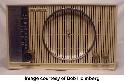
So I tend to lowball a bunch of stuff on ebay and then forget about it, its how i aquire most my radio pieces. Well it seems ive won a decent looking radiola 3, though its in the longer radiola 3a chassis. Its missing the bottom panel, but oh well. Since theres no tubes, i was thinking about using some cx299's i have. The dealers of the period had factory issued instructions on how to modify your radio to use them, so it would have enough output to drive a speaker.
Perhaps using a blank sheet of bakelite i have to cover the open portion of the top of the chassis. Then add a volume and a 1/4" jack to that side. Well, what do you guys think?  Uploaded with ImageShack.us http://www.antiquewireless.org/otb/radiola.htm the modification.   Uploaded with ImageShack.us  Uploaded with ImageShack.us
__________________
"Good morning whiskey, good morning night. The end of the world is in my sight." Hank 3 Last edited by jbivy; 09-23-2012 at 04:43 PM. 
|
|
#2
09-24-2012, 07:00 AM
|
||||
|
||||
|
Why not modify it? This one has already been played with, case is wrong, filament knob incorrect, later mica cap under there, who knows what else. Somebody else may be looking for that III-A case, and the regular III case is just a box, easy to make or find. There are still lots of III's and III-A's out there some worse some pristine so have fun with this one. If there's a way to keep the tube sockets down where they are it would look better.
__________________
Reece Perfection is hard to reach with a screwdriver.
|
|
#3
09-24-2012, 03:58 PM
|
|||
|
|||
|
Quote:
My idea, as i stated early, is to mod this with the factory 20s plans, so it would attain speaker level output. Ive always loved the look of these things and well.. im actually a bit happy that this one is messed with, since then i dont have to go through the cost of buying wd-11's. Thats a good idea about trying to sell the original case, im sure someone out there with a good stock 3a would be happy to have it. As you said its just a box basically. I could easily build another. Ive read that these original transformers were rather prone to failing, so that is a minor worry. Though even if it is open, im sure i can find a newer equivalent that would work with it (as long as its hidden, i dont mind using newer parts).
__________________
"Good morning whiskey, good morning night. The end of the world is in my sight." Hank 3
|
|
#4
09-24-2012, 04:57 PM
|
||||
|
||||
|
Go For It !! It don't/can't work now as it is, you can/will likely turn it into somethin' that WILL... Silk purse outta a Sow's Ear, & all that...Good for you !!
__________________
Benevolent Despot
|
|
#5
09-24-2012, 07:24 PM
|
||||
|
||||
|
The socket strip doesn't look original, all those that I have seen were smaller and mounted via rubber strips (WD11's are notorioulsy microphonic) so.. gopher it! I think an 863 tube is a pretty close equiv for the WD11, someone used to sell those rebased..
As for the transformer, I have rebuilt those using the Hammond 1:3 transformer bobbin, (you can get just the bobbin, without the core) it's a 124C. It's a bit tedious doing so, most of the transformer end bells are held on with screws, but some I have seen were riveted.
|
| Audiokarma |
|
#6
09-24-2012, 07:33 PM
|
||||
|
||||
|
Oh, another thing that really perks up these sets is having the "fuse" style caps rebuilt, there is a gent named Joe Mente who has done some form me.. They look stock when he's through with them, he has some sort of "crimper" to re-do them.
First item on this page: http://www.oldradiosrus.com/radiola.html
|
|
#7
09-25-2012, 11:34 AM
|
||||
|
||||
|
+1 for all teevee wrote. There are a number of subs for the original tubes. WD-11's weren't great tubes to begin with, but now they are so rare (better ones came out quickly) and so expensive even ones that work are kept for display. I just made up adapters for some octal pentodes, I think, triode wired, can't think of the tube number now. Radio worked fine, amazingly well, at night from south central PA I picked up stations every 10Kc on the horn speaker, (some not too loud) from Atlanta to Detroit, New York, Chicago, etc. Amazing little set. I rebuilt my audio transformer with the Hammond bobbin and rebuilt my own "fuse" caps and all, but to do it over I'd have somebody else do the caps. They're a bit ticklish to make.
On that first night that I fired the set up, I waited until after 8:00 for DX. I turned off the main lights in the shop and just had on one 60-watt bulb. Tuning around in the gloaming and recognizing the stations, I could feel the magic of how it must have been to the first set owner in 1924.
__________________
Reece Perfection is hard to reach with a screwdriver.
|
|
#8
09-25-2012, 01:47 PM
|
||||
|
||||
|
I remember seeing a picture of an RCA Radiola III in the (now long defunct) Popular Electronics magazine years ago, in an article titled "Restoreth Thy Relic Radio". However, that oval-shaped hole at the upper right corner of the cabinet originally had a piece of clear plastic over it. (This cover appeared broken in the Radiola III photo I saw in the article.) It was centered on the single WD-11 tube, and could have been there to show the tube filament so the user could tell if the set was on or off; this is just a guess, as I don't think the filament of a WD-11 operated on batteries would glow anywhere near bright enough to be used as an on-off indicator. Maybe it would glow bright enough to see if the set were operated on a battery eliminator, if such was even available when these radios were new -- which I doubt. The Radiola, and its predecessors, were likely one of the first commercial radios designed for home use and to be powered only by batteries. I don't know whether AC power was available in homes in the 1920s, but if not, I would think the Radiola III would have been designed for battery-only use. I'm sure these sets would have been instant best-sellers in rural areas without electricity (prior to the enactment of the Rural Electrification Act in, I believe, the 1930s) as well.
__________________
Jeff, WB8NHV Collecting, restoring and enjoying vintage Zenith radios since 2002 Zenith. Gone, but not forgotten. Last edited by Jeffhs; 09-25-2012 at 01:50 PM.
|
|
#9
09-25-2012, 03:20 PM
|
||||
|
||||
|
Here is a picture of my Radiola III which is decent except for the chip around the tube well. The box measures about 7-3/4 x 6-1/2 x 4-5/8 inches, which allows the front panel to overhang slightly. Perhaps it is walnut? Anyway, it should be pretty easy to replicate.
It is a poor to fair performer with the WD-11s, but the two tubes with tips and white patches of phosphorus (used as a getter) look pretty cool IMHO. jr
|
|
#10
09-26-2012, 10:10 PM
|
|||
|
|||
|
new pic. Well the sockets arent for the old wd-11's, the plate that holds them and the transformer isnt stock, just a piece of cut bakelite. Id add more pics, but my computer is acting up. I assume its been rewired (the fact its not set up with wd-11 sockets)and just havent the energy to trace down connections tonight. But since the coil is perfect, the tuners present, lots of good parts and the fact i happen to have a couple good cx-299's for it, seems like a fun project.
 Uploaded with ImageShack.us
__________________
"Good morning whiskey, good morning night. The end of the world is in my sight." Hank 3 Last edited by jbivy; 09-26-2012 at 10:17 PM.
|
| Audiokarma |
|
#11
09-28-2012, 04:20 PM
|
||||
|
||||
|
Hmmm. I thought it was missing a cap (Most have a total of 5, one is atop the first 4), so I went to take a pic of a basket case set I have.. It has 4! I'm guessing this is an earlier variant. 4 caps, later sets 5 caps (Both with the coiled strip tuner connections, then later they went to litz wire connections, the last variant used different caps, the RCA stamped sheet metal cased caps.
Here are some pix of the set I pulled out..
|
|
#12
09-29-2012, 01:52 PM
|
||||
|
||||
|
Quote:
3-dial sets were the most prevalent, using 5 tubes. Regenerative sets gave greater performance per tube, but could be finicky and harder to adjust.. as well as causing local interference when mis-adjusted. Another thing to remember evaluating the performance of these sets, is that the RF noise floor is much higher these days, with all the switching power supplies and HV transmission lines. Back when, 150 feet of wire running out to the barn and a crystal set really could pick up those distant stations in the evenings..
|
|
#13
09-30-2012, 06:31 AM
|
||||
|
||||
|
AC power was certainly available in most urban homes in the twenties; Edison's bulb was from about forty years previous. Juice didn't get to all of the outlying areas until later, some even after WWII. Witness the farm sets sold during the thirties that worked on batteries or wind chargers, or 32-volt generator farm systems. As teevee wrote, the problem was trying to use filamentary tubes on AC, and the necessity to devise good rectifiers.
In the early to middle late twenties, the typical multi-tube set ran on B-batteries and a rechargeable 6-volt lead/acid cell essentially the same as a car battery. The little Radiola III was probably used with a few 1.5 volt dry cells and a B-battery, on which it would run a long time, being of low drain.
__________________
Reece Perfection is hard to reach with a screwdriver.
|
 |
|
|



 Linear Mode

