
|
|
|
#1
 04-01-2013, 05:51 PM
|
||||
|
||||
|
Zenith H845 selenium Rectifier replacement
Been thinking about replacing the old selenium rectifier with a silicon diode in my Zenith H845 AM/FM radio. It's still working, but only a matter of time until it goes south.
I know that the B+ is going to go up quite a bit by using a diode in place of the selenium stack, and that I should add a wire-wound resistor to bring it back down to where it should be. Question: If anyone has done this to their set, what value resistor did you use? I know the H845 is a very popular model among collectors, and there is surely somebody here who has done this update before. Thanks 

|
|
#2
04-01-2013, 07:34 PM
|
||||
|
||||
|
I want to say 68ohm, 5W is a good value; but, you might want to try several values until you get the B+ voltage close to what's on the schematic. Try values between 22 ohms and 82 ohms.
__________________
http://www.youtube.com/user/radiotvphononut
|
|
#3
04-01-2013, 10:36 PM
|
||||
|
||||
|
I was thinking somewhere between a 50 and 100 ohm 5-watt resistor.
I'm going to go ahead and replace the filter caps (47uf. in place of the 40uf. sections and 100uf. in place of the 80 uf) while I'm in there. This means I need to make up for three factors that are going to make the B+ higher: 1. diode in place of selenium rectifier 2. higher value filter caps 3. my line voltage is most always 125 to 127 (above what the set was originally rated)
|
|
#4
04-02-2013, 03:46 PM
|
||||
|
||||
|
It's been a while, but when I replaced the rectifier on a set similar to this, it didn't mind the higher B+, it was a little more sensitive. Just be sure that the filter caps are rated for the higher B+.
__________________

|
|
#5
04-04-2013, 07:45 PM
|
||||
|
||||
|
After many hours of listening, I finally decided this evening to crack open my H845 and change the selenium rectifier.
After I grabbed a nut driver, I realized that I had never taken this particular radio apart. Once opened up, it became obvious that this radio had never been taken apart.....ever...by me or anyone else. Everything inside was exactly as it left the factory. This is one of the very few sets I own that has all it's original tubes, and even the old wax capacitors and electrolytic filters. The selenium rectifier even has the Zenith name stamped on it. Surprisingly enough, it was just a little dusty inside. I decided to do a little cleaning on it and just button it back up. I just got to thinking, it would be a shame to go poking around and updating parts in a radio that works and performs flawlessly and is still just as it was the day it left the Zenith factory in Chicago in 1961. I know 50 year old selenium rectifiers and 50 year old capacitors have to be closing in on their useful life-span, but as good as this radio performs, I think I'll just leave well enough alone. BTW, out of all my old FM sets, the Zenith H845 outperforms all the others in sound quality, sensitivity, and selectivity. Even my favorite FM set (a 7-tube Westinghouse table model) can't hardly pull in as many stations as the Zenith....and this with the Zenith's older discriminator detector technology vs. the Westinghouse ratio detector circuit. Last edited by davet753; 04-04-2013 at 07:47 PM. Reason: correction
|
| Audiokarma |
|
#6
04-09-2013, 12:59 PM
|
||||
|
||||
|
If you can measure the B+ current, then it's a simple math problem. Total current (playing at good volume). Divide the voltage needed to drop, by the max current, and you have your resistor value.
Quote:
|
|
#7
04-09-2013, 01:37 PM
|
||||
|
||||
|
Quote:
One thing that really impresses me with the C845 is its ability to pull in stations spaced closely together on the FM dial (as is common in metropolitan areas as well as when the FM band opens up in the late spring through fall). There is one such station in Cleveland, a classical-music station on 104.9, and a very powerful country-western station at 104.7. My C845 gets the classical station just fine with the AFC off, which is more than I can say for my other FM sets with fixed AFC. When Zenith made and marketed their 845 series radios (C/H/L-845), they had winners times at least ten.  As I always say about the older Zenith radios, they don't make them like that anymore. As I always say about the older Zenith radios, they don't make them like that anymore.
__________________
Jeff, WB8NHV Collecting, restoring and enjoying vintage Zenith radios since 2002 Zenith. Gone, but not forgotten.
|
|
#8
04-09-2013, 07:33 PM
|
||||
|
||||
|
True, the 845 series has a really great FM section. I have a small dipole antenna hooked up to mine, but it does almost as well using the built-in AC line antenna.
I noticed for a long time that my dial was slightly off on the FM and spot-on when switched to AM. I figured a little adjustment of the FM osc. would do the trick, but never bothered to try it until I took it apart the other day. After spending about an hour, I finally got it right. I learned real quick that a small adjustment on the wire moving the slug makes for a **huge** difference on the position of the stations.
|
|
#9
04-10-2013, 09:04 PM
|
||||
|
||||
|
Quote:
A resistor of around 22 ohms (use one rated for a few watts) would be good as a start. Increase or decrease to get the B+ where you want it.
__________________
|
|
#10
04-11-2013, 07:58 AM
|
||||
|
||||
|
I'm laid up recovering from knee surgery, and have been listening to the H845 quite a bit lately. Yesterday, I got to thinking about something that happened to me back when I was in the repair business.
I had replaced the filter caps in a set with a selenium rectifier. As it sat on the bench playing, the volume started to get lower and within a minute the selenium rectifier started smoking. I pulled the plug, but not before the whole building stunk to high heaven with the most pungent odor outside that of a skunk that I had ever smelled. Now, I use my Zenith as a bedside radio. If that selenium were to go south, the bedroom is not the place I would want that to happen. Taking all that into consideration, I decided to put in a diode. I left the selenium rectifier in it's place on the outside front of the chassis and soldered in a diode underneath the chassis. This model has a full metal cover underneath the chassis, so nobody would ever know it was there unless they slid the chassis out and removed the cover. I played it for an hour, and noticed no difference in the sound quality or tuning capabilities. I did note, however, that with the volume turned all the way down you could still hear it pretty well. When I checked the B+, it was a little higher than I wanted it to be, and the filter cap can seemed a little warm. I ended up adding a 100 ohm 10 watt resistor, and that brought everything back down to normal. I know 10 watts is overkill, but it's what I had. It's connected to the diode underneath the chassis, so I was a bit concerned with the amount of heat it would dissapate there. I left the radio on for 3 hours, and removed the bottom chassis cover and found it was not hot at all. With the diode and resistor in place, the set performs exactly like it did with the selenium rectifier and I don't have to worry about smelling up the house. This set gets used on a daily basis, and often stays on all night (because I doze off and forget to turn it off). Despite the fact I wanted to leave this radio as it left the factory, I just think it was best to go on the safe side and bypass that old selenium rectifier.
|
| Audiokarma |
|
#11
04-11-2013, 08:56 AM
|
||||
|
||||
|
Dave - I did the same thing to a Zenith H845 Interlude (I had two) that I gave to a co-worker. The radio was also never really serviced and has the original tubes. I did however have to repair one of the silver-mica wafers in one of the IF transformer cans. It sounds better than any AM/FM set I can think of as well!
I disconnected the selenium and installed a standard 1N4002 in place of it. I later checked the voltage (@ 123 VAC line) and measured exactly 140 volts per the Sams schematic. The current was about 80 ma, slightly less than schematic. So....Just to be careful, I inserted a 22 ohm, 7 watt in series with the silicon rectifier. This dropped it a volt or two, but allows for a voltage drop at turn-on until the first electrolytic charges. I also added a fuse, CL90 (120 ohms cold) thermistor and changed the wax-paper caps. Since the 4-section electrolytic seemed to be OK, I left it alone. It was about two months later, my co-worker sheepishly asking about the worsening hum, that I opened it up and finished the job by cutting leads and inserting new electrolytic caps in. So far, so good.
|
|
#12
04-11-2013, 01:41 PM
|
||||
|
||||
|
Sounds like you done yours up right, Dave.
The multi-section electrolytic is in a metal can, and it seems to be in fine shape (no hum at all). I think the old metal can electrolytics last longer than the ones in cardboard cans. I own (and have restored) many Westinghouse sets from the 50's and 60's, and most of them have the multi-section cardboard can capacitors, and they are most always in need of replacement. Since my particular Zenith works so good and is (or was until I put in the diode) factory original, I decided not to do too much work on it. If I ever have to take it apart for anything again, I will go ahead and replace all the wax capacitors and add a thermistor and fuse to it. In all fairness, I probably should have went ahead with it.
|
|
#13
04-12-2013, 07:42 AM
|
||||
|
||||
|
Gotta love the 845 !
Hi David ,
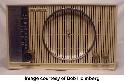
In my opinion , you did right by getting the selenium out of the circuit . Wheras we use these sets as "daily drivers" and they will never be terribly valuable anyway (like the price of the Zenith Stratosphere , for instance) it's not like a replacement rectifier will devalue it much . These 845s really do sound great and to be enjoyed to their fullest the added bit of reliability of the new diode and filter caps is a worthy improvement . It's still the same tube radio we all know and love , just with the one potential stink bomb removed . I'll end with a couple of shots of my 845 while I was restringing the tuner .
|
|
#14
04-14-2013, 06:10 PM
|
||||
|
||||
|
I used to have a set almost like that one. It didn't have the handle on top, and it had a tone control in the center of the tuning indicator.
I remember it had a deep, rich tone and sounded wonderful, but lacked an AFC circuit. It had a sticker on the back that advertised the FM as being the "Armstrong System".
|
|
#15
04-14-2013, 07:19 PM
|
||||
|
||||
|
Hi David , Yes , this one has the tone control in the middle of the tuning dial and the extra tube stage of the AFC circuit . I have not checked for the Armstrong sticker , but I'll take a look at it the next time im in my hobby room , which is where I use it quite a bit . Your right about the sound , it truly is a great sounding radio
|
| Audiokarma |
 |
|
|








 Linear Mode

