
|
|
|
#1
 10-03-2013, 07:23 AM
|
||||
|
||||
|
Looky what followed me home from NEARC :-)
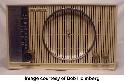
Not exactly antique, and by no means a great treasure - but a nice old Zenith table radio... from the freebie table at NEARC last Saturday :-) It works, too - a little bit of background hum but otherwise works amazingly well and sounds good :-)
 Zenith 2 by mhardy6647, on Flickr
__________________
all the best, mrh 
|
|
#2
10-03-2013, 08:14 AM
|
||||
|
||||
|
Kewl ! Zenith made GAZILLIONS of this basic radio in countless different versions from the late Forties thru the mid Sixties. I would hazard this is on e of the Sixties' versions. New caps, maybe replace a weak tube, a little Deoxit, & it'll be Good to Go for ANOTHER 50 years.. They DO like a nice FM antenna-they're a little deaf on FM otherwise.
__________________
Benevolent Despot
|
|
#3
10-03-2013, 09:03 AM
|
||||
|
||||
|
I figured this post would draw you out, Sandy. In fact, I almost titled the thread "Hey Uncle Sandy, look at this!"
;-)
__________________
all the best, mrh
|
|
#5
10-03-2013, 11:52 AM
|
||||
|
||||
|
This is the model after the Interlude series 1959-63, but not much later.
It still has conelrad on the dial. I bet it has a selenium rectifier. Everyone knew someone that had one for sure.
__________________
"When resistors increase in value, they're worthless" -Dave G
|
| Audiokarma |
|
#6
10-03-2013, 06:13 PM
|
||||
|
||||
|
It will have a selenium rectifier. I have one of these and another model with the same guts. They work after a fashion but need gone through. Good radios for what they are. I also restored another that works like new now.
__________________
Reece Perfection is hard to reach with a screwdriver.
|
|
#7
10-03-2013, 07:13 PM
|
||||
|
||||
 I replaced the selenium rectifier in one AM/FM set like this one with a bridge rectifier. Full wave rectification, less power supply hum (120Hz vs 60Hz). The heater string runs directly off the powerline (via power switch). The mid point of the heater string will look to have minimal AC waveform in reference to the B- line of the bridge rectifier. But will have a DC bias of about half the B+ voltage. This is fine, cathodes like their heaters to have a positive bias. One end of the audio output tube (for example a 50C5) (#8 in the diagram) heater is probably already connected to one of the AC lines. Disconnect the heater line of the other audio output heater pin. This line, now disconnected (feeding to tube #7), now will be connected to the other AC line. See diagram. And at the old ground end of the heater string, usually the AM or FM detector/ audio driver tube (#1) (19T8 for example) disconnect from ground and connect to the now loose end of the audio output tube heater. This should minimize hum pickup from the heater line. A small cap of around 0.1uF 400V or more tied close to the heater string midpoint should help reduce the AC waveform some more by holding a bias charge between the heater string and the B- ground of the radio during the time the bridge rectifier isn't conducting. The bridge diodes only conduct at the peaks of the AC powerline waveform. Pay special attention to the AC line lead dress around the volume control power switch for hum pickup. Hot chassis radios usually switched the local ground feed line to avoid hum pickup from 120VAC to local ground wires. This could ruin the advantage of full wave rectification (less hum, 120Hz vs 60Hz) if not taken care of. Look for trouble by listening to silent passages in radio programming with the volume control at half setting (hum pickup can be more severe at this position). Shielding may be needed.
__________________

|
|
#8
10-03-2013, 07:46 PM
|
||||
|
||||
|
I have the 1963-1964 version of this radio (Zenith K-731) in the Early American cabinet. Works well and sounds great, even though it is 50 years old. Brings in every major FM station in Cleveland very well, using the line-cord antenna (I am about 40 miles from the transmitters). No Conelrad icons on the dial. I also have a 1960 Zenith "Super Interlude" C-845 AM-FM hi-fidelity radio that works very well on FM, but the AM loop antenna connections came loose. Can't figure out where the "ground" end of the loop connects. There is a ground terminal on the chassis, but when I connect the loop there and the other end to the AM tuning capacitor, I hear nothing except very garbled sound from a local AM station in the next town. The sound is great on FM, however, so I don't think the power supply filters are at fault (although replacing them certainly wouldn't hurt).
Another question regarding the K731: Did this radio have a separate FM tuner as did the C-845 and, later, the Royal 3000 12-band portable? I ask because I read in another post to this forum an answer to a question about such a tuner; the post mentioned that the lead dress to and within the tuner must not be disturbed under any circumstances. If it is disturbed, even a tiny bit, the alignment could be thrown off or, at worst, the FM section of the radio will not operate.
__________________
Jeff, WB8NHV Collecting, restoring and enjoying vintage Zenith radios since 2002 Zenith. Gone, but not forgotten.
|
|
#9
10-03-2013, 08:04 PM
|
|||
|
|||
|
Quote:
The 731 chassis has a two gang tuning condenser and the slug arrangement, similar to the 845 series.
|
|
#10
10-04-2013, 02:15 PM
|
||||
|
||||
|
Quote:
What is the URL for the "build-a-radio" website? I never heard of it. I noticed the terminal for the feedthrough cap on the chassis of my C845, though I mistakenly thought it was a ground terminal. I'll have to go into the set tonight and reconnect the loop. I don't listen to AM that much, but it will be nice to have the radio working on that band anyway. Surprisingly, the radio still picks up the local station (1kW day/0.5kW night) without the loop, although since that station's transmitter is only about two miles away or so I'm probably getting a tremendous signal from it, so I shouldn't be surprised I am hearing it with no antenna. BTW, I did not realize the K731 has a similar type of slug-tuned FM tuner to the ones in the C845s. The '731 must have been a high-end radio in its day, as most AM-FM radios of the '50s-'60s do not have such a tuning arrangement for FM; most sets I've seen use the tuning capacitor for both AM and FM, with the RF amplifier stage used only for FM. I read, however (I think it was in this forum some time ago), that there isn't much point in having an RF amplifier for AM in the '845. The tube serves some other function on that band; I'm not sure what, though.  There wasn't much need for RF amplifiers in AM radios by about the late 1950s or '60s, anyway (the external AM antenna connector on the back covers of many AC-DC radios of the period disappeared about the same time), since by then most areas of the US were within range of at least one AM radio station. Many small towns, suburbs of major cities, and even rural areas had at least one low-power local station as well; many of the big-city stations were operating with 50kW clear-channel signals too, so they could be heard almost anywhere at night. Station WLW in Cincinnati has quite a story to tell about its 500-kW signal in the 1930s, which lit up light bulbs not even in sockets (!) and which probably could be heard practically world-wide after sundown. WLW was forced to reduce its power output to 50kW later on in the decade. There wasn't much need for RF amplifiers in AM radios by about the late 1950s or '60s, anyway (the external AM antenna connector on the back covers of many AC-DC radios of the period disappeared about the same time), since by then most areas of the US were within range of at least one AM radio station. Many small towns, suburbs of major cities, and even rural areas had at least one low-power local station as well; many of the big-city stations were operating with 50kW clear-channel signals too, so they could be heard almost anywhere at night. Station WLW in Cincinnati has quite a story to tell about its 500-kW signal in the 1930s, which lit up light bulbs not even in sockets (!) and which probably could be heard practically world-wide after sundown. WLW was forced to reduce its power output to 50kW later on in the decade.This changed, of course, when the FCC abolished clear channels in the mid-1980s; instead, under new rules adopted in that decade, former daytime-only or limited-time stations could now operate full-time, often with decreased power output and directional signals at night and during critical hours. Some stations in very small towns, however, still sign off at sunset for financial or other reasons; one station in northeastern Ohio (WBTC-1540 in Uhrichsville, Ohio, near Canton and 70-some miles from Cleveland) does this, operating with a measly 5 watts at night and signing off at nine p.m.; the night sign-off is to protect at least one full-time station (KXEL-1540 in Waterloo, Iowa, IIRC) from skywave interference. Station WJIB-AM 740 in Boston also operates with just five watts nights (250 watts days); the station cannot be heard in much of Boston outside the city itself at night, but unfortunately this was the only way the station could operate past local sunset. I noticed the terminal for the feedthrough cap on the chassis of my C845, though I mistakenly thought it was a ground terminal. I'll have to go into the set tonight and reconnect the loop. I don't listen to AM that much, but it will be nice to have the radio working on that band anyway. Surprisingly, the radio still picks up the local station (1kW day/0.5kW night) without the loop, although since that station's transmitter is only about two miles away or so, I'm probably getting a tremendous signal from it so I shouldn't be surprised I am hearing it without the antenna connected.
__________________
Jeff, WB8NHV Collecting, restoring and enjoying vintage Zenith radios since 2002 Zenith. Gone, but not forgotten. Last edited by Jeffhs; 10-04-2013 at 02:33 PM.
|
| Audiokarma |
|
#11
10-04-2013, 02:34 PM
|
||||
|
||||
|
Quote:
What is the URL for the "build-a-radio" website? I never heard of it. BTW, I did not realize the K731 has a similar type of slug-tuned FM tuner to the ones in the C845s. The '731 must have been a high-end radio in its day, as most AM-FM radios of the '50s-'60s do not have such a tuning arrangement for FM; most sets I've seen use the tuning capacitor for both AM and FM, with the RF amplifier stage used only for FM. I read, however (I think it was in this forum some time ago), that there isn't much point in having an RF amplifier for AM in the '845. The tube serves some other function on that band; I'm not sure what, though. There wasn't much need for RF amplifiers in AM radios by about the '60s, anyway (the external AM antenna connector on the back covers of many radios disappeared about the same time), since by then most areas of the US were within range of at least one AM radio station. Many small towns and even rural areas had at least one local station as well; many big-city stations were operating with 50kW clear-channel signals too, so they could be heard almost anywhere (even on the opposite coast in the case of coastal stations in California, etc.) at night. This changed, of course, when the FCC abolished clear channels in the mid-1980s; instead,former daytime-only or limited-time stations could now operate full-time, often with decreased power output and directional signals at night and during critical hours. Some stations in very small towns, however, still sign off at sunset for financial or other reasons; one station in northeastern Ohio (WBTC-1540 in Uhrichsville, Ohio, near Canton and 70-some miles from Cleveland) does this, operating with a measly 5 watts at night and signing off at nine p.m. Station WJIB-AM 740 in Boston also operates with just five watts nights (250 watts days); the station cannot be heard in much of Boston outside the city itself at night, but unfortunately this was the only way the station could operate past local sunset.
__________________
Jeff, WB8NHV Collecting, restoring and enjoying vintage Zenith radios since 2002 Zenith. Gone, but not forgotten. Last edited by Jeffhs; 10-04-2013 at 02:39 PM.
|
|
#12
10-04-2013, 06:35 PM
|
|||
|
|||
|
I messed up after posting. I isn't build a radio, it's makearadio.com, one word, all lower case. You might have to download Dejavoo.
Try the website and follow the instructions. 
|
|
#13
10-04-2013, 07:18 PM
|
||||
|
||||
|
Twenty years old is antique in my book, and that set is well older than that.
I used to have that cabinet style version of that set. I now have two of the modern style wood cabinet version. The modern cabinet version was the set that started my radio and TV collecting hobby.There was one in my family's cabin up north. That set had very good FM reception and exceptional AM reception I wanted it so bad when I was around 4 years old that I started buying tube radios when my folks would stop at antique shops on trips.
__________________
Tom C. Zenith: The quality stays in EVEN after the name falls off! What I want. --> http://www.videokarma.org/showpost.p...62&postcount=4
|
|
#14
10-13-2013, 04:59 PM
|
||||
|
||||
|
IIRC slug ( coil ) tuned front ends are PTO's or "permeability tuned oscillator".
I have only seen them in car radios, Zeniths & the highest grade comms receivers. Not the cheap way out..... 73 Zeno 
|
 |
|
|






 Linear Mode

