
|
|
|
#1
 05-06-2014, 08:16 AM
|
||||
|
||||
|
motorola table top
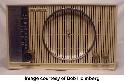
just another question, i have a line on a motorola i think it may be a 7 inch b&w table top tv with the door that folds down to cover the front when not in use. i dont know what year it is but it is very light not much weight to it at all unlike the other sets that have power transformers and flybacks as this one i dont think it has either but it is complete and very clean. would this set be worth grabbing for 75.00 its so clean it may even work i dont know. i was always wondering how the sets that dont have flybacks get the hv and how the power is made when it dont have the big heavy transformers in them as i think this is the case with this set.

|
|
#2
05-06-2014, 12:58 PM
|
||||
|
||||
|
$75 would be a perfectly reasonable price for that particular Motorola if it is in good shape. If the CRT turns out to be good, it's a very good price.
Early sets without a flyback transformer use an RF step-up transformer to generate the high voltage. Sets that don't use a power transformer typically use a two-diode voltage doubler running off the AC line. That's what this Motorola set does. These sets work very well when fully restored. You'll definitely need to replace the 6000 V coupling capacitors going to the picture tube deflection plates as step #1. Suitable tubular caps for this are available from Just Radios. Otherwise the usual recapping of paper caps and electrolytic caps is needed, and it's not a bad idea to replace the mica caps in the sync separator and sweep circuitry in these sets. Most people will recommend replacing the selenium rectifiers with silicon rectifiers. I find that adding a 30 ohm 10 watt resistor in series with each rectifier brings the voltages back to where they should be, since the silicon diode has less voltage drop than the original selenium rectifiers. You also have the option to leave the selenium rectifiers in place. They are often in good working order, and at least in a few sets I've had where I've left them in place, they have worked fine for many years. (But someone is bound to reply that they smell real bad when they fail and therefore you've GOT to replace them now...) The ballast tubes in these are almost always bad. I replace them with power resistors that I mount right inside the original ballast can (with one or two under the chassis if they don't all fit). Otherwise I hear there is a replacement ballast available that someone can point you to.
|
|
#3
05-06-2014, 02:15 PM
|
||||
|
||||
|
Quote:
Scroll down to the bottom: http://www.amptechsystems.com/Buy_Pa...ccessories.htm
|
|
#4
05-06-2014, 05:45 PM
|
||||
|
||||
|
No, I think what I had heard about must have been these NOS Amperite glass ballasts. There is some mention of them on various forum threads, and this seems to be a link to one that is or was for sale: http://www.classimap.us/New+York/Aud...2#.U2llBoFdVqw
This website mentions a specific part number for a glass ballast: http://www.geocities.ws/reevesradios/vt71new.html I don't know if any of this will really help you find one. I just used power resistors to make my own ballast substitute in several of these sets I have restored and they seem to work fine.
|
|
#5
05-06-2014, 06:44 PM
|
||||
|
||||
|
TS-4 through TS-4H chassis use the 17A470303 ballast.
TS-4J and TS-18 chassis use the 17A485459 ballast. It doesn't matter if it's metal or glass - the part # is the same. For a brief time there was a supply of NOS glass 17A485459 ballasts at $15 a pop. That dried up a couple years ago. $65 may sound high, but they rarely show up for sale. The glass ballasts use iron wire in hydrogen gas which provides a regulation effect to suppress the surge current on start up. That's easy enough to replicate with the use of a modern thermistor like the CL-90.
|
| Audiokarma |
|
#6
05-06-2014, 11:54 PM
|
||||
|
||||
|
That 17A485459 ballast tube sounds a lot like the 50A1s used in very old Zenith Trans-Oceanic tube radios. I believe those tubes also were gas-filled and used a length of iron wire, hence the "1" in the designation. It's the only vacuum tube I have ever heard of with just one element and no filament, except perhaps for the 0Z4, 0D3, etc. gas-filled regulator tubes that were the forerunners of today's Zener diodes.
__________________
Jeff, WB8NHV Collecting, restoring and enjoying vintage Zenith radios since 2002 Zenith. Gone, but not forgotten. Last edited by Jeffhs; 05-07-2014 at 12:02 AM.
|
 |
|
|


 Linear Mode

