![]() |
|
#16
|
||||
|
||||
|
Oh BTW, thanks again for assembling all this in one neat understandable place!
|
|
#17
|
|||
|
|||
|
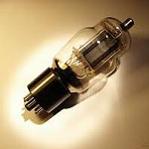
Yup. Notably via the famous 6JU8 quadruple-diode tube.
|
|
#18
|
||||
|
||||
|
Though the Portacolor is the easiest set to acquire with resonant color sub-carrier recovery it is far from the only example....GE used that circuit from their first 15GP22 based color set on until at least the end of their tube offerings...If they kept it in their earlier SS offerings then the acquisition of RCA in the mid 80's would be the time when they dropped it (since they used RCA chassis after that).
__________________
Tom C. Zenith: The quality stays in EVEN after the name falls off! What I want. --> http://www.videokarma.org/showpost.p...62&postcount=4 |
|
#19
|
||||
|
||||
|
Thanks Nic for assembling this. I would like to add my thoughts on the dot crawl issue and compatibility with B&W systems.
The early black and white sets with 4MHz bandwidth did suffer. The dot crawl could be minimized by careful and exacting RF/IF alignment. If the carrier is placed at 50% and the response is flat through the color subcarrier, the dot crawl is not too bad. Fortunately, since the DTV revolution, it is now possible to get the full 4 MHz back on pre-1955 TV's. Pretty well all DVD players and a few DTV over the air set top boxes are provided with Y, Pb, Pr or component analog interfacing. The Y output is luminance only and if fed to an RF modulator will provide full 4 MHz luminance bandwidth with no chroma and dot crawl interference. The addition of color to a B&W channel would be a trade off. The 2nd NTSC (from 1951) realized luminance bandwidth would be reduced but felt the addition of color would more than compensate for the loss. It was a wise compromise which resulted in providing an excellent television delivery technology lasting more than 50 years. |

|
#20
|
||||
|
||||
|
Wayne is correct, I mistyped slightly. The reactance tube merely does the nudging in response to the phase detector, which is a pair of diodes exactly like in horizontal circuits. The phase detector is what is comparing the local signal to the incoming burst, producing an error signal used by the reactance tube. Little too much egg nog last night!
Here's another way to do it, the GE Porta Color chassis! Instead of having a PLL (phase locked loop) as with RCA designs, GE decided to 'shock excite' the crystal directly with the incoming burst and allow it to ring on its own at the correct frequency. It's analogous to ringing a bell, in a way. This is what Tom was referring to earlier, and why I like this circuit so much. It's a much simpler way to go about it, all you do is gate the burst with a horizontal pulse from the flyback and route the signal from the ringing crystal to your detectors. In this case the detectors are silicon diodes not vacuum tubes, which along with the use of compactrons in the HE chassis drastically cut down on the number of tubes involved.
__________________
Evolution... Last edited by miniman82; 12-25-2015 at 10:00 PM. |
| Audiokarma |
|
#21
|
|||
|
|||
|
Great discussion.
Waitin' now for the 6LE8 high level demodulator story.
|
|
#22
|
|||
|
|||
|
Excellent explaination. Should this thread be a "sticky"?
|
|
#23
|
||||
|
||||
|
Quote:
If I ran a TV station back in the late 50's to mid 70's, I would have done this in the station's color modulator. "Wow, your TV station has such good looking video". Around 1980 comb filters came out.
__________________
|
|
#24
|
||||
|
||||
|
No filter is perfect, especially not a vacuum tube based notch filter. They were only working with what they had available at the time, so let's not bash the engineers for only doing what they could.
It's the thing with my Corvair, which has the factory turbo option. The only way they could figure out how to control ignition timing is to only have mechanical advance and a diaphragm operated boost retard (the opposite of vacuum advance) to avoid detonation. Does it seem like they could have gone about it a better way? Sure, but the lens of time and technology always does that. I would say put yourself in their shoes, they did pretty good if you ask me. I have fun digging into the history of these now extinct signals, and when you think back to the constraints they had to deal with it quickly becomes obvious that it's a wonder it works at all!
__________________
Evolution... |
|
#25
|
||||
|
||||
|
Same here, I haven't heard that one yet.
__________________
Evolution... |
| Audiokarma |
|
#26
|
||||
|
||||
|
If anyone can point me to the schematic...
__________________
Evolution... |
|
#27
|
||||
|
||||
|
Posted here in 2006:
http://www.videokarma.org/showthread...ghlight=sodpil |
|
#28
|
||||
|
||||
|
Brilliant, thanks wayne!
__________________
Evolution... |
|
#29
|
||||
|
||||
|
Here's someone that can shed some light on the subject of color.
https://www.youtube.com/watch?v=FvkgXrLXyIQ
__________________
[IMG] |
![]() |
|
|