
|
|
|
#316
 05-29-2015, 09:27 PM
|
||||
|
||||
|
I'm going to make a stab at your problem based of my CT-100 experience:
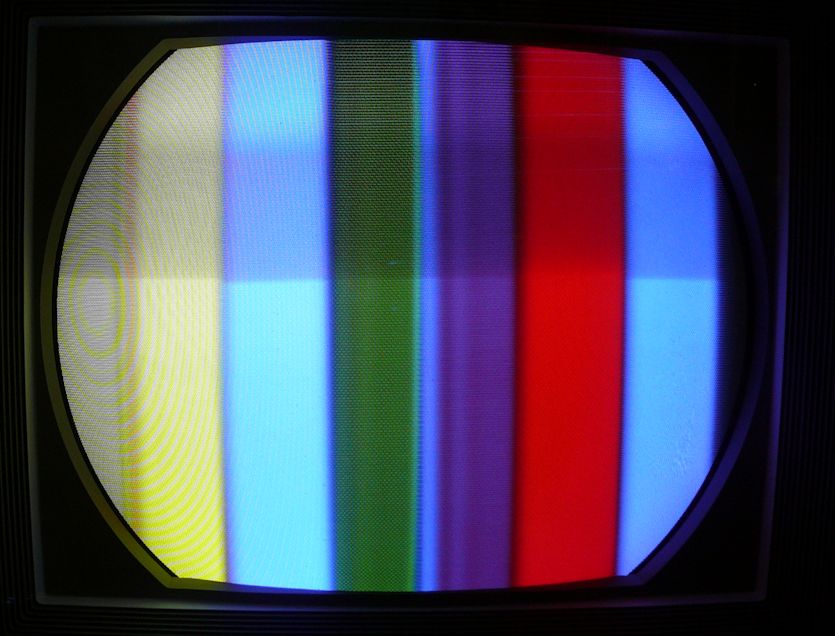
Bad, very bad, IF alignment and AGC setting. The symptom is that black magenta bar. Of course, a wrong type diode might do it. Try viewing 50% or 25% saturated color bars, they won't show as much problem with the magenta bar. In any case, I would do really careful, really full IF and RF alignment next. 
|
|
#317
05-29-2015, 11:06 PM
|
|||
|
|||
|
Yeah, get the proper diode in there first. There used to be some conjecture about the 1N34 at higher frequencies.
|
|
#318
05-29-2015, 11:42 PM
|
||||
|
||||
|
I ordered a pack of 1N60 diodes, and after ordering learned they will not arrive until June 11. I see that a local store has NTE110A diodes. I wonder if that is an appropriate sub?
http://www.nteinc.com/specs/100to199/pdf/nte110a.pdf Phil Nelson
|
|
#319
05-30-2015, 12:03 AM
|
|||
|
|||
|
This listing indicates it's equivalent to the 1N60..
http://www.vetco.net/catalog/product...oducts_id=1729
|
|
#320
05-30-2015, 04:38 PM
|
||||
|
||||
|
Quote:
 I plunked down 71 cents at the local store and installed a 1N60 diode in place of the 1N34A. Can't say that I noticed much difference. This scope trace from pin 2 of the 1st video amp looked identical before and after the diode transplant. (The top trace is the output from my video detector and the bottom trace shows the color bar pattern direct from the generator). 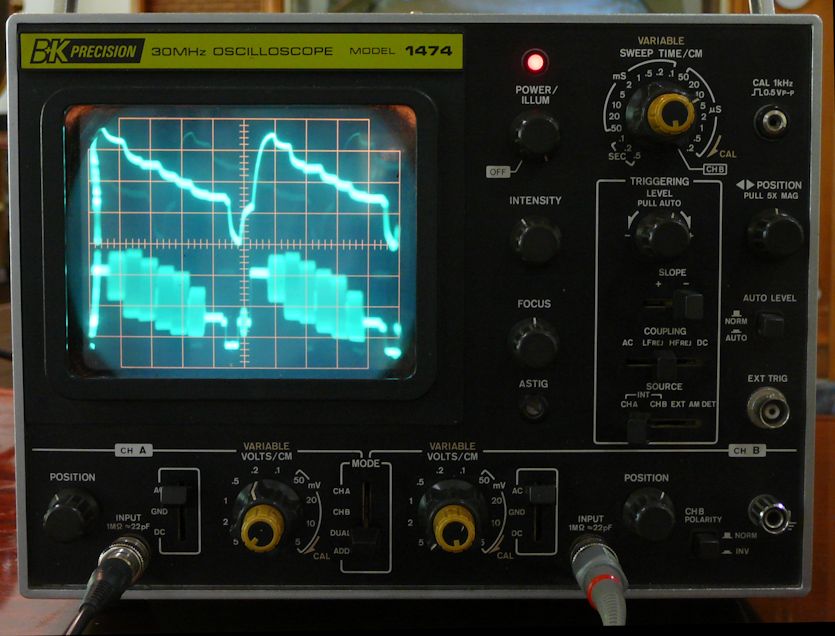 'That still looks more like a luma stairstep signal than a color signal," I thought, but as Username1 recently pointed out, there is more than one output path from the video detector (forehead slap). I put the scope on pin 4 (cathode) of the 1st video amp, and finally saw the kind of signal I had been expecting to see way back when: 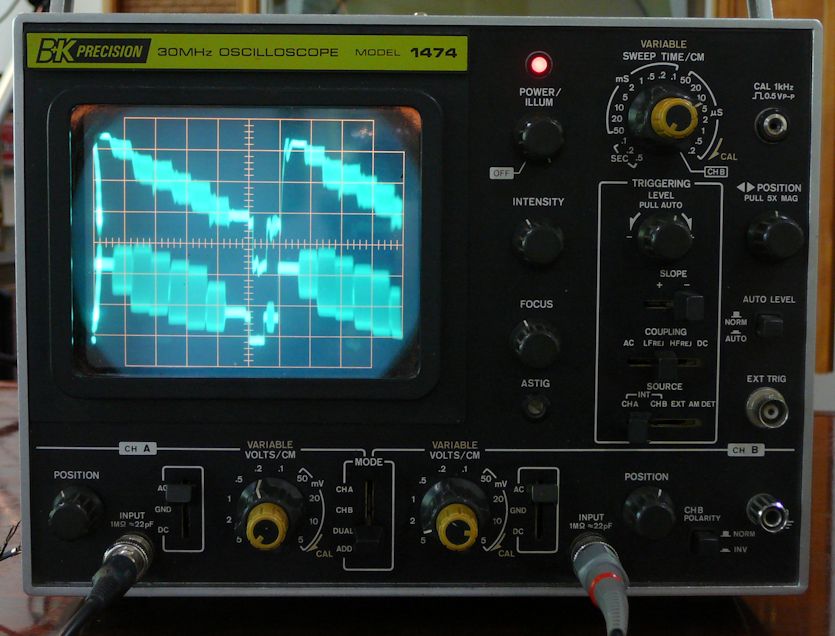 That looks like a burst signal as well as chroma info. When you fine-tune the signal in and out on the tuner, the upper trace gets fatter & skinnier and the screen colors come and go. I still haven't done the ground-up color setup procedures, but simply trying different sources and exercising the controls (including AGC) makes me think that I can eventually make this a watchable television. Phil Nelson Phil's Old Radios http://antiqueradio.org/index.html
|
| Audiokarma |
|
#322
05-31-2015, 01:29 AM
|
||||
|
||||
|
Quote:
I thought you had a B&K 1077 Analyzer. If you do, I am pretty sure it has the "gated rainbow" color bar function in it, which was the standard color-TV test pattern for years before the NTSC color-bar generators became affordable. You would run it either without a slide in the scanner or maybe a black/opaque sheet, I am not sure. The background, then, is the black that normally appears between the bars.
__________________
Chris Quote from another forum: "(Antique TV collecting) always seemed to me to be a fringe hobby that only weirdos did."
|
|
#323
05-31-2015, 10:06 AM
|
|||
|
|||
|
I b'lieve Phil does have a 1077b Analyst.
It'd be cool if he could find a nice example of its stablemate B&K 415 Sweep Generator. http://radiomuseum.org/r/dynascan_sw...rator_415.html Since he's already got a nice scope, he'd be all set up to tackle some alignment. 
|
|
#324
05-31-2015, 01:28 PM
|
||||
|
||||
|
Yes, I have a 1077B TV Analyst. I guess I need to use it more often. I hauled it out, and the contacts on the channel selector seem to be funky. After letting the Analyst warm up and spending a LONG time messing with a newish solid-state TV, I was able to find a signal with the Analyst channel selector set partway between channels 4 and 5. After exercising the channel selector some more, a signal eventually appeared at its channel 4 position. It was still barely usable with the modern TV, and trying out the signal with the CTC-4 just produced a mess. Besides cleaning the Analyst's channel selector, it might help to clean its control pots.
I also have a model 415 sweep/marker generator, which I picked up somewhere in my travels and never really used. I suspect it would also need some TLC before it's ready for prime time. Phil Nelson
|
|
#326
05-31-2015, 02:25 PM
|
||||
|
||||
|
I haven't reinstalled the original L42 coil yet. I did reinstall the original T115 quadrature transformer.
It seems possible the detector diode was always bad, but when first looking at that output way back when, I only scoped the grid of the 1st video amp, which gives a skeletal luma-like signal, even with a new diode. I should also have looked at the cathode of the video amp, where color information (including burst signal) appears. Perhaps the signal coming out of the video detector network wasn't as bad as I first assumed. Since that time, I have also replaced dozens of resistors in the chrominance circuits, the video board, and the video IF board. Those replacements corrected a number of wrong voltages. It's tempting to look for a single "silver bullet" solution, but I suspect that the TV started out with a bunch of problems (maybe including a funky diode), which I'm still in the process of correcting. Phil Nelson
|
|
#327
05-31-2015, 06:09 PM
|
||||
|
||||
|
If you have a Sencore VA62, it also puts out the color bar pattern.
Dave
|
|
#328
05-31-2015, 06:17 PM
|
|||
|
|||
|
Phil,
Have you checked/replaced any resistors in the IF strip yet? If not, I would start with the screen grid and cathode resistors of the three IF stages. And then check the screengrid & plate voltages of all three stages. If all's good, then scope the screen grid of each stage. They should all be flatline. Any hash or signal of any kind on them would indicate a bypass cap problem.
|
|
#329
05-31-2015, 07:10 PM
|
||||
|
||||
|
That reminds me, I need to fix the color bars on my VA62. It makes beautiful B/W patterns, but the colors roll. Just call this the house of half-baked equipment
 . .In the IF section, I have replaced R115, R116, R118, R119, R120, R122, R123. That was in the context of working on AGC, and I see that it did not include the IF cathode resistors. It can't hurt to check out that section some more. Phil Nelson
|
|
#330
05-31-2015, 09:00 PM
|
|||
|
|||
|
If, in checking voltages, you find any seriously out of whack on plate & screengrid of 1st and 2nd IFs, there's two honkin' 10K resistors in parallel (R320, R321). Since this pair is a B+ dropper, they could sure mess with those voltages.
Last edited by old_coot88; 05-31-2015 at 09:05 PM.
|
| Audiokarma |
 |
|
|




 Linear Mode

