
|
|
|
|
|
#1
 01-05-2016, 10:15 PM
|
||||
|
||||
|
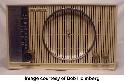
What a rare and interesting set. Stromberg Carlson sets are usually well built, in my limited experience. One peek at that dual chassis and you can tell this is not an RCA clone
 Is a schematic available anywhere online? I noticed that this page at the ETF website has a little more info about the purity & static convergence gizmos: http://www.earlytelevision.org/strom..._brochure.html Regards, Phil Nelson Phil's Old Radios http://antiqueradio.org/index.html 
|
|
#2
01-05-2016, 11:13 PM
|
||||
|
||||
|
Color TV certainly has come a long way since the Stromberg-Carlson K-1, from the 15GP22 round screen to the 21AXP/CYP22 round, to 21- and 23" rectangular, to 12-, 16- and 19-inch portables, to today's flat screens.
Color had to start somewhere, though, and I guess the S/C K-1 (and RCA's own CT-100) were right at that starting point. I don't think there are many of those K-1s in existence today; the one being discussed here could well be the only such set left, so I'd hang on to it and get it working as well as possible. The number of tubes used in the S/C K-1 is astounding. Thirty-three signal tubes, multiple HV (ultor) and low-voltage (B+) rectifiers . . . I guess multi-section/function tubes hadn't yet been invented when this TV was new, so each tube had its own unique function. I am also sure this set must have cost a small fortune, being one of the first color sets made (aside from RCA's CT-100), so there probably were not many K-1s in use in the US. After all, color TV itself was in its infancy when this set was new, and b&w sets were . . . well, not rare, but not as common as they were to become later in the 1950s and sixties until small-screen color portables and large-screen color consoles from RCA and Zenith appeared. Again, hold on to that S/C K-1. It is truly one of a kind, and we will likely never see another color TV like it.
__________________
Jeff, WB8NHV Collecting, restoring and enjoying vintage Zenith radios since 2002 Zenith. Gone, but not forgotten.
|
|
#3
01-06-2016, 02:39 PM
|
||||
|
||||
|
Steve, Good work getting that repaired color ctransormer back in and working. Use NTSC color bars to troubleshoot you color problem, it is very diagnostic.
__________________
John Folsom
|
|
#4
01-06-2016, 08:13 PM
|
||||
|
||||
|
Recalling Ed's thoughts...
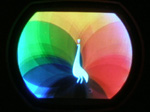
Phil, Ed thought of the K-1 as a close clone of the RCA Model 4. So close in fact that he felt the image on a K-1 would give the viewer accurate insight as to what an operable Model 4 would display.
First, there are differences between the two designs, although examples such as these affect the bottom line more than the picture: For its power supply, a Model 4 used two selenium rectifiers in a voltage-doubler circuit as did the Model 5 and CT-100. The K-1 uses four 5U4's. The Models 4 and 5 used a 6CD6 to drive their horizontal output transformers while the K-1 used a parallel-connected pair of 6CD6's. There are many similarities between the two designs, for example: The Model 4 and K-1 use a Chroma Phase Amp stage and a pot for Hue adjustment rather than the much simpler variable cap and inductor hanging on the burst amp grid -- that first appeared on the Model 5. The R, G and B video amplifiers on the Model 4 and K-1 were identical, but then were cleaned up and simplified somewhat for the Model 5. And yes, There is a K-1 Photofact, the Set 265 Folder 13 dated Feburary 1955. Pete Last edited by Pete Deksnis; 01-06-2016 at 08:27 PM. Reason: correct Set number
|
 |
|
|




 Hybrid Mode
