
|
|
|
#1
 12-03-2020, 04:00 PM
|
||||
|
||||
|
TV DX and VHF long distance reception
I have been searching for a list online after the US DTV Channel repack, of the new allocations nationwide. Does anyone have the list?
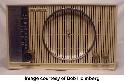
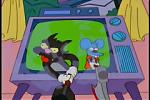
After the repack, I thought that maybe I should resume DX channel hunting? It will depend upong the number and radiated power of the VHF new allocations. We have just past the solar sunspot minimum in 2019 and the next peak is due in 2025. TV DXing appeared more prevalent when I was younger. I recall the summer of '72 when the sunspots reached their peak and was able to receive TV stations thousands of miles distant. I took advantage of the last few weeks of analog TV broadcast in June 2009 to search for distant stations on low VHF channels 2 to 6. Recall this was during the "NiteLite" period when most stations switched off and only a few stations in the US remained on to air DTV transition spots. I was living in Carbondale in Southern Illinois and had a 50' ft tower with a high gain Yagi antenna and rotor. On a good day, you could rotate the antenna 360 degrees and pick up distant stations in all directions. From Carbondale I logged the following: WGBH Channel 2 Boston WPBT Channel 2 South Florida Azteca TV Monterrey Mexico KOB TV Channel 4 Albuquerque NM KTVK TV Channel 5 Phoenix CKCK TV (CTV) Channel 2 Regina, Saskatchewan, Canada CBAT TV Channel 4 (CBC) Fredericton, New Brunswick, Canada Videokarma unfortunately would not allow me to upload the short 20 second avi clips I made at the time in 2009. I threfore have attached some freeze frame smapshots. The identification came from the audio which was generally quite clear. These stations were received by the phenomenon known a tropospheric ducting and could sometimes selectively remove the alternately the sound or picture. The set I used was a 1948 RCA Model 8T243. This set employed RCA chassis KCS28. I always thought the KCS28 (using the 10BP4) and the KCS29 (using the 16AP4) were the most impressive design for DXing, featuring not one but two upper adjacent channel traps and two lower adjacent channel traps. It was good in the day receiving fringe signals next to very strong adjacents. The split sound design as opposed to intercarrier ensured the sound was not dependent on video for reception. In the pictured examples, the audio was very clear to aid identification. 
|
|
#2
12-03-2020, 04:49 PM
|
||||
|
||||
|
|
|
#3
12-03-2020, 05:56 PM
|
||||
|
||||
|
Thanks. I have seen the Rabbit Ears information. However I recall seeing on the FFC website and elsewhere a spreadsheet of station allocations state-by-state across the US.
I was wondering if a complete new listing after the final repack has been posted somewhere?
|
|
#4
12-03-2020, 07:44 PM
|
||||
|
||||
|
You can search the TV query on FCC site for channels in various categories.
https://www.fcc.gov/media/television/tv-query For example, generated this list of licensed low band channels: https://transition.fcc.gov/fcc-bin/t...2=&EW=W&size=9 jr
|
|
#5
12-03-2020, 09:10 PM
|
||||
|
||||
|
It is probably going to continue to shift if ATSC 3.0 keeps progressing.
__________________
Tom C. Zenith: The quality stays in EVEN after the name falls off! What I want. --> http://www.videokarma.org/showpost.p...62&postcount=4
|
| Audiokarma |
|
#6
12-03-2020, 10:29 PM
|
||||
|
||||
|
Thanks all. I will hunt further through thge FCC site.
I am curious how many stations after the recent repack ended up on VHF, especially on the low band. As for ATSC 3.0, the ability for broadcasters to adopt a more rugged modulation configuration means it may enhance DXing!
|
|
#7
12-03-2020, 10:57 PM
|
||||
|
||||
|
Quote:
BTW, I think when all TV went digital in 2008, it pretty much killed TV DXing, as the stations now operate with much, much lower power than they did when they were still analog. I don't see much sense in trying to get TV stations from other cities anyway (if such is actually possible in this age of DTV), since any stations you can receive in other areas (if you can receive the distant signals at all--remember, digital TV is all or nothing, meaning you will either see a picture or a blank screen) will carry the same network programs as do the stations in your own area.
__________________
Jeff, WB8NHV Collecting, restoring and enjoying vintage Zenith radios since 2002 Zenith. Gone, but not forgotten. Last edited by Jeffhs; 12-03-2020 at 11:03 PM.
|
|
#8
12-04-2020, 09:38 PM
|
||||
|
||||
|
Yes I agree that DXing died after 2009. However it occurred to me the repack pushed stations from UHF to VHK in some markets because of the shortage of spectrum. Haven't found the new list of assignments YET and will.keep looking.
ATSC 3.0 is an interesting prospect. It offers the broadcaster a more robust transmission if the broadcaster decides to utilize it. Whereas ATSC 8VSB requires a C/N of 15.3dB, 3.0 facilities modulation modes of 10 dB or less at the expense of reduced channel payload capacity. And if the broadcaster seeks the mobile/ portable receiver market, there is the opportunity to allow the signal to go beyond their immediate market. Unlike analog tv, where you could evaluate propagation contains by looking at the tv screen, a spectrum analyzer for dtv dxing is essential. Looking at it you can optimize you antenna and keep an eye on the signal to when it reaches and exceeds the threshold of decodability. So the prospects of DTV dx'ing may be looking up as we head to the next sunspot peak in 2025.
|
|
#9
12-04-2020, 10:10 PM
|
||||
|
||||
|
There are a lot of pluses and minuses involved. Low VHF leaks over the horizon much more easily than UHF. On the other hand, the FCC did not take into account ambient electrical noise when setting the power level for low V digital, only the opposing consideration to protect analog from co-channel during the transition. It is unlikely that ATSC 1.0 broadcasts in low V will get any power increase in the future. It remains to be seen if the power levels may be boosted for ATSC 3.0. In opposition to the idea of boosting power for ATSC 3.0 is the idea of using single-frequency networks (multiple small transmitters of the same signal all aimed closely at a given market). These will even out the signal level across a market, but cause it to drop off more steeply outside that market.
|
|
#10
12-05-2020, 12:15 AM
|
||||
|
||||
|
[QUOTE=Jeffhs;3229345] I live in an apartment building, so cannot use any kind of outdoor TV antenna; I must have cable to get all seven stations serving northeast Ohio.
If your apartment has an exclusive use area, such as a balcony or patio, your landlord cannot exclude you from setting up an outside antenna within reasonable size. See this FCC citation. https://www.fcc.gov/media/over-air-r...n-devices-rule
__________________

|
| Audiokarma |
 |
|
|






 Linear Mode

